Commissioners table sign-ordinance changes after debate over billboard spacing and setbacks
February 10, 2026 | Randolph County, North Carolina
This article was created by AI summarizing key points discussed. AI makes mistakes, so for full details and context, please refer to the video of the full meeting. Please report any errors so we can fix them. Report an error »
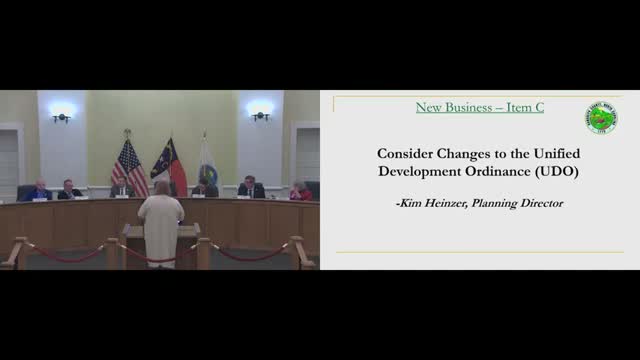
Planning staff presented proposed revisions to the sign regulations in the Unified Development Ordinance aimed at updating rules last revised in the 1980s. The proposal would change billboard separation distances, increase setbacks from residentially zoned property, add a new "special sign request" process for signs exceeding standard allowances and add tighter time requirements for removing certain temporary signs.
Commissioners debated key numeric thresholds: whether billboard spacing should be 1,000 feet or the planning-board-recommended 2,500 feet, whether the residential setback should be 300 feet (the draft) or a smaller figure, and whether a new real-estate sign rule should require removal within 7 days or a longer period. One commissioner proposed extending the real-estate sign removal window to 30 days to accommodate marketing needs; others suggested 3 weeks as an alternative.
Concerns raised included preserving agricultural character, protecting property owners' ability to monetize billboard leases, ensuring the county is not overly restrictive compared with neighboring counties, and creating a clear process (special sign request) to consider exceptional projects such as a large truck-stop sign. After discussion commissioners identified four specific items for revision (billboard separation distance, residential setback distance, an exception for large-frontage properties that can maintain the 1,000-foot separation, and extending the real-estate sign removal period), then moved, seconded and voted to table the ordinance so staff can return with revised, specific language at the next meeting.
Planning staff said the earlier public hearing requirement had been met and that tabling the item with revisions should avoid repeating the public-notice process. The board took no final vote to adopt ordinance changes; the item was sent back to staff for redrafting.
Commissioners debated key numeric thresholds: whether billboard spacing should be 1,000 feet or the planning-board-recommended 2,500 feet, whether the residential setback should be 300 feet (the draft) or a smaller figure, and whether a new real-estate sign rule should require removal within 7 days or a longer period. One commissioner proposed extending the real-estate sign removal window to 30 days to accommodate marketing needs; others suggested 3 weeks as an alternative.
Concerns raised included preserving agricultural character, protecting property owners' ability to monetize billboard leases, ensuring the county is not overly restrictive compared with neighboring counties, and creating a clear process (special sign request) to consider exceptional projects such as a large truck-stop sign. After discussion commissioners identified four specific items for revision (billboard separation distance, residential setback distance, an exception for large-frontage properties that can maintain the 1,000-foot separation, and extending the real-estate sign removal period), then moved, seconded and voted to table the ordinance so staff can return with revised, specific language at the next meeting.
Planning staff said the earlier public hearing requirement had been met and that tabling the item with revisions should avoid repeating the public-notice process. The board took no final vote to adopt ordinance changes; the item was sent back to staff for redrafting.
Don't Miss a Word: See the Full Meeting!
Go beyond summaries. Unlock every video, transcript, and key insight with a Founder Membership.
✓
Get instant access to full meeting videos
✓
Search and clip any phrase from complete transcripts
✓
Receive AI-powered summaries & custom alerts
✓
Enjoy lifetime, unrestricted access to government data
30-day money-back guarantee
