Lee County officials describe multi-pronged response to growing feral-cat population
February 10, 2026 | Lee County, Illinois
This article was created by AI summarizing key points discussed. AI makes mistakes, so for full details and context, please refer to the video of the full meeting. Please report any errors so we can fix them. Report an error »
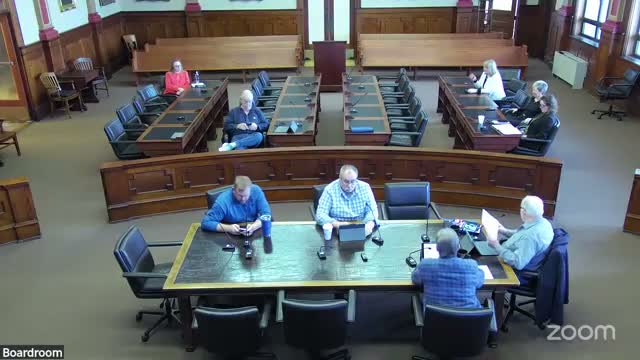
Chair opened a round of reports and an attendee offered public praise for county Animal Control; Terry, the county Animal Control representative, used the report period to outline recent rescue and trapping work.
Terry said officers recovered animals after a bull attack (two horses died and others were injured) and that four horses went to new homes. She then described a recent operation to trap feral cats on the South Side, saying, “So far, we have 10. It'll be a release, a trap and release,” and explaining that some cats will be returned to their properties while others will be placed as barn cats.
The chair and other members pressed for details on responsibility and costs. Terry stated the county would cover spay/neuter and vaccination costs for the animals in this effort, noting state vaccination schedules for cats and that some veterinarians will operate on animals at smaller weights. On adoption and cost recovery, Terry said the county sometimes charges adopters a nominal fee (she cited about $50) while veterinary costs for alteration and vaccines run roughly $125 depending on the animal.
Members repeatedly emphasized county staffing and capacity limits. Several officials said Dixon's population creates concentrated demand and that Lee County Animal Control, with only a small staff, needs program partners and shelter collaborators to scale a sustained TNR strategy. One member suggested targeted catch-and-release drives in high-density areas using population-focused funding to support operations.
Terry and members agreed the problem would take months, not weeks, to address. The department will continue trapping, vetting and ear-tipping feral cats and will pursue partnerships with neighboring municipalities and shelters to expand capacity. The chair said he would coordinate further conversations between county staff and city officials to clarify cost-sharing and operational roles.
Terry said officers recovered animals after a bull attack (two horses died and others were injured) and that four horses went to new homes. She then described a recent operation to trap feral cats on the South Side, saying, “So far, we have 10. It'll be a release, a trap and release,” and explaining that some cats will be returned to their properties while others will be placed as barn cats.
The chair and other members pressed for details on responsibility and costs. Terry stated the county would cover spay/neuter and vaccination costs for the animals in this effort, noting state vaccination schedules for cats and that some veterinarians will operate on animals at smaller weights. On adoption and cost recovery, Terry said the county sometimes charges adopters a nominal fee (she cited about $50) while veterinary costs for alteration and vaccines run roughly $125 depending on the animal.
Members repeatedly emphasized county staffing and capacity limits. Several officials said Dixon's population creates concentrated demand and that Lee County Animal Control, with only a small staff, needs program partners and shelter collaborators to scale a sustained TNR strategy. One member suggested targeted catch-and-release drives in high-density areas using population-focused funding to support operations.
Terry and members agreed the problem would take months, not weeks, to address. The department will continue trapping, vetting and ear-tipping feral cats and will pursue partnerships with neighboring municipalities and shelters to expand capacity. The chair said he would coordinate further conversations between county staff and city officials to clarify cost-sharing and operational roles.
Don't Miss a Word: See the Full Meeting!
Go beyond summaries. Unlock every video, transcript, and key insight with a Founder Membership.
✓
Get instant access to full meeting videos
✓
Search and clip any phrase from complete transcripts
✓
Receive AI-powered summaries & custom alerts
✓
Enjoy lifetime, unrestricted access to government data
30-day money-back guarantee
