Working group declines motion to delay or condition excise tax at public EV chargers after debate over market impacts and revenue
February 09, 2026 | 2026 Legislature MN, Minnesota
This article was created by AI summarizing key points discussed. AI makes mistakes, so for full details and context, please refer to the video of the full meeting. Please report any errors so we can fix them. Report an error »
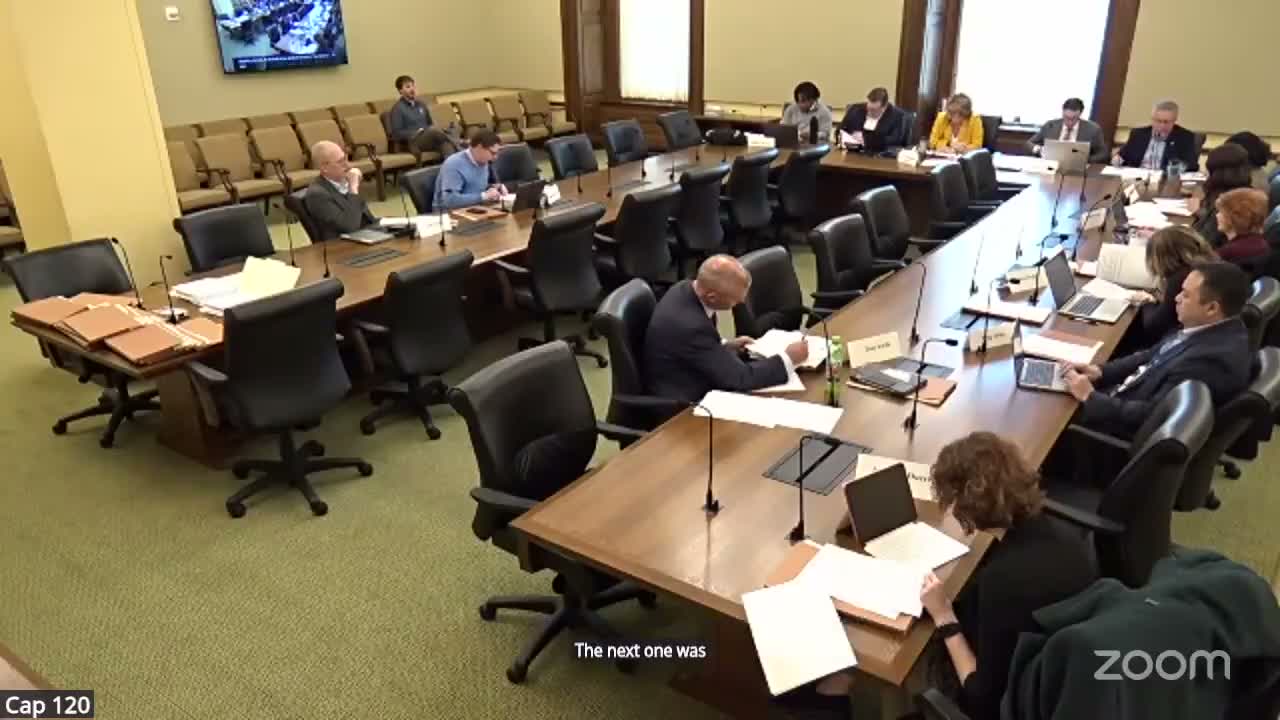
The working group considered a motion by Justin Emerich to apply Minnesota’s excise-style tax at public EV chargers only when a utilization benchmark is met — or to delay implementation until 2035 — with the stated goal of avoiding early market disincentives for public charging investment.
Emerich explained that because EV saturation is still low, nearby out-of-state charging could shift the burden to Minnesota residents, and a utilization threshold (he suggested 25% fleet saturation in one example) could guard nascent charging businesses. “Until we reach 25% saturation in the state of our total fleet, at that point we can apply the fuel tax,” he said.
Members pressed the fiscal implications. A staff participant recalled a roughly $9 million first-year revenue estimate mentioned elsewhere in the process; other members cited smaller fiscal-note numbers (one set of figures cited about $600,000 in FY26 rising to $2.4 million later). Danny Gillis noted that conferees had booked $1.6 million in FY28 and $2.4 million in FY29 under the version that reached special-session agreement.
Opponents said delaying the tax risks lost revenue and delays building collection systems and statutory practice; proponents said collection costs and low early revenue could discourage charging deployment. The motion was defeated on a roll call, 7 yes, 8 no and 2 abstentions; the differing revenue estimates will be documented in the final report and staff will include references to the fiscal notes discussed.
Why it matters: Whether to tax electricity at public chargers affects both revenue for roads and the economics of private investment in charging infrastructure. The working group’s rejection leaves implementation on the current statutory track and signals lawmakers will weigh the trade-offs.
What happens next: The discussion and revenue estimates will be recorded in the final report for legislators to consider.
Emerich explained that because EV saturation is still low, nearby out-of-state charging could shift the burden to Minnesota residents, and a utilization threshold (he suggested 25% fleet saturation in one example) could guard nascent charging businesses. “Until we reach 25% saturation in the state of our total fleet, at that point we can apply the fuel tax,” he said.
Members pressed the fiscal implications. A staff participant recalled a roughly $9 million first-year revenue estimate mentioned elsewhere in the process; other members cited smaller fiscal-note numbers (one set of figures cited about $600,000 in FY26 rising to $2.4 million later). Danny Gillis noted that conferees had booked $1.6 million in FY28 and $2.4 million in FY29 under the version that reached special-session agreement.
Opponents said delaying the tax risks lost revenue and delays building collection systems and statutory practice; proponents said collection costs and low early revenue could discourage charging deployment. The motion was defeated on a roll call, 7 yes, 8 no and 2 abstentions; the differing revenue estimates will be documented in the final report and staff will include references to the fiscal notes discussed.
Why it matters: Whether to tax electricity at public chargers affects both revenue for roads and the economics of private investment in charging infrastructure. The working group’s rejection leaves implementation on the current statutory track and signals lawmakers will weigh the trade-offs.
What happens next: The discussion and revenue estimates will be recorded in the final report for legislators to consider.
View the Full Meeting & All Its Details
This article offers just a summary. Unlock complete video, transcripts, and insights as a Founder Member.
✓
Watch full, unedited meeting videos
✓
Search every word spoken in unlimited transcripts
✓
AI summaries & real-time alerts (all government levels)
✓
Permanent access to expanding government content
30-day money-back guarantee
