House panel advances bills to let charters pick authorizer and create charter financing programs
February 09, 2026 | 2026 Legislature OK, Oklahoma
This article was created by AI summarizing key points discussed. AI makes mistakes, so for full details and context, please refer to the video of the full meeting. Please report any errors so we can fix them. Report an error »
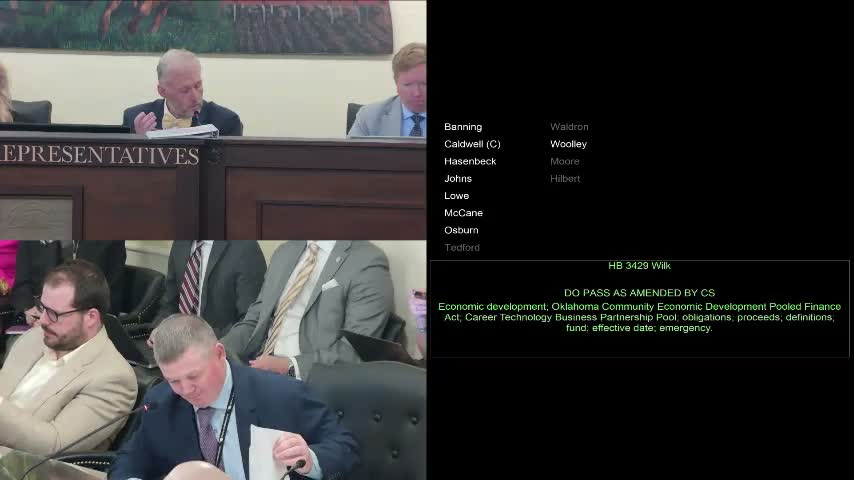
Representative Hall presented two related bills. HB 3069 would allow a potential charter school to apply to any approved authorizer rather than requiring an initial application to the local school district, a change sponsors said would reduce administrative barriers and attract new charter operators. The committee discussed whether the local application step encourages collaboration and whether removing it risks adversarial relationships; sponsor noted local districts can still establish charters and said the change simply reduces a duplicative step. The bill passed 6–4.
HB 3372 would create (1) a revolving loan fund for charter capital projects that would be repaid and re‑lent, and (2) a bond enhancement program where the state effectively backstops private bonds to secure lower interest rates for charter borrowers. Members expressed concerns about oversight of private management companies, how the state would recoup funds if a charter closed mid‑semester, and whether the statewide charter school board is the right entity to define creditworthiness. The sponsor said the statewide charter school board would approve loan applications and the Oklahoma Finance Authority, Treasurer’s office and other finance entities would be involved; he offered to follow up on technical questions about collateral and recoupment. HB 3372 passed the committee 6–4.
Next steps: Sponsors promised follow‑up on oversight procedures and the mechanics of recouping funds; both bills advance to the next legislative stage.
HB 3372 would create (1) a revolving loan fund for charter capital projects that would be repaid and re‑lent, and (2) a bond enhancement program where the state effectively backstops private bonds to secure lower interest rates for charter borrowers. Members expressed concerns about oversight of private management companies, how the state would recoup funds if a charter closed mid‑semester, and whether the statewide charter school board is the right entity to define creditworthiness. The sponsor said the statewide charter school board would approve loan applications and the Oklahoma Finance Authority, Treasurer’s office and other finance entities would be involved; he offered to follow up on technical questions about collateral and recoupment. HB 3372 passed the committee 6–4.
Next steps: Sponsors promised follow‑up on oversight procedures and the mechanics of recouping funds; both bills advance to the next legislative stage.
View the Full Meeting & All Its Details
This article offers just a summary. Unlock complete video, transcripts, and insights as a Founder Member.
✓
Watch full, unedited meeting videos
✓
Search every word spoken in unlimited transcripts
✓
AI summaries & real-time alerts (all government levels)
✓
Permanent access to expanding government content
30-day money-back guarantee
