Committee advances five‑year biosolids pilot amid safety concerns; bill passes 9‑2
February 09, 2026 | 2026 Legislature OK, Oklahoma
This article was created by AI summarizing key points discussed. AI makes mistakes, so for full details and context, please refer to the video of the full meeting. Please report any errors so we can fix them. Report an error »
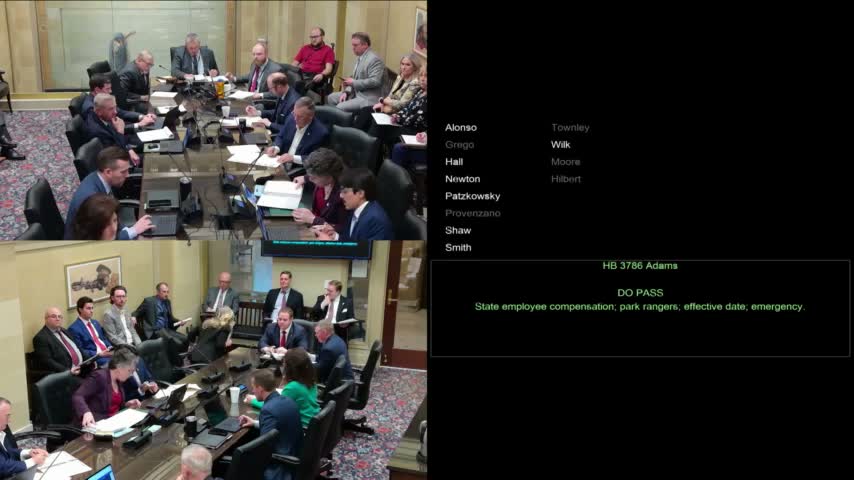
Representative Paskowski urged the Natural Resources A & B Subcommittee to approve a five‑year pilot to study land‑applied biosolids in Oklahoma, saying researchers from Oklahoma State University and other partners will test solid waste samples and measure transmission into crops and livestock. "We need 5 years," Paskowski said, arguing the state must vet its own biosolids rather than rely solely on out‑of‑state studies.
Lawmakers pushed back, citing an interim study that, according to Representative Shaw, contains "overwhelming research" indicating that land application of biosolids can contaminate farm and ranch land, water supplies, humans and animals. "Do you really think we need 5 more years to reaffirm what the rest of the country and the rest of Oklahoma already understands to be a really significant problem?" Shaw asked.
Paskowski responded that DEQ currently oversees permitting and point‑source water testing but that testing of the solid biosolids themselves has been limited. He said the pilot will include public and private research partners and that some private entities have already taken biosolids for independent testing. When asked whether the private company would receive program funds, Paskowski said, "They received no money. They're just doing it on their own," and described the company as seeking a commercial treatment that could neutralize PFAS, heavy metals and related compounds.
On scope, Paskowski said test plot size will vary by study needs, ranging from small crop production plots to larger 1–2 acre swaths where appropriate. He also noted DEQ monitoring of effluent at treatment plants and framed the pilot as adding testing of solid materials and measuring potential uptake through the food chain, including whether a cow that consumes treated hay could transmit contaminants into meat.
After extended questioning about the need for additional in‑state study versus relying on existing research, the committee voted to pass House Bill 34 03 by 9 yeas to 2 nays. The bill will move to the next legislative stage.
The transcript shows members asked about procurement and whether multiple private entities could bid to participate; Paskowski said the current private partner approached the interim study team and participation is voluntary. The bill does not appropriate new state funds according to the presenter.
The committee record does not identify individual yes/no votes by member name in the transcript; the chair announced the final tally.
Lawmakers pushed back, citing an interim study that, according to Representative Shaw, contains "overwhelming research" indicating that land application of biosolids can contaminate farm and ranch land, water supplies, humans and animals. "Do you really think we need 5 more years to reaffirm what the rest of the country and the rest of Oklahoma already understands to be a really significant problem?" Shaw asked.
Paskowski responded that DEQ currently oversees permitting and point‑source water testing but that testing of the solid biosolids themselves has been limited. He said the pilot will include public and private research partners and that some private entities have already taken biosolids for independent testing. When asked whether the private company would receive program funds, Paskowski said, "They received no money. They're just doing it on their own," and described the company as seeking a commercial treatment that could neutralize PFAS, heavy metals and related compounds.
On scope, Paskowski said test plot size will vary by study needs, ranging from small crop production plots to larger 1–2 acre swaths where appropriate. He also noted DEQ monitoring of effluent at treatment plants and framed the pilot as adding testing of solid materials and measuring potential uptake through the food chain, including whether a cow that consumes treated hay could transmit contaminants into meat.
After extended questioning about the need for additional in‑state study versus relying on existing research, the committee voted to pass House Bill 34 03 by 9 yeas to 2 nays. The bill will move to the next legislative stage.
The transcript shows members asked about procurement and whether multiple private entities could bid to participate; Paskowski said the current private partner approached the interim study team and participation is voluntary. The bill does not appropriate new state funds according to the presenter.
The committee record does not identify individual yes/no votes by member name in the transcript; the chair announced the final tally.
View the Full Meeting & All Its Details
This article offers just a summary. Unlock complete video, transcripts, and insights as a Founder Member.
✓
Watch full, unedited meeting videos
✓
Search every word spoken in unlimited transcripts
✓
AI summaries & real-time alerts (all government levels)
✓
Permanent access to expanding government content
30-day money-back guarantee
