Kankakee budget committee: revenues reported at 81% as ARPA and grant timing shape next budget
February 09, 2026 | Kankakee City, Kankakee County, Illinois
This article was created by AI summarizing key points discussed. AI makes mistakes, so for full details and context, please refer to the video of the full meeting. Please report any errors so we can fix them. Report an error »
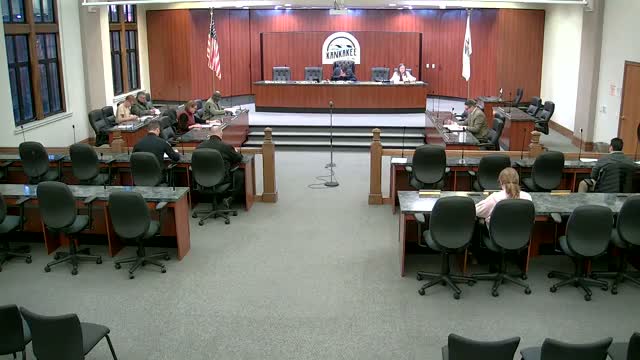
Comptroller Rogers told the City of Kankakee Budget Committee that the city’s revenues are at about 81% of budget for the year and property taxes have been collected in full, putting the city “in really good shape” as the committee prepares for the next budget cycle.
Rogers, speaking during a detailed review of the city financial statements, said the city is nine months (roughly 75%) through the fiscal year but that total revenues are stronger than that benchmark: “Overall, our revenues are at 81%. We’re in really good shape,” she said. She cautioned, however, that some revenue lines are underperforming: corporate replacement tax and local use tax projections fell short of earlier expectations and the cable TV fee has declined further because streaming has displaced traditional cable receipts.
Why it matters: the committee is beginning budget work while several timing and funding questions remain. Rogers identified grant and timing issues that could change how next year’s budget is balanced—most notably, recent decisions about CDBG administrative charges that mean previously grant‑covered rent and admin expenses may now need to be paid from city funds.
Key details from the review:
- Taxes: Property taxes are fully collected and the tax line overall is about 86% of budget; sales tax is healthy and exceeded earlier estimates.
- Licenses and fees: Liquor licenses (due in April) and rental license timing explain why license receipts are only about 37% of budget so far; cable TV fees continue to decline.
- Grants and one‑time receipts: An IDNR grant for the riverwalk arrived after the budget was set and will boost grant revenue lines. Rogers also described an ESU hazardous‑materials incident for which the city expects to bill approximately $5,500 as the city’s portion of a larger (about $11,000) cost.
- Expenditures and payroll: After recent salary adjustments the city’s combined salary lines sit near 70% of budget; many departments remain under budget for the year, though timing for police pension contributions and other items creates line‑by‑line variance.
- ECDA and CDBG changes: Rogers and committee members discussed that CDBG now disallows some administrative charges the city had previously charged to the grant. That change means the city must absorb some rent and administrative costs (ECDA office rent was cited roughly at $56,000 annually for 275 East Court Street). Rogers said the comptroller’s office will pursue additional grant opportunities to offset the difference.
ARPA and cash management
Rogers reviewed cash balances and ARPA spending. She noted several ARPA allocations remain and must be spent by December 2026, and the committee expects several pass‑throughs and invoices to reduce outstanding balances in the coming months. “We have to have all of it spent by December 2026,” Rogers said, adding that the city is coordinating invoices and reporting to close out projects such as Kankakee United, Harbor House and a Justice Academy item referenced to State’s Attorney Jim Rolle.
Staffing and audit timeline
Rogers introduced new comptroller’s office staff—Carlos (will track fixed assets and assist on the budget), Joy (CPA, master’s degree, grant experience) and Troy (previously at the Federal Reserve)—and said the finance team is now fully staffed. She reported auditors have provided a first draft and she hopes to finalize the audit and present it at the next meeting in about two to three weeks.
Other items
Alderman Jones raised constituent concerns about fiber‑optic installation in alleys and openings left in rights‑of‑way; the Mayor noted state law allows internet companies to expand in rights‑of‑way and said the city has engaged legal counsel and hired Pigash Engineering to oversee contractor work and improve communication with residents. Alderman Johnson asked about repairs at the violence prevention house; committee members said the area was closed, a worker was placed on workers’ compensation, and repairs await favorable weather.
Votes at a glance
- Approval of minutes from the Jan. 12, 2026 budget committee meeting: motion made and seconded; approved by voice vote.
- Motion to adjourn: motion made and seconded; approved by voice vote.
The committee concluded by scheduling follow‑up items during the budget season: finalizing the audit, continuing ARPA closeouts and pursuing grant funding to cover newly ineligible administrative costs.
Rogers, speaking during a detailed review of the city financial statements, said the city is nine months (roughly 75%) through the fiscal year but that total revenues are stronger than that benchmark: “Overall, our revenues are at 81%. We’re in really good shape,” she said. She cautioned, however, that some revenue lines are underperforming: corporate replacement tax and local use tax projections fell short of earlier expectations and the cable TV fee has declined further because streaming has displaced traditional cable receipts.
Why it matters: the committee is beginning budget work while several timing and funding questions remain. Rogers identified grant and timing issues that could change how next year’s budget is balanced—most notably, recent decisions about CDBG administrative charges that mean previously grant‑covered rent and admin expenses may now need to be paid from city funds.
Key details from the review:
- Taxes: Property taxes are fully collected and the tax line overall is about 86% of budget; sales tax is healthy and exceeded earlier estimates.
- Licenses and fees: Liquor licenses (due in April) and rental license timing explain why license receipts are only about 37% of budget so far; cable TV fees continue to decline.
- Grants and one‑time receipts: An IDNR grant for the riverwalk arrived after the budget was set and will boost grant revenue lines. Rogers also described an ESU hazardous‑materials incident for which the city expects to bill approximately $5,500 as the city’s portion of a larger (about $11,000) cost.
- Expenditures and payroll: After recent salary adjustments the city’s combined salary lines sit near 70% of budget; many departments remain under budget for the year, though timing for police pension contributions and other items creates line‑by‑line variance.
- ECDA and CDBG changes: Rogers and committee members discussed that CDBG now disallows some administrative charges the city had previously charged to the grant. That change means the city must absorb some rent and administrative costs (ECDA office rent was cited roughly at $56,000 annually for 275 East Court Street). Rogers said the comptroller’s office will pursue additional grant opportunities to offset the difference.
ARPA and cash management
Rogers reviewed cash balances and ARPA spending. She noted several ARPA allocations remain and must be spent by December 2026, and the committee expects several pass‑throughs and invoices to reduce outstanding balances in the coming months. “We have to have all of it spent by December 2026,” Rogers said, adding that the city is coordinating invoices and reporting to close out projects such as Kankakee United, Harbor House and a Justice Academy item referenced to State’s Attorney Jim Rolle.
Staffing and audit timeline
Rogers introduced new comptroller’s office staff—Carlos (will track fixed assets and assist on the budget), Joy (CPA, master’s degree, grant experience) and Troy (previously at the Federal Reserve)—and said the finance team is now fully staffed. She reported auditors have provided a first draft and she hopes to finalize the audit and present it at the next meeting in about two to three weeks.
Other items
Alderman Jones raised constituent concerns about fiber‑optic installation in alleys and openings left in rights‑of‑way; the Mayor noted state law allows internet companies to expand in rights‑of‑way and said the city has engaged legal counsel and hired Pigash Engineering to oversee contractor work and improve communication with residents. Alderman Johnson asked about repairs at the violence prevention house; committee members said the area was closed, a worker was placed on workers’ compensation, and repairs await favorable weather.
Votes at a glance
- Approval of minutes from the Jan. 12, 2026 budget committee meeting: motion made and seconded; approved by voice vote.
- Motion to adjourn: motion made and seconded; approved by voice vote.
The committee concluded by scheduling follow‑up items during the budget season: finalizing the audit, continuing ARPA closeouts and pursuing grant funding to cover newly ineligible administrative costs.
View the Full Meeting & All Its Details
This article offers just a summary. Unlock complete video, transcripts, and insights as a Founder Member.
✓
Watch full, unedited meeting videos
✓
Search every word spoken in unlimited transcripts
✓
AI summaries & real-time alerts (all government levels)
✓
Permanent access to expanding government content
30-day money-back guarantee
