Senate subcommittee packages governance reforms for public universities, adopts substitute in concept
February 10, 2026 | 2026 Legislature VA, Virginia
This article was created by AI summarizing key points discussed. AI makes mistakes, so for full details and context, please refer to the video of the full meeting. Please report any errors so we can fix them. Report an error »
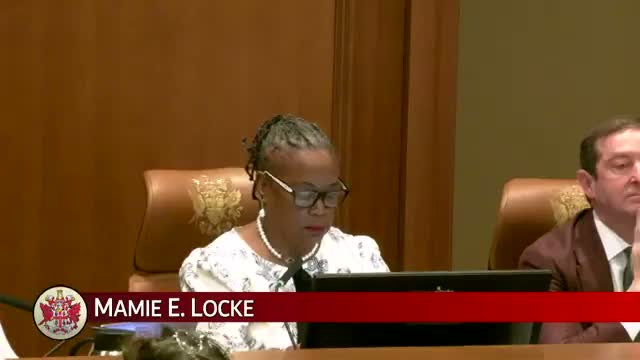
The subcommittee devoted the bulk of its hearing to two related bills, SB 381 and SB 494, which sponsors said were written in response to recent governance conflicts at Virginia's public universities. Senator Deeds (identified in the transcript as the sponsor for SB 494) framed the bills as attempts to reduce partisan influence over governing boards by instituting longer staggered terms, standardizing board membership and clarifying duties, expanding shared-governance processes, and permitting—under specific conditions—universities to obtain independent legal counsel.
Deeds emphasized several core changes: establishing single six-year terms for board visitors to reduce turnover tied to gubernatorial cycles; standardizing most boards to 18 members; clarifying that gubernatorial appointees may not assume a seat until confirmed by the General Assembly; creating a 30-day window after nomination before an appointee may take the oath; and adding protections for faculty academic freedom and a requirement that recusal standards be clarified for conflicts of interest. Deeds said the language also would limit third-party contractual training that, in his view, altered visitor expectations.
Supporters from governance and higher-education groups testified. Ross Mugler, president and CEO of the Association of Governing Boards, said best practice discourages faculty serving as voting governing-board members because of conflicts and confidentiality issues. Lizzie Shaw, a law student at the University of Virginia policy clinic who worked on the sponsor's memo, told the committee that Virginia is one of the few states that requires exclusive university representation by the politically elected attorney general and that in SB 381 the attorney general retains authority to approve settlements above $5,000,000 and to intervene where the Commonwealth has an independent interest.
Tim Heafy, former general counsel at UVA, described the ‘‘cumbersome’’ dual duty of loyalty when university legal advice had to be coordinated with the attorney general, saying that created practical barriers to candid counsel between university leadership and their lawyers.
The Office of the Attorney General (Deputy Attorney General Lisonbee Teisinger) said it had no position on the board‑membership provisions but warned that allowing universities to employ their own counsel could create opportunities for ideologically aligned boards and counsel to take positions that conflict with the Commonwealth's interests; the office urged continued negotiation with patrons.
Committee members debated multiple amendments. Senators moved and seconded to strike lines 267–271 (a provision that would have forced expiration of unexpired terms) and approved that amendment. Members also moved and seconded and approved an amendment to convert proposed faculty, staff and student voting seats to nonvoting positions. Senators discussed further technical edits—staggering of initial terms, how confirmations would be scheduled and whether to set terms to begin January 1 to avoid off‑session confirmation issues.
By the end of the docket the subcommittee voted to incorporate identified portions of SB 381 into SB 494 and adopted SB 494 as a substitute in concept; the substitute was recommended to the full committee for further consideration. The transcript records voice votes ('Aye') for these actions; no roll-call tallies were provided in the hearing record.
Next procedural steps: the recommended substitute and incorporated provisions will go to the full committee for consideration; sponsors and the attorney general's office indicated they intend to continue working on the counsel and implementation language.
Deeds emphasized several core changes: establishing single six-year terms for board visitors to reduce turnover tied to gubernatorial cycles; standardizing most boards to 18 members; clarifying that gubernatorial appointees may not assume a seat until confirmed by the General Assembly; creating a 30-day window after nomination before an appointee may take the oath; and adding protections for faculty academic freedom and a requirement that recusal standards be clarified for conflicts of interest. Deeds said the language also would limit third-party contractual training that, in his view, altered visitor expectations.
Supporters from governance and higher-education groups testified. Ross Mugler, president and CEO of the Association of Governing Boards, said best practice discourages faculty serving as voting governing-board members because of conflicts and confidentiality issues. Lizzie Shaw, a law student at the University of Virginia policy clinic who worked on the sponsor's memo, told the committee that Virginia is one of the few states that requires exclusive university representation by the politically elected attorney general and that in SB 381 the attorney general retains authority to approve settlements above $5,000,000 and to intervene where the Commonwealth has an independent interest.
Tim Heafy, former general counsel at UVA, described the ‘‘cumbersome’’ dual duty of loyalty when university legal advice had to be coordinated with the attorney general, saying that created practical barriers to candid counsel between university leadership and their lawyers.
The Office of the Attorney General (Deputy Attorney General Lisonbee Teisinger) said it had no position on the board‑membership provisions but warned that allowing universities to employ their own counsel could create opportunities for ideologically aligned boards and counsel to take positions that conflict with the Commonwealth's interests; the office urged continued negotiation with patrons.
Committee members debated multiple amendments. Senators moved and seconded to strike lines 267–271 (a provision that would have forced expiration of unexpired terms) and approved that amendment. Members also moved and seconded and approved an amendment to convert proposed faculty, staff and student voting seats to nonvoting positions. Senators discussed further technical edits—staggering of initial terms, how confirmations would be scheduled and whether to set terms to begin January 1 to avoid off‑session confirmation issues.
By the end of the docket the subcommittee voted to incorporate identified portions of SB 381 into SB 494 and adopted SB 494 as a substitute in concept; the substitute was recommended to the full committee for further consideration. The transcript records voice votes ('Aye') for these actions; no roll-call tallies were provided in the hearing record.
Next procedural steps: the recommended substitute and incorporated provisions will go to the full committee for consideration; sponsors and the attorney general's office indicated they intend to continue working on the counsel and implementation language.
Don't Miss a Word: See the Full Meeting!
Go beyond summaries. Unlock every video, transcript, and key insight with a Founder Membership.
✓
Get instant access to full meeting videos
✓
Search and clip any phrase from complete transcripts
✓
Receive AI-powered summaries & custom alerts
✓
Enjoy lifetime, unrestricted access to government data
30-day money-back guarantee
