UN briefing urges predictable financing for UN police amid cuts
February 10, 2026 | United Nations, International
This article was created by AI summarizing key points discussed. AI makes mistakes, so for full details and context, please refer to the video of the full meeting. Please report any errors so we can fix them. Report an error »
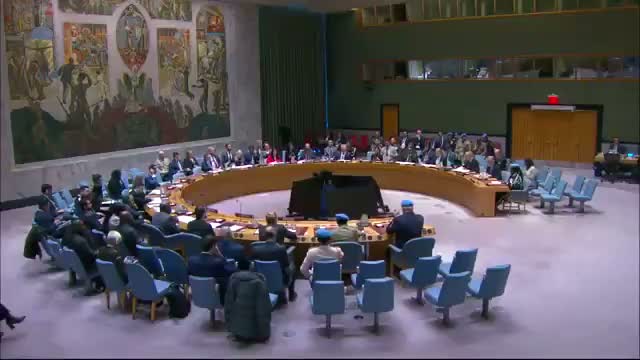
Mister Milakarff, the briefing presenter, told the council that United Nations police (UNPOL) remain "a key component" of peacekeeping but are stretched by recent cost‑saving measures and a liquidity crunch that have reduced civilian staff and repatriated uniformed personnel. He warned that "peacekeeping's ability to deliver will be severely compromised without the timely and full payment of assessed contributions."
The briefing framed the Secretary‑General’s comprehensive review of UN peace operations (the "pact for the future" review) as an inflection point to rethink deployment, resourcing and mission support. Milakarff said the review and the Action for Peacekeeping (A4P) framework—implemented across seven priority areas—offer a chance to align mandates with resources and improve operational effectiveness.
Milakarff outlined the A4P priorities he said are central to UNPOL's role: backing political solutions; strengthening strategic and operational integration between military and police components; investing in capabilities and training (including revisions to the police command course and a new police operational command course); deepening accountability through community‑oriented and intelligence‑led policing; protecting against misconduct; bolstering information integrity and strategic communications; and deepening cooperation with host‑state police.
On accountability and misconduct, Milakarff reiterated the department's policy of "0 tolerance for ****** expectation and abuse" (phrase redacted in the transcript) and described strengthened training, monitoring and victim‑centered responses as part of the department’s approach. He thanked police‑contributing countries for cooperation on these measures.
The presenter also highlighted the women, peace and security agenda, saying progress in women's participation and leadership in UNPOL is fragile under budget pressure and urging continued investment in recruitment, retention and leadership development for women police peacekeepers.
Milakarff cited the 2025 peacekeeping ministerial meeting in Berlin as evidence of renewed political commitment and said pledges made there included specialized police capacities, rapid deployment capabilities and training to address threats such as transnational organized crime, cyber‑enabled crime and climate‑related insecurity. He underscored that innovation and reorganization can mitigate some operational impacts but cannot replace predictable financing and political unity around mandates.
The presiding officer thanked "Mister Milakarff" for the briefing and gave the floor to United Nations police adviser Commissioner Faisal Shaka, whose remarks followed in the transcript.
The briefing framed the Secretary‑General’s comprehensive review of UN peace operations (the "pact for the future" review) as an inflection point to rethink deployment, resourcing and mission support. Milakarff said the review and the Action for Peacekeeping (A4P) framework—implemented across seven priority areas—offer a chance to align mandates with resources and improve operational effectiveness.
Milakarff outlined the A4P priorities he said are central to UNPOL's role: backing political solutions; strengthening strategic and operational integration between military and police components; investing in capabilities and training (including revisions to the police command course and a new police operational command course); deepening accountability through community‑oriented and intelligence‑led policing; protecting against misconduct; bolstering information integrity and strategic communications; and deepening cooperation with host‑state police.
On accountability and misconduct, Milakarff reiterated the department's policy of "0 tolerance for ****** expectation and abuse" (phrase redacted in the transcript) and described strengthened training, monitoring and victim‑centered responses as part of the department’s approach. He thanked police‑contributing countries for cooperation on these measures.
The presenter also highlighted the women, peace and security agenda, saying progress in women's participation and leadership in UNPOL is fragile under budget pressure and urging continued investment in recruitment, retention and leadership development for women police peacekeepers.
Milakarff cited the 2025 peacekeeping ministerial meeting in Berlin as evidence of renewed political commitment and said pledges made there included specialized police capacities, rapid deployment capabilities and training to address threats such as transnational organized crime, cyber‑enabled crime and climate‑related insecurity. He underscored that innovation and reorganization can mitigate some operational impacts but cannot replace predictable financing and political unity around mandates.
The presiding officer thanked "Mister Milakarff" for the briefing and gave the floor to United Nations police adviser Commissioner Faisal Shaka, whose remarks followed in the transcript.
Don't Miss a Word: See the Full Meeting!
Go beyond summaries. Unlock every video, transcript, and key insight with a Founder Membership.
✓
Get instant access to full meeting videos
✓
Search and clip any phrase from complete transcripts
✓
Receive AI-powered summaries & custom alerts
✓
Enjoy lifetime, unrestricted access to government data
30-day money-back guarantee
