Pearland reviews major overhaul of Unified Development Code; council debates earlier notice and ADU rules
February 09, 2026 | Pearland, Brazoria County, Texas
This article was created by AI summarizing key points discussed. AI makes mistakes, so for full details and context, please refer to the video of the full meeting. Please report any errors so we can fix them. Report an error »
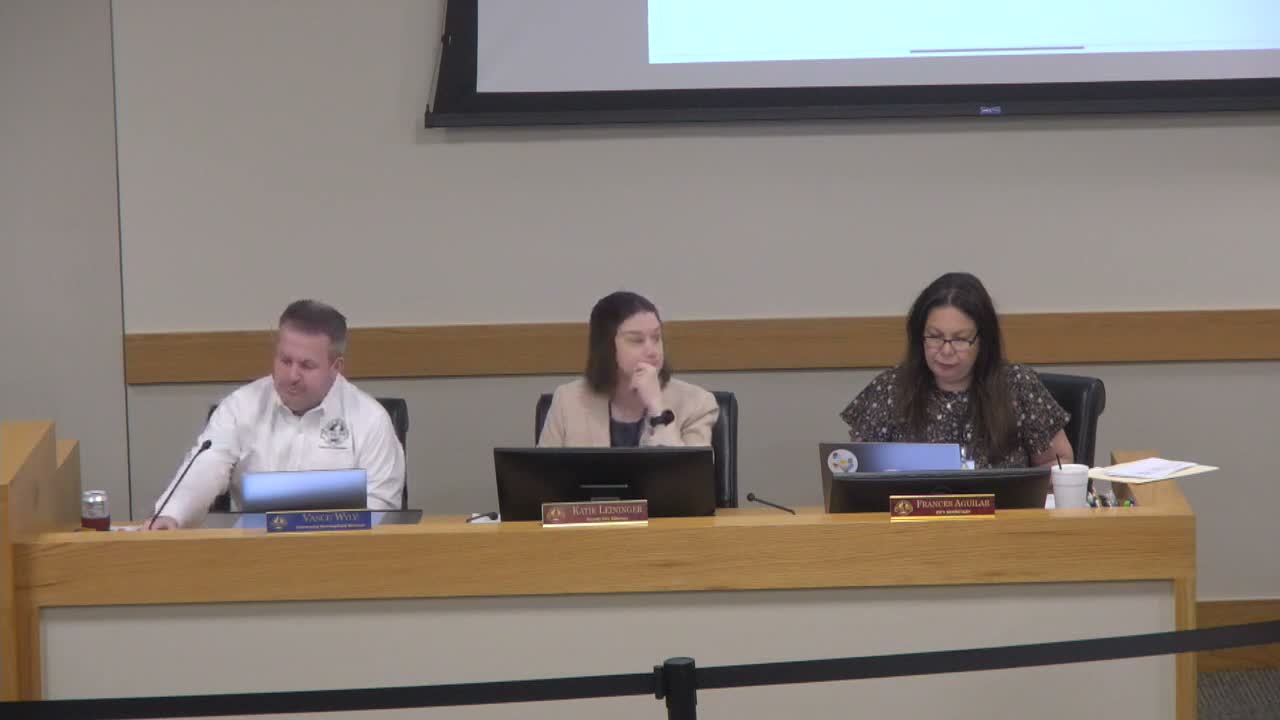
Design Workshop presented Pearland’s 50% Unified Development Code (UDC) update at a joint workshop of city council and the Planning & Zoning Commission on Feb. 10, laying out a streamlined chapter structure, consolidated zoning districts, a two‑tier planned‑development (PD) path, and proposed rules for accessory dwelling units (ADUs) and public‑space incentives.
"I'm Claire Hempel with Design Workshop, and this is our continuation of workshop number 4 from December," the consultant said, opening a high‑level review intended to give council and commissioners a shared understanding of the draft before staff moves to a 90% version. Staff and the consultant said the draft is intended to be transparent and traceable to Pearland’s 2040 comprehensive plan and that the team is aiming for adoption in late spring or early summer.
The draft would consolidate many current districts into clearer categories (for example, R1 low‑density, R2 general residential, MD medium density, MDHR medium‑high density and HDR high density) to reduce overlap, simplify administration and reflect recent development trends. On the commercial side, the draft combines overlapping categories (e.g., general commercial designations) and separates horizontal mixed use (retail centers) from vertical mixed use (retail with upper‑floor residential or office). The presenters emphasized that the maps shown at the workshop are illustrative and not a rezoning action.
Design Workshop also described procedural changes intended to make the code easier to use: a single chapter centralizing procedures and notices; process diagrams for common applications; and reorganized definitions grouped by topic. A two‑tier PD approach was proposed: a streamlined "PD light" for small, straightforward infill projects and a Tier 2 PD for larger, incentive‑driven, or complex proposals.
On ADUs, the draft defines an accessory dwelling unit as "one fixed habitable structure per lot" and requires a conditional use permit (CUP) to review compatibility on a case‑by‑case basis. The team said that approach is partly intended to preempt proposed state legislation that would permit multiple ADUs on a lot by keeping the city’s local standard to one ADU unless the state requires otherwise.
Council members and commissioners raised multiple questions. One commissioner described recurring drainage and rebuild problems in older neighborhoods and urged language that allows in‑kind rebuilds compatible with historic drainage patterns; Design Workshop said the issue was noted and will be addressed in the draft and criteria manual. Several council members asked how consolidating R1/R2/R3 into fewer categories would affect lot sizes and built expectations; staff clarified historical Pearland side‑yard rules (an aggregate 15‑foot side‑yard requirement often applied as 7.5/7.5) and said some grandfathering or careful transition language will be needed.
A sustained debate focused on public notice timing and reach. Council and commissioners discussed whether workshops should receive mailed notice earlier in the process and whether Pearland should require a citywide standard larger than the state‑mandated 200‑foot mailed radius. Staff said the city may require more than 200 feet but asked the council for direction and offered to return with cost and map examples showing a 500‑foot radius. The city’s legislative‑posting practice was also noted: signs on site, a public‑hearing website and mailed letters (staff said mailings go out 19 days before Planning & Zoning consideration).
Council directed staff to return with options on notice timing and radius, maps showing the practical effect of different distances, and cost estimates for developer‑borne mailings. Staff also committed to correct a slide typo that misordered application/workshop/notice steps and to bring refinements on PD process language and criteria.
Next steps: staff will revise the draft and circulate a 90% version that incorporates council and PNZ direction, plus follow up materials on notice options and the specific drainage concerns raised.
"I'm Claire Hempel with Design Workshop, and this is our continuation of workshop number 4 from December," the consultant said, opening a high‑level review intended to give council and commissioners a shared understanding of the draft before staff moves to a 90% version. Staff and the consultant said the draft is intended to be transparent and traceable to Pearland’s 2040 comprehensive plan and that the team is aiming for adoption in late spring or early summer.
The draft would consolidate many current districts into clearer categories (for example, R1 low‑density, R2 general residential, MD medium density, MDHR medium‑high density and HDR high density) to reduce overlap, simplify administration and reflect recent development trends. On the commercial side, the draft combines overlapping categories (e.g., general commercial designations) and separates horizontal mixed use (retail centers) from vertical mixed use (retail with upper‑floor residential or office). The presenters emphasized that the maps shown at the workshop are illustrative and not a rezoning action.
Design Workshop also described procedural changes intended to make the code easier to use: a single chapter centralizing procedures and notices; process diagrams for common applications; and reorganized definitions grouped by topic. A two‑tier PD approach was proposed: a streamlined "PD light" for small, straightforward infill projects and a Tier 2 PD for larger, incentive‑driven, or complex proposals.
On ADUs, the draft defines an accessory dwelling unit as "one fixed habitable structure per lot" and requires a conditional use permit (CUP) to review compatibility on a case‑by‑case basis. The team said that approach is partly intended to preempt proposed state legislation that would permit multiple ADUs on a lot by keeping the city’s local standard to one ADU unless the state requires otherwise.
Council members and commissioners raised multiple questions. One commissioner described recurring drainage and rebuild problems in older neighborhoods and urged language that allows in‑kind rebuilds compatible with historic drainage patterns; Design Workshop said the issue was noted and will be addressed in the draft and criteria manual. Several council members asked how consolidating R1/R2/R3 into fewer categories would affect lot sizes and built expectations; staff clarified historical Pearland side‑yard rules (an aggregate 15‑foot side‑yard requirement often applied as 7.5/7.5) and said some grandfathering or careful transition language will be needed.
A sustained debate focused on public notice timing and reach. Council and commissioners discussed whether workshops should receive mailed notice earlier in the process and whether Pearland should require a citywide standard larger than the state‑mandated 200‑foot mailed radius. Staff said the city may require more than 200 feet but asked the council for direction and offered to return with cost and map examples showing a 500‑foot radius. The city’s legislative‑posting practice was also noted: signs on site, a public‑hearing website and mailed letters (staff said mailings go out 19 days before Planning & Zoning consideration).
Council directed staff to return with options on notice timing and radius, maps showing the practical effect of different distances, and cost estimates for developer‑borne mailings. Staff also committed to correct a slide typo that misordered application/workshop/notice steps and to bring refinements on PD process language and criteria.
Next steps: staff will revise the draft and circulate a 90% version that incorporates council and PNZ direction, plus follow up materials on notice options and the specific drainage concerns raised.
View the Full Meeting & All Its Details
This article offers just a summary. Unlock complete video, transcripts, and insights as a Founder Member.
✓
Watch full, unedited meeting videos
✓
Search every word spoken in unlimited transcripts
✓
AI summaries & real-time alerts (all government levels)
✓
Permanent access to expanding government content
30-day money-back guarantee
