Votes at a glance: House approves commemoration and multiple policy bills under suspension rules
February 10, 2026 | House Office of the Clerk, House, Legislative, Federal
This article was created by AI summarizing key points discussed. AI makes mistakes, so for full details and context, please refer to the video of the full meeting. Please report any errors so we can fix them. Report an error »
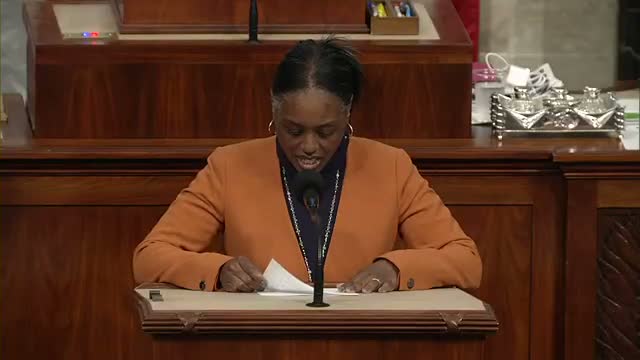
The House used suspension-of-the-rules procedure and recorded votes on Feb. 9 to approve a series of bills ranging from commemorative matters to financial and foreign-policy measures.
Key outcomes recorded on the floor:
- S.3705, Semiquincentennial Congressional Time Capsule Act: The Senate companion was called up under suspension; managers described the capsule to be sealed until July 4, 2276 and curated by bipartisan congressional and Architect of the Capitol participation. The Chair announced the suspension-rule motion carried without objection.
- HR 5616, "$2.50 for America's 250" Act: Floor managers described the bill authorizing a $2.50 commemorative coin and a Treasury study of the viability of a circulating $2.50 coin; the House passed the bill under suspension and the motion was stated as carried.
- HR 6644, Housing for the 21st Century Act: Passed by recorded vote, yays 390, nays 9. (See separate article for detailed coverage.)
- HR 3682, Financial Stability Oversight Council Improvement Act: Sponsors described requirements for FSOC to consult firms and primary regulators and to consider alternatives before entity-wide SIFI designations. The measure passed under suspension (voice/record as noted on the floor).
- HR 3390, Bringing the Discount Window into the 21st Century Act: The bill requires the Federal Reserve to review and submit improvement plans for discount-window operations (technology, operating hours, stigma); sponsors emphasized lessons from 2023 bank failures. The House passed the bill under suspension.
- HR 1531, Protect Taiwan Act: Sponsors said the bill would direct U.S. regulators to exclude certain Chinese representatives from international financial organizations if Congress determines an immediate threat to Taiwan; the recorded tally announced on the floor was yeas 395, nays 2.
- HR 31190, Brave Burma Act: Proponents argued for blocking sanctions on Myanmar state entities and actors funding the junta’s military operations; the House passed the measure by suspension vote as announced on the floor.
On suspension-rule votes, the Chair frequently announced that the rules were suspended and the bills passed; where the record shows an electronic roll-call, the transcript reports the tallies above. In several instances managers entered CBO estimates and supporting material into the record before the votes.
What members said: Floor managers on both sides framed many of the suspensions as bipartisan compromises that either commemorate the semiquincentennial or address perceived regulatory or national-security gaps. For example, Rep. Bice described S.3705 as a nonpartisan commemoration of the country's 250th anniversary, and Rep. Hill argued HR 3390 would make discount-window operations "more accessible and thereby more effective."
The motion to reconsider was routinely laid on the table following the suspension votes, per practice on the floor.
Key outcomes recorded on the floor:
- S.3705, Semiquincentennial Congressional Time Capsule Act: The Senate companion was called up under suspension; managers described the capsule to be sealed until July 4, 2276 and curated by bipartisan congressional and Architect of the Capitol participation. The Chair announced the suspension-rule motion carried without objection.
- HR 5616, "$2.50 for America's 250" Act: Floor managers described the bill authorizing a $2.50 commemorative coin and a Treasury study of the viability of a circulating $2.50 coin; the House passed the bill under suspension and the motion was stated as carried.
- HR 6644, Housing for the 21st Century Act: Passed by recorded vote, yays 390, nays 9. (See separate article for detailed coverage.)
- HR 3682, Financial Stability Oversight Council Improvement Act: Sponsors described requirements for FSOC to consult firms and primary regulators and to consider alternatives before entity-wide SIFI designations. The measure passed under suspension (voice/record as noted on the floor).
- HR 3390, Bringing the Discount Window into the 21st Century Act: The bill requires the Federal Reserve to review and submit improvement plans for discount-window operations (technology, operating hours, stigma); sponsors emphasized lessons from 2023 bank failures. The House passed the bill under suspension.
- HR 1531, Protect Taiwan Act: Sponsors said the bill would direct U.S. regulators to exclude certain Chinese representatives from international financial organizations if Congress determines an immediate threat to Taiwan; the recorded tally announced on the floor was yeas 395, nays 2.
- HR 31190, Brave Burma Act: Proponents argued for blocking sanctions on Myanmar state entities and actors funding the junta’s military operations; the House passed the measure by suspension vote as announced on the floor.
On suspension-rule votes, the Chair frequently announced that the rules were suspended and the bills passed; where the record shows an electronic roll-call, the transcript reports the tallies above. In several instances managers entered CBO estimates and supporting material into the record before the votes.
What members said: Floor managers on both sides framed many of the suspensions as bipartisan compromises that either commemorate the semiquincentennial or address perceived regulatory or national-security gaps. For example, Rep. Bice described S.3705 as a nonpartisan commemoration of the country's 250th anniversary, and Rep. Hill argued HR 3390 would make discount-window operations "more accessible and thereby more effective."
The motion to reconsider was routinely laid on the table following the suspension votes, per practice on the floor.
View the Full Meeting & All Its Details
This article offers just a summary. Unlock complete video, transcripts, and insights as a Founder Member.
✓
Watch full, unedited meeting videos
✓
Search every word spoken in unlimited transcripts
✓
AI summaries & real-time alerts (all government levels)
✓
Permanent access to expanding government content
30-day money-back guarantee
