High court hears argument that juror's voir dire created structural error in Kanza appeal
February 09, 2026 | Judicial - Supreme Court, Judicial, Massachusetts
This article was created by AI summarizing key points discussed. AI makes mistakes, so for full details and context, please refer to the video of the full meeting. Please report any errors so we can fix them. Report an error »
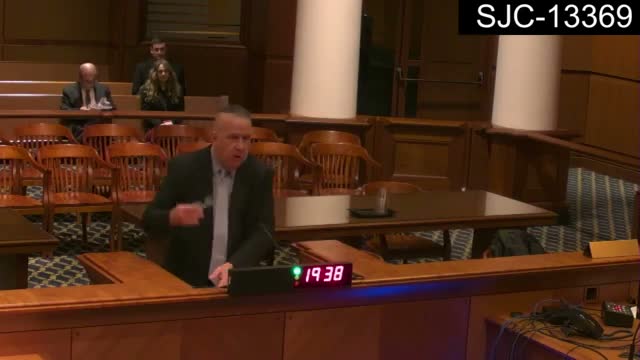
William Smith, counsel for the defendant in Commonwealth v. Franklin Kanza, told the court that an exchange with prospective juror number 24 during voir dire required strict adherence to the Williams protocol and amounted to structural error. "First of all, this is structural error," Smith said, arguing the juror's shifting answers and the judge's repeated questioning undermined the integrity of jury selection.
Smith described the voir dire exchange in which the judge asked whether the juror believed Hispanics might commit crimes more frequently; the juror first replied "maybe in certain areas, but I don't know," then later said "no," which Smith said showed the juror may have been trying to tell the judge what he thought the judge wanted to hear. Smith added that the Commonwealth had joined the defense below in opposing seating the juror, and that the irregularity affected peremptory‑challenge strategy.
The Commonwealth, represented by Travis Lynch, told the court the record shows the juror ultimately stated on the record that he could be "fair and impartial," and emphasized that juror 24 did not participate in deliberations. "Juror 24 did not participate in deliberations," Lynch said, arguing that an alternate's nonparticipation means there was no prejudice to the defendant and that any error was therefore harmless.
A central dispute before the court is whether the seating decision should be treated as a structural error — which would not require a showing of prejudice — or whether any error should be assessed for prejudice given that the juror did not deliberate. Justices pressed Smith on whether the defendant had a separate, for‑cause basis to exclude the juror (the juror also said he would have "difficulty not having sympathy for the victim"), and asked Lynch why the Commonwealth, which had joined in opposing seating below, now defends the judge's decision on appeal.
If the court treats the issue as structural error, reversal could follow without a factual showing of harm; if not, the court will evaluate whether the juror's presence affected the verdict, a question the Commonwealth contends is resolved by the fact that the juror did not deliberate. The court did not issue a decision at argument; counsel were directed to further briefing and the case remains under submission.
Smith described the voir dire exchange in which the judge asked whether the juror believed Hispanics might commit crimes more frequently; the juror first replied "maybe in certain areas, but I don't know," then later said "no," which Smith said showed the juror may have been trying to tell the judge what he thought the judge wanted to hear. Smith added that the Commonwealth had joined the defense below in opposing seating the juror, and that the irregularity affected peremptory‑challenge strategy.
The Commonwealth, represented by Travis Lynch, told the court the record shows the juror ultimately stated on the record that he could be "fair and impartial," and emphasized that juror 24 did not participate in deliberations. "Juror 24 did not participate in deliberations," Lynch said, arguing that an alternate's nonparticipation means there was no prejudice to the defendant and that any error was therefore harmless.
A central dispute before the court is whether the seating decision should be treated as a structural error — which would not require a showing of prejudice — or whether any error should be assessed for prejudice given that the juror did not deliberate. Justices pressed Smith on whether the defendant had a separate, for‑cause basis to exclude the juror (the juror also said he would have "difficulty not having sympathy for the victim"), and asked Lynch why the Commonwealth, which had joined in opposing seating below, now defends the judge's decision on appeal.
If the court treats the issue as structural error, reversal could follow without a factual showing of harm; if not, the court will evaluate whether the juror's presence affected the verdict, a question the Commonwealth contends is resolved by the fact that the juror did not deliberate. The court did not issue a decision at argument; counsel were directed to further briefing and the case remains under submission.
View the Full Meeting & All Its Details
This article offers just a summary. Unlock complete video, transcripts, and insights as a Founder Member.
✓
Watch full, unedited meeting videos
✓
Search every word spoken in unlimited transcripts
✓
AI summaries & real-time alerts (all government levels)
✓
Permanent access to expanding government content
30-day money-back guarantee
