Life Cycle Transitions founder Brandon Bernaw outlines hoarding interventions and 30-day 'home rescue' option
February 09, 2026 | Monmouth County, New Jersey
This article was created by AI summarizing key points discussed. AI makes mistakes, so for full details and context, please refer to the video of the full meeting. Please report any errors so we can fix them. Report an error »
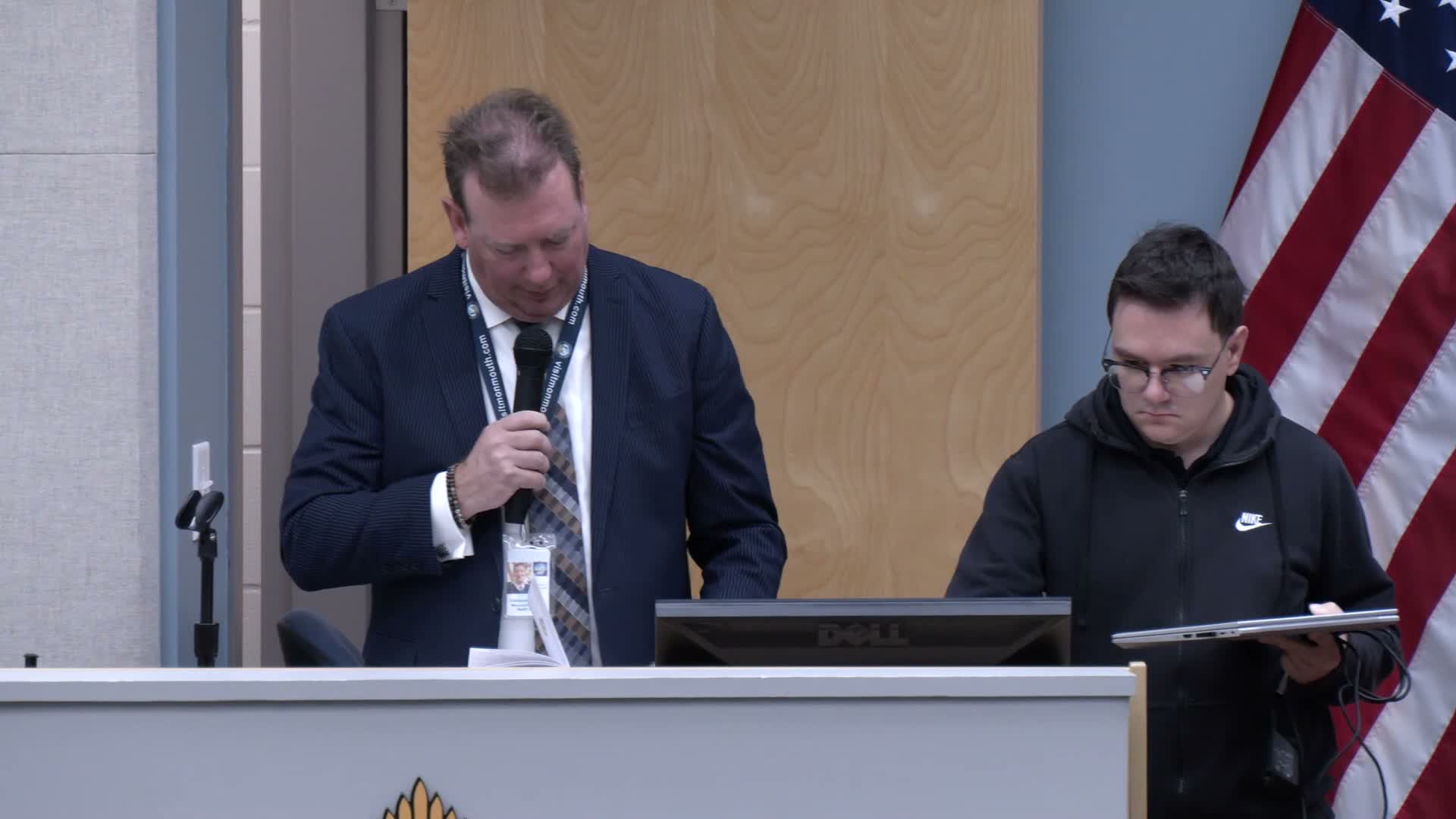
Brandon Bernaw, a life transition expert who founded Life Cycle Transitions, presented a clinical framework for understanding hoarding and described a suite of services his team offers to households and municipalities dealing with severe clutter and related safety risks.
Bernaw told the audience that hoarding frequently stems from trauma, age-related changes or brain injury and that shame and fear of mandatory reporting often stop people from seeking help. "They're ashamed. They're embarrassed," he said, describing why some people avoid emergency responders and delay care. He emphasized the physical and public-safety consequences of severe clutter, including trip and fire hazards that can endanger neighbors and first responders.
The presentation focused on a multi-disciplinary approach. Bernaw said Life Cycle Transitions begins with a "transition evaluation assessment" conducted with contracted social workers or case managers to identify immediate safety concerns, legal or ordinance risks, and the client's short- and long-term goals. "We're the first company...that instead of when we were growing the business, we didn't want technicians...to try to be case workers," he said, explaining the firm's use of behavioral specialists and social-service intake to shape interventions.
Bernaw described partnerships with health-care providers, hospitals, skilled nursing and assisted-living communities, councils on aging and inspection services, and said some municipalities have asked the company to help with local hoarding emergencies. He framed success as combining cleanup with sustained therapeutic and social supports to reduce recidivism.
On program details, Bernaw described a "home rescue program" for households facing condemnation or foreclosure: the firm evaluates the home's condition, provides a fair-market value estimate in its current state, works with moving and relocation specialists, and seeks housing alternatives for the client. "Within 30 days, we'll get them out of the home and into a new environment and move them in 30 days," Bernaw said. He added that Life Cycle Transitions can front cleanup funds in emergency cases and place clients temporarily in hotels or Airbnbs while arrangements and reimbursements are finalized.
Bernaw also referenced the scale of need and his organization's reach. He said in different parts of the presentation that the company has "transitioned more than 500 families," later stating "we started 17 years ago, and we have transitioned over 7,000 clients," and he asserted that "over 6,000,000 people are dealing with hoarding every single day." The transcript shows both the 500 and 7,000 figures; the presentation did not resolve the discrepancy.
Audience members asked about timelines and financing; Bernaw said the company offers multiple options, including monthly health plans, loans for cleanup spread over six to 12 months, and emergency fronting of funds. He urged early detection, unified care planning and family involvement as essential to long-term outcomes. The presentation concluded with a brief Q&A and Bernaw thanking the audience.
No formal votes, ordinances, or official municipal actions were recorded in the presentation.
Bernaw told the audience that hoarding frequently stems from trauma, age-related changes or brain injury and that shame and fear of mandatory reporting often stop people from seeking help. "They're ashamed. They're embarrassed," he said, describing why some people avoid emergency responders and delay care. He emphasized the physical and public-safety consequences of severe clutter, including trip and fire hazards that can endanger neighbors and first responders.
The presentation focused on a multi-disciplinary approach. Bernaw said Life Cycle Transitions begins with a "transition evaluation assessment" conducted with contracted social workers or case managers to identify immediate safety concerns, legal or ordinance risks, and the client's short- and long-term goals. "We're the first company...that instead of when we were growing the business, we didn't want technicians...to try to be case workers," he said, explaining the firm's use of behavioral specialists and social-service intake to shape interventions.
Bernaw described partnerships with health-care providers, hospitals, skilled nursing and assisted-living communities, councils on aging and inspection services, and said some municipalities have asked the company to help with local hoarding emergencies. He framed success as combining cleanup with sustained therapeutic and social supports to reduce recidivism.
On program details, Bernaw described a "home rescue program" for households facing condemnation or foreclosure: the firm evaluates the home's condition, provides a fair-market value estimate in its current state, works with moving and relocation specialists, and seeks housing alternatives for the client. "Within 30 days, we'll get them out of the home and into a new environment and move them in 30 days," Bernaw said. He added that Life Cycle Transitions can front cleanup funds in emergency cases and place clients temporarily in hotels or Airbnbs while arrangements and reimbursements are finalized.
Bernaw also referenced the scale of need and his organization's reach. He said in different parts of the presentation that the company has "transitioned more than 500 families," later stating "we started 17 years ago, and we have transitioned over 7,000 clients," and he asserted that "over 6,000,000 people are dealing with hoarding every single day." The transcript shows both the 500 and 7,000 figures; the presentation did not resolve the discrepancy.
Audience members asked about timelines and financing; Bernaw said the company offers multiple options, including monthly health plans, loans for cleanup spread over six to 12 months, and emergency fronting of funds. He urged early detection, unified care planning and family involvement as essential to long-term outcomes. The presentation concluded with a brief Q&A and Bernaw thanking the audience.
No formal votes, ordinances, or official municipal actions were recorded in the presentation.
View the Full Meeting & All Its Details
This article offers just a summary. Unlock complete video, transcripts, and insights as a Founder Member.
✓
Watch full, unedited meeting videos
✓
Search every word spoken in unlimited transcripts
✓
AI summaries & real-time alerts (all government levels)
✓
Permanent access to expanding government content
30-day money-back guarantee
