New Jersey Medicaid outlines housing supports, remediation and moving help for people with hoarding-related housing risks
February 09, 2026 | Monmouth County, New Jersey
This article was created by AI summarizing key points discussed. AI makes mistakes, so for full details and context, please refer to the video of the full meeting. Please report any errors so we can fix them. Report an error »
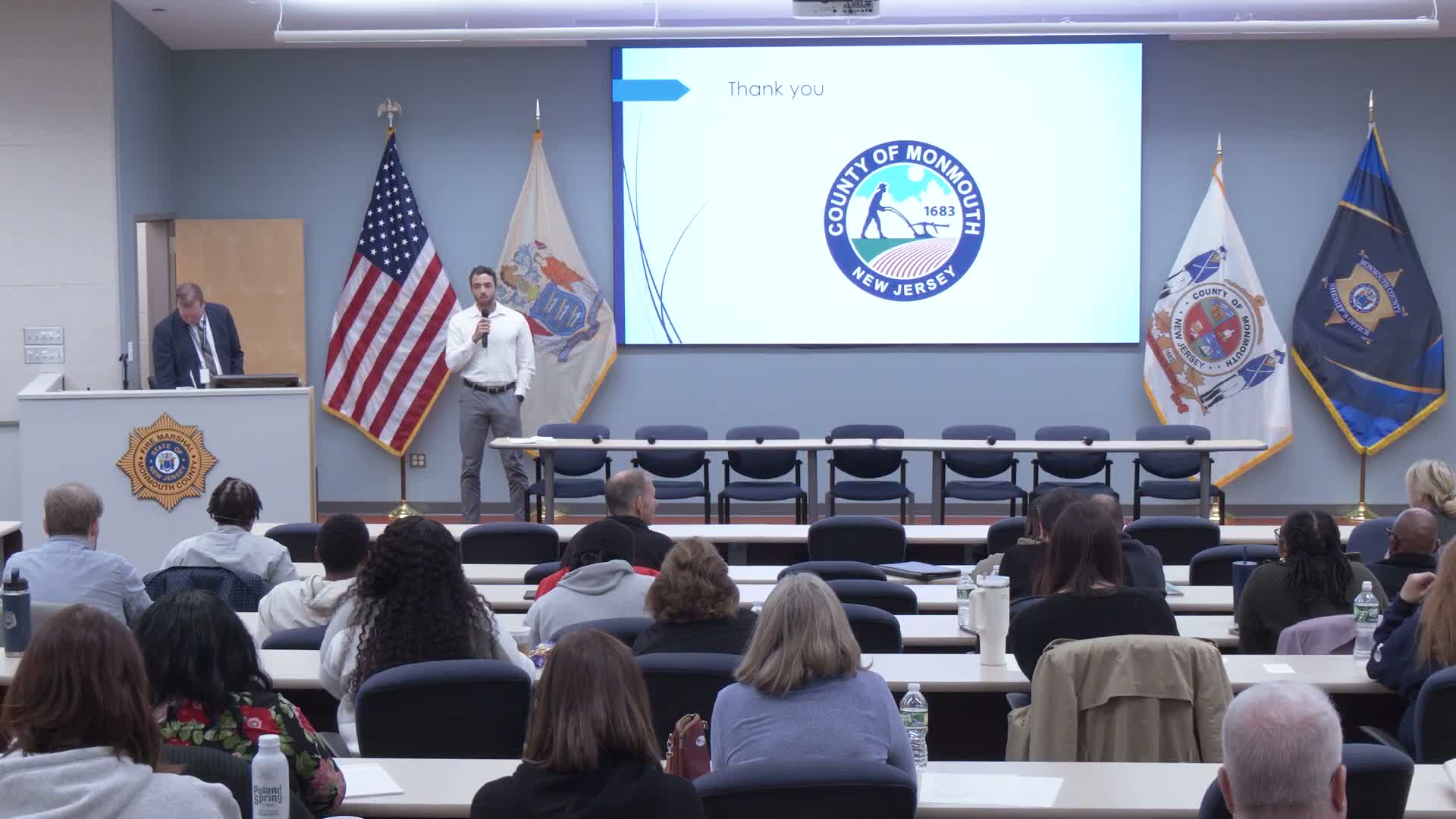
Tristan Gibson, a representative of the New Jersey Department of Human Services' Division of Medical Assistance and Health Services, outlined a new Housing Supports Program at a Monmouth County hoarding conference, saying the state will connect eligible Medicaid beneficiaries to housing services, remediation and moving assistance.
Gibson said the statewide program, launched July 1 and authorized under a Section 1115 Medicaid waiver, aims to address social determinants of health by integrating housing and behavioral health into Medicaid. "Medicaid has now gotten into the business of building affordable housing, as, through the American Rescue Plan, we received some funding to help construct some homes," Gibson said, describing a broader shift beyond traditional medical benefits.
The program provides four service buckets, Gibson said. The primary service is long-term case management: community-based organizations will help eligible members who are homeless or at risk of homelessness with tenancy supports, applications for housing programs, identification documents and other tasks to maintain housing. Gibson named local and statewide provider examples, including CARC, Affordable Housing Alliance, the Mental Health Association of New Jersey and HABCOR, and said managed care organizations (MCOs) will coordinate and authorize services.
Remediation benefits include mold and pest removal and other biohazard remediation. Gibson told the audience that cleanup services specifically "are not yet a fully authorized part of the Medicaid benefit" as of Oct. 30, 2025, but that remediation and other program components are available now and that full cleanup authorization is expected soon. "If someone qualifies for the program, and perhaps hoarding is leading, is the main reason for eviction, Medicaid could help pay for that cleanup to help remove the hoarding from the home," he said.
The program also covers moving supports, such as security deposits, moving fees and essential furnishings, to reduce financial barriers to rehousing. Gibson cautioned the program has limits: "We don't cover ongoing rent. We don't do arrears. We don't... build housing," he said, noting Medicaid can cover some start-up costs but not long-term subsidies or housing production.
Eligibility requires Medicaid enrollment, assignment to an MCO and meeting at least one clinical risk factor and one social risk factor; Gibson cited about 1,800,000 Medicaid beneficiaries in the state as context. Currently, chore and cleanup services are available to a small subset of members through the state's MLTSS long-term services program; Medicaid plans to expand access to the broader Medicaid population in coming months.
Gibson urged a "no wrong door" referral approach: outreach workers or social-service agencies can refer individuals to the member's MCO to request an assessment for housing supports. He listed the five MCOs operating in New Jersey—Horizon, Aetna, WellPoint (Amerigroup), Fidelis (WellCare) and United—and encouraged remediation contractors to enroll as Medicaid providers so they can be reimbursed for cleanup work.
Gibson emphasized that cleanup alone will not prevent recurrence of hoarding and urged enrollment in behavioral health services and long-term supports within managed care so individuals can receive the mental-health care needed to address underlying causes. He closed by inviting feedback and offering to discuss provider enrollment and reimbursement later in the conference.
Next steps: providers and outreach organizations were directed to contact members' managed care plans for referrals and authorizations; cleanup authorization for the full Medicaid population remains pending as of Oct. 30, 2025.
Gibson said the statewide program, launched July 1 and authorized under a Section 1115 Medicaid waiver, aims to address social determinants of health by integrating housing and behavioral health into Medicaid. "Medicaid has now gotten into the business of building affordable housing, as, through the American Rescue Plan, we received some funding to help construct some homes," Gibson said, describing a broader shift beyond traditional medical benefits.
The program provides four service buckets, Gibson said. The primary service is long-term case management: community-based organizations will help eligible members who are homeless or at risk of homelessness with tenancy supports, applications for housing programs, identification documents and other tasks to maintain housing. Gibson named local and statewide provider examples, including CARC, Affordable Housing Alliance, the Mental Health Association of New Jersey and HABCOR, and said managed care organizations (MCOs) will coordinate and authorize services.
Remediation benefits include mold and pest removal and other biohazard remediation. Gibson told the audience that cleanup services specifically "are not yet a fully authorized part of the Medicaid benefit" as of Oct. 30, 2025, but that remediation and other program components are available now and that full cleanup authorization is expected soon. "If someone qualifies for the program, and perhaps hoarding is leading, is the main reason for eviction, Medicaid could help pay for that cleanup to help remove the hoarding from the home," he said.
The program also covers moving supports, such as security deposits, moving fees and essential furnishings, to reduce financial barriers to rehousing. Gibson cautioned the program has limits: "We don't cover ongoing rent. We don't do arrears. We don't... build housing," he said, noting Medicaid can cover some start-up costs but not long-term subsidies or housing production.
Eligibility requires Medicaid enrollment, assignment to an MCO and meeting at least one clinical risk factor and one social risk factor; Gibson cited about 1,800,000 Medicaid beneficiaries in the state as context. Currently, chore and cleanup services are available to a small subset of members through the state's MLTSS long-term services program; Medicaid plans to expand access to the broader Medicaid population in coming months.
Gibson urged a "no wrong door" referral approach: outreach workers or social-service agencies can refer individuals to the member's MCO to request an assessment for housing supports. He listed the five MCOs operating in New Jersey—Horizon, Aetna, WellPoint (Amerigroup), Fidelis (WellCare) and United—and encouraged remediation contractors to enroll as Medicaid providers so they can be reimbursed for cleanup work.
Gibson emphasized that cleanup alone will not prevent recurrence of hoarding and urged enrollment in behavioral health services and long-term supports within managed care so individuals can receive the mental-health care needed to address underlying causes. He closed by inviting feedback and offering to discuss provider enrollment and reimbursement later in the conference.
Next steps: providers and outreach organizations were directed to contact members' managed care plans for referrals and authorizations; cleanup authorization for the full Medicaid population remains pending as of Oct. 30, 2025.
View the Full Meeting & All Its Details
This article offers just a summary. Unlock complete video, transcripts, and insights as a Founder Member.
✓
Watch full, unedited meeting videos
✓
Search every word spoken in unlimited transcripts
✓
AI summaries & real-time alerts (all government levels)
✓
Permanent access to expanding government content
30-day money-back guarantee
