Legal-aid attorney in Monmouth County: hoarding can trigger eviction steps, but landlords can’t remove tenants directly
February 09, 2026 | Monmouth County, New Jersey
This article was created by AI summarizing key points discussed. AI makes mistakes, so for full details and context, please refer to the video of the full meeting. Please report any errors so we can fix them. Report an error »
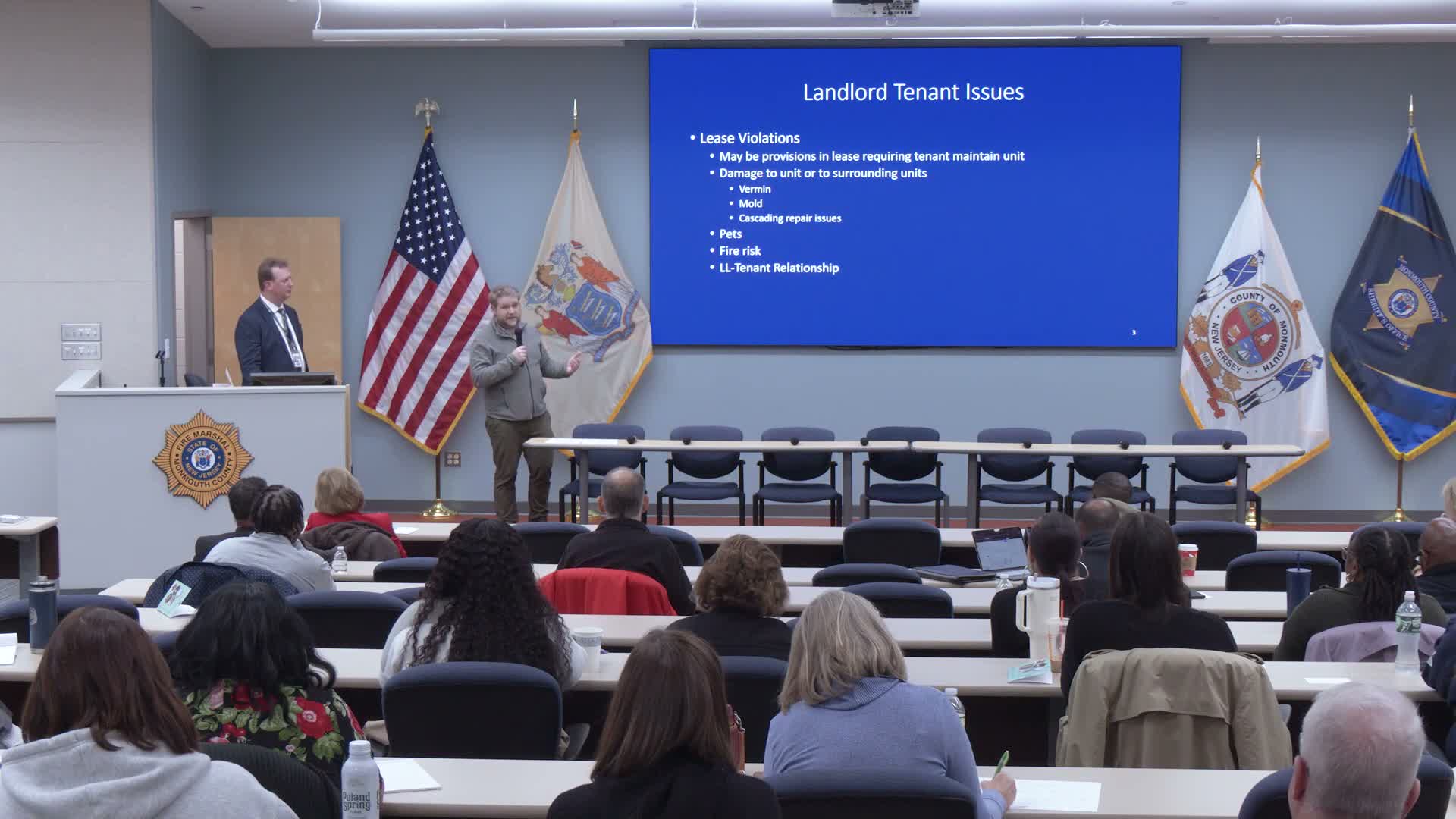
Christopher Benson, managing attorney for the Monmouth County office of South Jersey Legal Services, told attendees that hoarding is not itself illegal but often produces conditions that can form the legal basis for eviction, code enforcement or fines.
"There are no self help evictions in New Jersey under any circumstances," Benson said, explaining that landlords must follow statutory notice and court procedures before a tenant can be removed. He described the typical sequence: a landlord issues a notice alleging lease violations, code enforcement or voucher agencies may inspect and cite violations, and a landlord must file in court to pursue eviction.
Benson gave a practical timeline for tenants: once a landlord files, the court date is typically scheduled within about five weeks and, if the tenant loses, an eviction commonly follows roughly two weeks later — a commonly used 6–8 week worst-case estimate. He urged tenants and advocates to document any remediation (receipts, dated photos) because "the basic defense to an eviction related to hoarding is that you are not actually doing the behavior or you've cleaned it up."
He warned that secondary harms from hoarding — infestations, mold, water or structural damage and increased fire risk — often produce the citations or lease violations that lead to enforcement. Those conditions can also trigger inspections by housing voucher programs (commonly called Section 8), which may have independent standards and the authority to terminate participation.
Benson said municipal code-enforcement agencies can issue fines to landlords and that landlords may pass fines to tenants when the tenant is found responsible for the underlying violation. He described relocation assistance as an available remedy in some cases when tenants are forced out for safety or structural violations, but cautioned that municipal budgets and staffing often limit how quickly or consistently that assistance is provided.
He emphasized timing and early legal help: "Call us week 1, not at week 8," noting South Jersey Legal Services has more success keeping people housed when contacted early in the notice process. He encouraged anyone with a case-specific question to use SJLS intake rather than seeking legal advice during the public presentation.
The presentation focused on how hoarding-related conditions intersect with landlord–tenant law and municipal enforcement; Benson did not offer medical or treatment guidance, and he advised listeners to contact intake for individual representation or referrals.
"There are no self help evictions in New Jersey under any circumstances," Benson said, explaining that landlords must follow statutory notice and court procedures before a tenant can be removed. He described the typical sequence: a landlord issues a notice alleging lease violations, code enforcement or voucher agencies may inspect and cite violations, and a landlord must file in court to pursue eviction.
Benson gave a practical timeline for tenants: once a landlord files, the court date is typically scheduled within about five weeks and, if the tenant loses, an eviction commonly follows roughly two weeks later — a commonly used 6–8 week worst-case estimate. He urged tenants and advocates to document any remediation (receipts, dated photos) because "the basic defense to an eviction related to hoarding is that you are not actually doing the behavior or you've cleaned it up."
He warned that secondary harms from hoarding — infestations, mold, water or structural damage and increased fire risk — often produce the citations or lease violations that lead to enforcement. Those conditions can also trigger inspections by housing voucher programs (commonly called Section 8), which may have independent standards and the authority to terminate participation.
Benson said municipal code-enforcement agencies can issue fines to landlords and that landlords may pass fines to tenants when the tenant is found responsible for the underlying violation. He described relocation assistance as an available remedy in some cases when tenants are forced out for safety or structural violations, but cautioned that municipal budgets and staffing often limit how quickly or consistently that assistance is provided.
He emphasized timing and early legal help: "Call us week 1, not at week 8," noting South Jersey Legal Services has more success keeping people housed when contacted early in the notice process. He encouraged anyone with a case-specific question to use SJLS intake rather than seeking legal advice during the public presentation.
The presentation focused on how hoarding-related conditions intersect with landlord–tenant law and municipal enforcement; Benson did not offer medical or treatment guidance, and he advised listeners to contact intake for individual representation or referrals.
View the Full Meeting & All Its Details
This article offers just a summary. Unlock complete video, transcripts, and insights as a Founder Member.
✓
Watch full, unedited meeting videos
✓
Search every word spoken in unlimited transcripts
✓
AI summaries & real-time alerts (all government levels)
✓
Permanent access to expanding government content
30-day money-back guarantee
