Attorney explains limits of legal-aid on competency cases and how ejection differs from eviction
February 09, 2026 | Monmouth County, New Jersey
This article was created by AI summarizing key points discussed. AI makes mistakes, so for full details and context, please refer to the video of the full meeting. Please report any errors so we can fix them. Report an error »
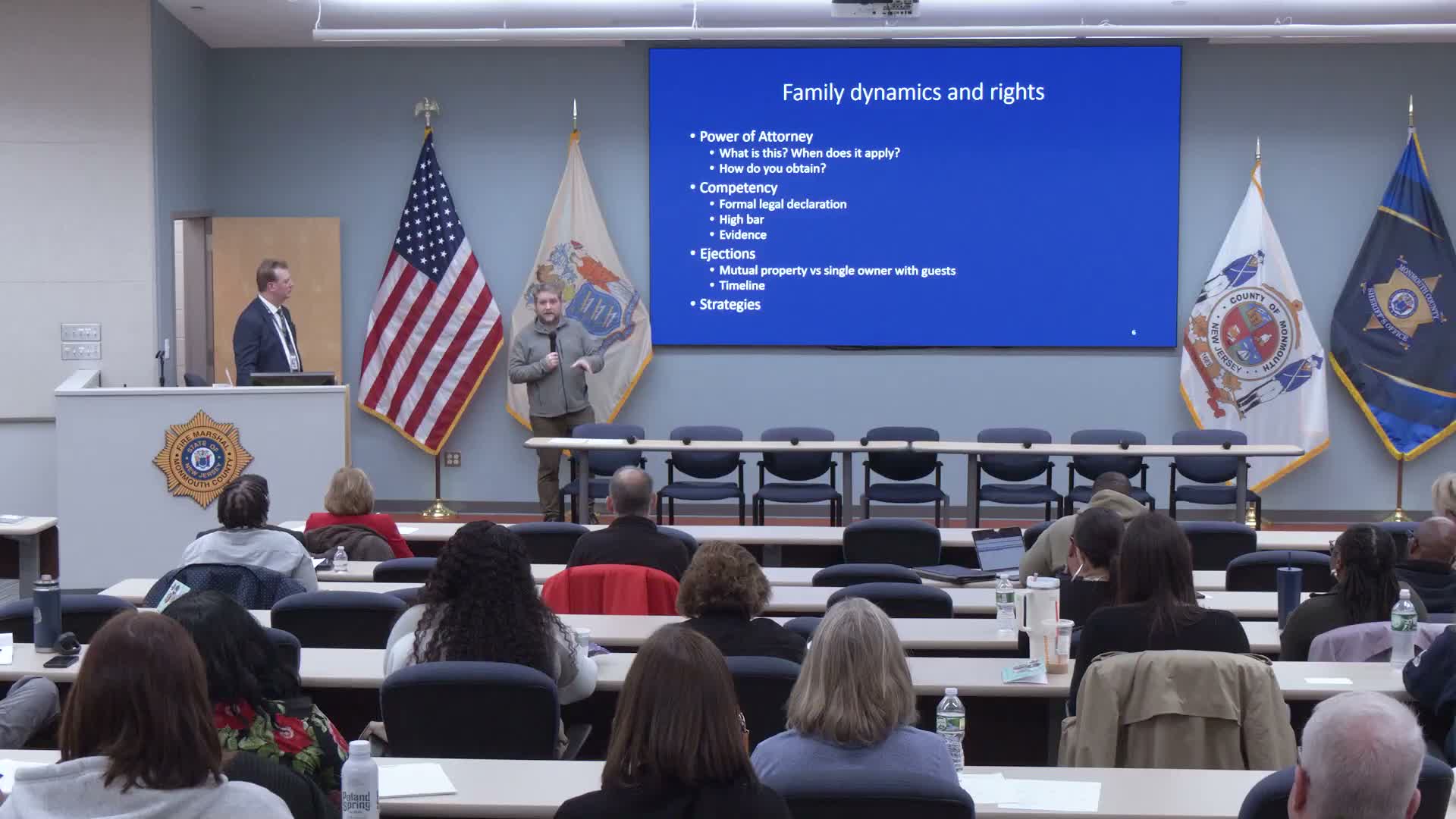
Christopher Benson, managing attorney for the Monmouth County office of South Jersey Legal Services, told listeners his agency does not handle competency, guardianship or legal decision-making disputes, but he described the legal distinctions and practical steps relevant to families and caregivers.
Benson said a power of attorney is a document executed in advance that grants decision-making authority to another person; "You cannot consent to a power of attorney once you are incompetent," he said, noting that if a person is already incapacitated, counsel must pursue court processes, which are difficult and not guaranteed.
On ejection, Benson distinguished the remedy from eviction: ejection is used when a person in a home is not a tenant or owner (for example, an adult child or guest who refuses to leave). He said ejection is a court-based process, typically taking about two months, and usually offers no legal defense if the person has no lease or ownership rights.
Benson said SJLS can help advise and sometimes mediate or negotiate settlements in family ejection scenarios but generally does not litigate guardianship or competency matters because they require different legal expertise and resources. He encouraged attendees to contact SJLS for referrals or intake for non-housing assistance where appropriate.
Benson said a power of attorney is a document executed in advance that grants decision-making authority to another person; "You cannot consent to a power of attorney once you are incompetent," he said, noting that if a person is already incapacitated, counsel must pursue court processes, which are difficult and not guaranteed.
On ejection, Benson distinguished the remedy from eviction: ejection is used when a person in a home is not a tenant or owner (for example, an adult child or guest who refuses to leave). He said ejection is a court-based process, typically taking about two months, and usually offers no legal defense if the person has no lease or ownership rights.
Benson said SJLS can help advise and sometimes mediate or negotiate settlements in family ejection scenarios but generally does not litigate guardianship or competency matters because they require different legal expertise and resources. He encouraged attendees to contact SJLS for referrals or intake for non-housing assistance where appropriate.
View the Full Meeting & All Its Details
This article offers just a summary. Unlock complete video, transcripts, and insights as a Founder Member.
✓
Watch full, unedited meeting videos
✓
Search every word spoken in unlimited transcripts
✓
AI summaries & real-time alerts (all government levels)
✓
Permanent access to expanding government content
30-day money-back guarantee
