Public-health official outlines multidisciplinary response to hoarding disorder
February 09, 2026 | Monmouth County, New Jersey
This article was created by AI summarizing key points discussed. AI makes mistakes, so for full details and context, please refer to the video of the full meeting. Please report any errors so we can fix them. Report an error »
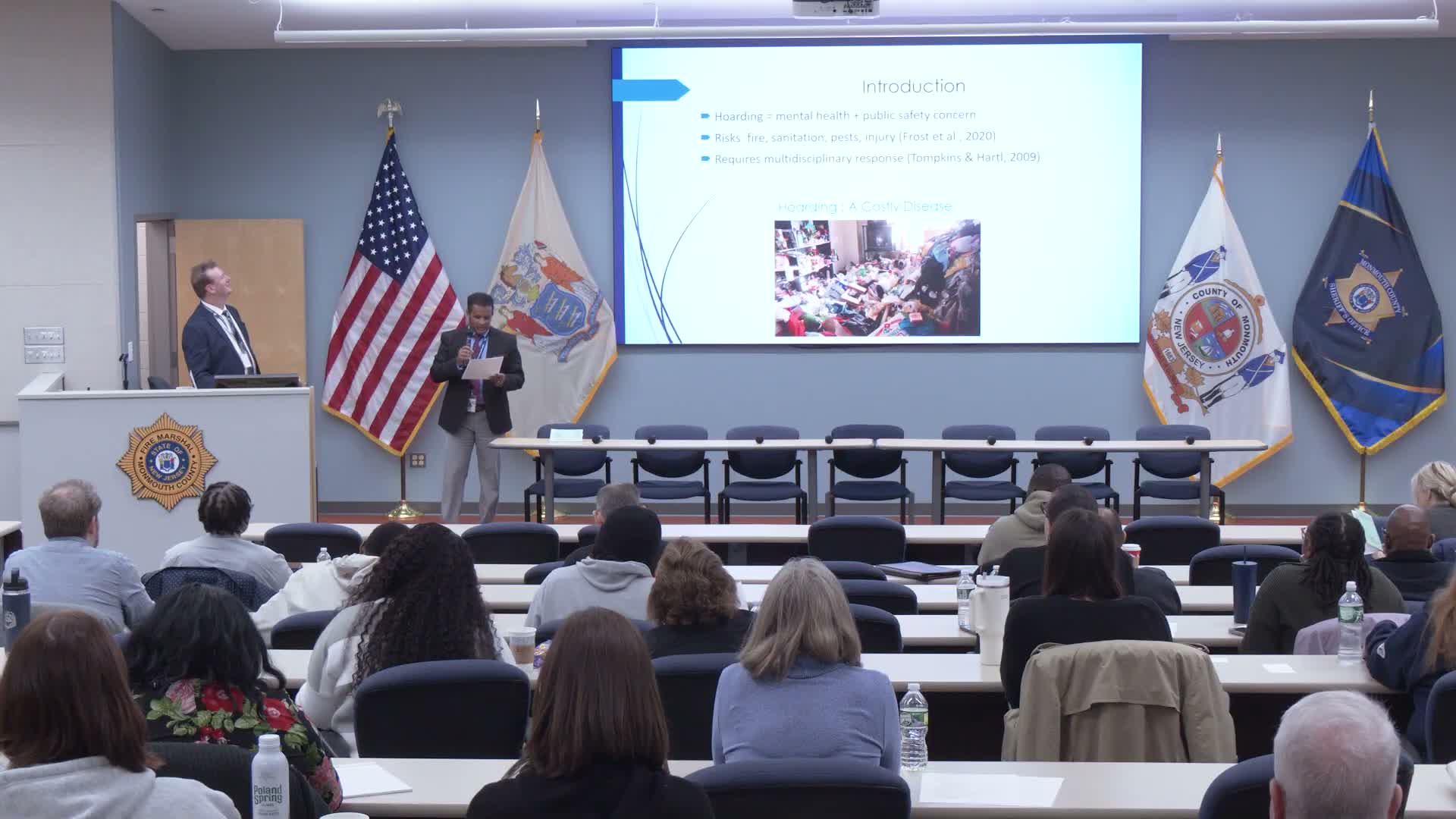
An unidentified introducer announced 'Doctor Kifli Mehta' as an assistant health officer working with local public-health leadership in Monmouth County. The next speaker, who identified himself as "Kefley," an assistant health officer for the Harris County Health Department, told the audience he would present a case investigation that illustrates how hoarding disorder poses both mental-health and public-safety risks.
"Hoarding disorder is a persistent difficult discarding possessions," Kefley said, saying the condition creates risks including fire, sanitation problems, pest infestations and structural hazards. He described a recent case involving an elderly person living alone: neighbors complained of strong odors and rodents; public-health inspection confirmed unsanitary conditions; code enforcement flagged structural concerns; and the fire department identified blocked exits.
On visiting the property, Kefley said, responders could not open the front door because trash filled the entryway to chest height. He recounted that the resident ultimately was removed and the house was demolished, using the example to emphasize the human and safety consequences of severe hoarding.
Kefley urged agencies to use a multidisciplinary approach. He recommended a case conference to share inspection findings, prioritize immediate hazards, assign responsibilities across public health, fire and code enforcement, and plan interventions that start with harm reduction. "We have to prioritize immediate hazards, then assign responsibilities," he said.
He described intervention elements that officials should consider together: make exits safe; reduce pests; provide social work, counseling and in-home supports; use enforcement or compliance orders when needed; and plan phased cleanups. As an example of a timeline, he cited a phased cleanup carried out over three months that resolved fire and sanitation hazards while keeping the resident housed with ongoing counseling.
The presenter emphasized avoiding eviction where possible: "We don't like people to leave their house or to be thrown out to the street to be homeless," he said, calling for compassion and clear communication with the person affected.
Kefley also warned about animal hoarding, saying it harms people, animals and the community and should be reported promptly to health or code-enforcement authorities.
For reporting, he advised residents and agencies in New Jersey to contact their local health department or code-enforcement office when they observe unsafe housing conditions related to hoarding. He noted that health-department notices and court-enforcement notices differ and recommended that agencies align messaging to the resident in trouble.
Kefley acknowledged the local hoarding task force and the county health department and said he had research references and contact information available. The presentation concluded with a call to check workplaces and offices for clutter and safety risks and to implement suggested strategies in local practice.
Next steps conveyed in the presentation were primarily procedural: convene interagency case conferences for identified hoarding cases, prioritize immediate hazards, and pursue phased cleanups with supports to avoid homelessness.
"Hoarding disorder is a persistent difficult discarding possessions," Kefley said, saying the condition creates risks including fire, sanitation problems, pest infestations and structural hazards. He described a recent case involving an elderly person living alone: neighbors complained of strong odors and rodents; public-health inspection confirmed unsanitary conditions; code enforcement flagged structural concerns; and the fire department identified blocked exits.
On visiting the property, Kefley said, responders could not open the front door because trash filled the entryway to chest height. He recounted that the resident ultimately was removed and the house was demolished, using the example to emphasize the human and safety consequences of severe hoarding.
Kefley urged agencies to use a multidisciplinary approach. He recommended a case conference to share inspection findings, prioritize immediate hazards, assign responsibilities across public health, fire and code enforcement, and plan interventions that start with harm reduction. "We have to prioritize immediate hazards, then assign responsibilities," he said.
He described intervention elements that officials should consider together: make exits safe; reduce pests; provide social work, counseling and in-home supports; use enforcement or compliance orders when needed; and plan phased cleanups. As an example of a timeline, he cited a phased cleanup carried out over three months that resolved fire and sanitation hazards while keeping the resident housed with ongoing counseling.
The presenter emphasized avoiding eviction where possible: "We don't like people to leave their house or to be thrown out to the street to be homeless," he said, calling for compassion and clear communication with the person affected.
Kefley also warned about animal hoarding, saying it harms people, animals and the community and should be reported promptly to health or code-enforcement authorities.
For reporting, he advised residents and agencies in New Jersey to contact their local health department or code-enforcement office when they observe unsafe housing conditions related to hoarding. He noted that health-department notices and court-enforcement notices differ and recommended that agencies align messaging to the resident in trouble.
Kefley acknowledged the local hoarding task force and the county health department and said he had research references and contact information available. The presentation concluded with a call to check workplaces and offices for clutter and safety risks and to implement suggested strategies in local practice.
Next steps conveyed in the presentation were primarily procedural: convene interagency case conferences for identified hoarding cases, prioritize immediate hazards, and pursue phased cleanups with supports to avoid homelessness.
View the Full Meeting & All Its Details
This article offers just a summary. Unlock complete video, transcripts, and insights as a Founder Member.
✓
Watch full, unedited meeting videos
✓
Search every word spoken in unlimited transcripts
✓
AI summaries & real-time alerts (all government levels)
✓
Permanent access to expanding government content
30-day money-back guarantee
