Syracuse City councilors weigh bypassing RFP to chase EV charging grant
February 10, 2026 | Syracuse City, Onondaga County, New York
This article was created by AI summarizing key points discussed. AI makes mistakes, so for full details and context, please refer to the video of the full meeting. Please report any errors so we can fix them. Report an error »
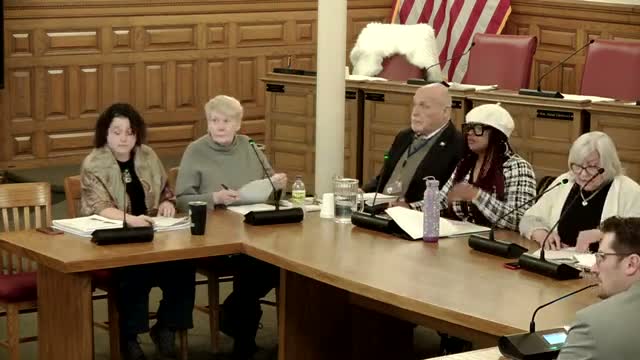
Syracuse City planning staff told the council that a state funder has an approved list of vendors and that only one firm available to do the full package would not require upfront payment from the city, creating a narrow path to secure an electric-vehicle charging grant.
Owen Kearney, City Planning and Sustainability, said the city did not run a competitive bid for the current grant opportunity and that the waiver item to bypass the normal RFP process did not make the present agenda. He asked whether the council could consider that waiver at the next meeting so the city could proceed with grant submissions.
Several councilors pushed back, stressing fairness to local businesses and the importance of open RFPs. "How do we just pick one corp, one organization and say, this is the way we go when we should be fair and equitable to everyone?" said Councilor Caldwell, urging that the city not repeatedly use waivers that exclude local vendors.
Staff replied the funder dictates which companies are eligible and that, after reviewing the approved list, they found no local vendor able to provide the full suite of services without upfront payment. A staff speaker said, "This is the only company that fits all of those options," and noted the firm has a track record of winning grants on the approved lists.
Staff estimated the opportunity could bring "over $400,000 of funding to install infrastructure" the city currently lacks and described the project as "revenue positive," but cautioned the revenue would be modest: "A very conservative estimate...the revenue could be a few $100 a month," producing at most "a couple thousand a year," according to Kearney.
Councilors also raised equity and workforce questions. One councilor asked whether minority-owned firms or local union contractors had been contacted; staff said the funder-approved list constrains eligibility but committed to help local firms qualify for future opportunities and to engage stakeholders going forward.
Multiple councilors proposed trying a rapid or limited RFP to increase local participation, but staff said the normal RFP process takes four to six months and the grant timeline was too tight. Staff said they would "hustle" business development and ACAC contacts to try to accelerate outreach and noted a waiver might still be necessary to place the items on the next agenda.
The council did not take a final vote on the waiver during the study session. Members agreed to keep items 31 and 32 on the docket while staff pursues quick outreach, explores whether a shortened procurement process is feasible, and attempts to secure permission from the funder or a waiver to meet the grant deadline.
Owen Kearney, City Planning and Sustainability, said the city did not run a competitive bid for the current grant opportunity and that the waiver item to bypass the normal RFP process did not make the present agenda. He asked whether the council could consider that waiver at the next meeting so the city could proceed with grant submissions.
Several councilors pushed back, stressing fairness to local businesses and the importance of open RFPs. "How do we just pick one corp, one organization and say, this is the way we go when we should be fair and equitable to everyone?" said Councilor Caldwell, urging that the city not repeatedly use waivers that exclude local vendors.
Staff replied the funder dictates which companies are eligible and that, after reviewing the approved list, they found no local vendor able to provide the full suite of services without upfront payment. A staff speaker said, "This is the only company that fits all of those options," and noted the firm has a track record of winning grants on the approved lists.
Staff estimated the opportunity could bring "over $400,000 of funding to install infrastructure" the city currently lacks and described the project as "revenue positive," but cautioned the revenue would be modest: "A very conservative estimate...the revenue could be a few $100 a month," producing at most "a couple thousand a year," according to Kearney.
Councilors also raised equity and workforce questions. One councilor asked whether minority-owned firms or local union contractors had been contacted; staff said the funder-approved list constrains eligibility but committed to help local firms qualify for future opportunities and to engage stakeholders going forward.
Multiple councilors proposed trying a rapid or limited RFP to increase local participation, but staff said the normal RFP process takes four to six months and the grant timeline was too tight. Staff said they would "hustle" business development and ACAC contacts to try to accelerate outreach and noted a waiver might still be necessary to place the items on the next agenda.
The council did not take a final vote on the waiver during the study session. Members agreed to keep items 31 and 32 on the docket while staff pursues quick outreach, explores whether a shortened procurement process is feasible, and attempts to secure permission from the funder or a waiver to meet the grant deadline.
Don't Miss a Word: See the Full Meeting!
Go beyond summaries. Unlock every video, transcript, and key insight with a Founder Membership.
✓
Get instant access to full meeting videos
✓
Search and clip any phrase from complete transcripts
✓
Receive AI-powered summaries & custom alerts
✓
Enjoy lifetime, unrestricted access to government data
30-day money-back guarantee
