Pewaukee Spotlight: Horizon Elementary details PLC rollout, cites early reading gains
February 09, 2026 | Pewaukee School District, School Districts, Wisconsin
This article was created by AI summarizing key points discussed. AI makes mistakes, so for full details and context, please refer to the video of the full meeting. Please report any errors so we can fix them. Report an error »
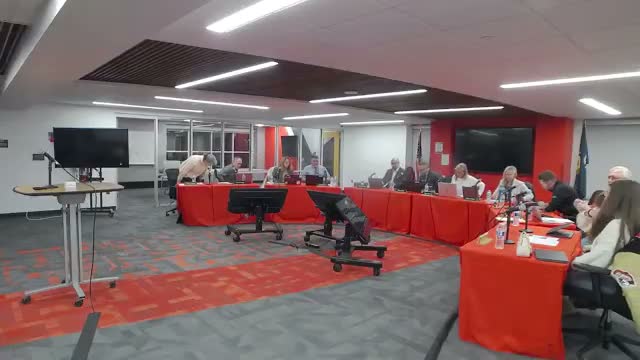
Horizon Elementary staff presented a detailed account of how Professional Learning Communities, or PLCs, are being implemented at the school and rolled out districtwide this school year. Principal Lexi Horvath and members of the Horizon team described a structured PLC that centers on four guiding questions — what students should know, how learning will be assessed, interventions when students do not meet expectations, and extensions for students who already demonstrate proficiency.
Christina Swanson, a reading interventionist who is filling in as an instructional coach, described the Analysis of Student Work (ASW) tool the school uses to link standards to assessment and visualize data to inform instruction. "These are not my students. These are our students," Swanson said, explaining how PLCs shift responsibility from individual classrooms to a collective grade‑level approach. She and other presenters described specific interventions: a modified Orton‑Gillingham approach for multisyllabic decoding and fluency groups targeted to students in lower percentiles, plus reciprocal‑teaching strategies to boost comprehension for proficient readers.
Third‑grade teachers presented winter oral reading fluency data showing movement of student subgroups up at least one percentile band after targeted interventions and PLC‑driven practices. Bryn Jakabowski and other coaches explained that the BLT (Building Leadership Team) introduces protocols and tools monthly to build PLC capacity and that coaching focuses on collaborative practices, data interpretation and planning next instructional steps.
Board members asked how the district defines "equity" within PLCs; presenters clarified they meant equitable teacher voice and consistent access to instructional practices rather than enforced uniformity of outcomes. Administrators said PLCs were piloted last year at several buildings and expanded districtwide this year as a strategic step to increase instructional consistency and earlier intervention.
Officials described outcomes beyond reading gains: reductions in heavy intervention caseloads for pull‑out specialists because classroom teachers are intervening sooner and a broader set of tiered supports available in classrooms. The presentation closed with staff inviting board questions and emphasizing continued monitoring of spring assessment data to evaluate the longer‑term impact of PLC work.
Christina Swanson, a reading interventionist who is filling in as an instructional coach, described the Analysis of Student Work (ASW) tool the school uses to link standards to assessment and visualize data to inform instruction. "These are not my students. These are our students," Swanson said, explaining how PLCs shift responsibility from individual classrooms to a collective grade‑level approach. She and other presenters described specific interventions: a modified Orton‑Gillingham approach for multisyllabic decoding and fluency groups targeted to students in lower percentiles, plus reciprocal‑teaching strategies to boost comprehension for proficient readers.
Third‑grade teachers presented winter oral reading fluency data showing movement of student subgroups up at least one percentile band after targeted interventions and PLC‑driven practices. Bryn Jakabowski and other coaches explained that the BLT (Building Leadership Team) introduces protocols and tools monthly to build PLC capacity and that coaching focuses on collaborative practices, data interpretation and planning next instructional steps.
Board members asked how the district defines "equity" within PLCs; presenters clarified they meant equitable teacher voice and consistent access to instructional practices rather than enforced uniformity of outcomes. Administrators said PLCs were piloted last year at several buildings and expanded districtwide this year as a strategic step to increase instructional consistency and earlier intervention.
Officials described outcomes beyond reading gains: reductions in heavy intervention caseloads for pull‑out specialists because classroom teachers are intervening sooner and a broader set of tiered supports available in classrooms. The presentation closed with staff inviting board questions and emphasizing continued monitoring of spring assessment data to evaluate the longer‑term impact of PLC work.
View the Full Meeting & All Its Details
This article offers just a summary. Unlock complete video, transcripts, and insights as a Founder Member.
✓
Watch full, unedited meeting videos
✓
Search every word spoken in unlimited transcripts
✓
AI summaries & real-time alerts (all government levels)
✓
Permanent access to expanding government content
30-day money-back guarantee
