Umatilla County officials say legislative tour highlighted strain on roads, urge preservation of 50-30-20 gas-tax split
October 31, 2024 | Umatilla County, Oregon
This article was created by AI summarizing key points discussed. AI makes mistakes, so for full details and context, please refer to the video of the full meeting. Please report any errors so we can fix them. Report an error »
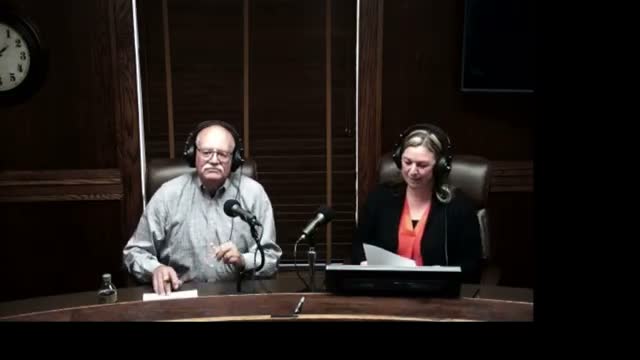
Dan (role not specified) said a recent visit by the Joint Legislative Task Force on Transportation to Umatilla County was “a great success,” and used the trip to press the urgency of preserving funding for local roads.
The visit included a three‑hour bus tour and stakeholder meetings with state and regional officials, Dan said, including ODOT Director Chris Strickler, regional staff Kim Patterson and Rich Lanney, Rep. MacLean and Sen. Boakwist, and local officials such as Mark Morgan of Hermiston. The tour visited industrial corridors on Highway 395, the Stanfield urban growth boundary and sites of flood damage at Echo.
Why it matters: County leaders said the state’s 50‑30‑20 distribution of the gas tax (50% to ODOT, 30% to counties, 20% to cities) underpins local maintenance and safety work. “People don’t understand how critical transportation is, to commerce, to safety,” Dan said. He also stated that “property taxes cannot be used to pay for roads,” describing that restriction as a significant funding constraint for counties.
Local scale and costs: Dan provided county figures to illustrate needs: about 1,700 miles of county roads, roughly 200 miles paved, about 280 bridges and approximately 3,800 miles of private roads. He said many county roads remain gravel and that the cost of construction and maintenance has risen sharply since 2017 — he described the increase as “over 300%.” Those figures were offered as approximate representations of county conditions.
Declining revenue and options: Both hosts discussed declining highway‑fund revenue as vehicles become more fuel‑efficient and electric. Dan said that without revenue indexing and new sources, the highway fund will shrink while maintenance needs do not. Revenue ideas discussed at the stakeholder meetings and on the task force tour included a road‑user charge (RUC, a per‑mile fee), higher vehicle registration fees with opt‑out options, and surcharges on package deliveries by carriers such as Amazon or UPS. Dan cautioned that any per‑mile or user fee must be designed to avoid disproportionately burdening rural drivers, who tend to drive longer distances and use less fuel‑efficient vehicles.
Safety and commerce impacts: Dan described local examples where reduced bridge load ratings slow commerce and raise costs for agricultural shipments. He also cited flood damage seen at the Echo crossing as evidence legislators need to see conditions beyond I‑84 to understand maintenance priorities.
Next steps: Dan said the task force will continue hearings (with three stops remaining in the statewide tour) and expects transportation funding to be a focus in the 2025 legislative session in Salem. He urged residents and local leaders to stay engaged in those conversations.
Authorities: The hosts referenced the 50‑30‑20 allocation as a formula developed in coordination with the League of Oregon Cities and the Association of Oregon Counties in 2017; they also cited ongoing work by the Joint Legislative Task Force on Transportation and ODOT.
The visit included a three‑hour bus tour and stakeholder meetings with state and regional officials, Dan said, including ODOT Director Chris Strickler, regional staff Kim Patterson and Rich Lanney, Rep. MacLean and Sen. Boakwist, and local officials such as Mark Morgan of Hermiston. The tour visited industrial corridors on Highway 395, the Stanfield urban growth boundary and sites of flood damage at Echo.
Why it matters: County leaders said the state’s 50‑30‑20 distribution of the gas tax (50% to ODOT, 30% to counties, 20% to cities) underpins local maintenance and safety work. “People don’t understand how critical transportation is, to commerce, to safety,” Dan said. He also stated that “property taxes cannot be used to pay for roads,” describing that restriction as a significant funding constraint for counties.
Local scale and costs: Dan provided county figures to illustrate needs: about 1,700 miles of county roads, roughly 200 miles paved, about 280 bridges and approximately 3,800 miles of private roads. He said many county roads remain gravel and that the cost of construction and maintenance has risen sharply since 2017 — he described the increase as “over 300%.” Those figures were offered as approximate representations of county conditions.
Declining revenue and options: Both hosts discussed declining highway‑fund revenue as vehicles become more fuel‑efficient and electric. Dan said that without revenue indexing and new sources, the highway fund will shrink while maintenance needs do not. Revenue ideas discussed at the stakeholder meetings and on the task force tour included a road‑user charge (RUC, a per‑mile fee), higher vehicle registration fees with opt‑out options, and surcharges on package deliveries by carriers such as Amazon or UPS. Dan cautioned that any per‑mile or user fee must be designed to avoid disproportionately burdening rural drivers, who tend to drive longer distances and use less fuel‑efficient vehicles.
Safety and commerce impacts: Dan described local examples where reduced bridge load ratings slow commerce and raise costs for agricultural shipments. He also cited flood damage seen at the Echo crossing as evidence legislators need to see conditions beyond I‑84 to understand maintenance priorities.
Next steps: Dan said the task force will continue hearings (with three stops remaining in the statewide tour) and expects transportation funding to be a focus in the 2025 legislative session in Salem. He urged residents and local leaders to stay engaged in those conversations.
Authorities: The hosts referenced the 50‑30‑20 allocation as a formula developed in coordination with the League of Oregon Cities and the Association of Oregon Counties in 2017; they also cited ongoing work by the Joint Legislative Task Force on Transportation and ODOT.
View the Full Meeting & All Its Details
This article offers just a summary. Unlock complete video, transcripts, and insights as a Founder Member.
✓
Watch full, unedited meeting videos
✓
Search every word spoken in unlimited transcripts
✓
AI summaries & real-time alerts (all government levels)
✓
Permanent access to expanding government content
30-day money-back guarantee
