Principals report crisis intervention work at grammar schools; committee discusses adding risk coordinators
February 10, 2026 | Methuen Public Schools, School Boards, Massachusetts
This article was created by AI summarizing key points discussed. AI makes mistakes, so for full details and context, please refer to the video of the full meeting. Please report any errors so we can fix them. Report an error »
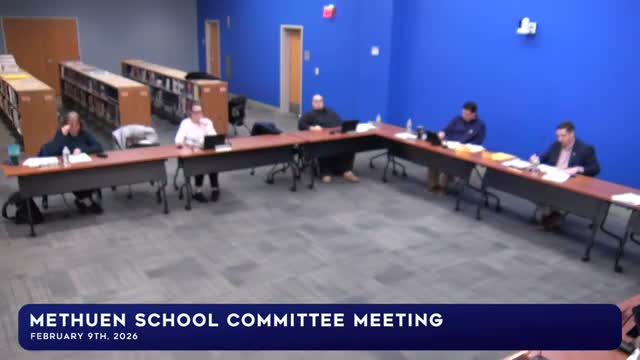
Supervising principal Katie Priyetti told the school committee that the crisis interventionist position at her building is primarily reactive — focused on de‑escalation and immediate behavior response — while other buildings use risk coordinators for relationship building and prevention.
"So that's that's how crisis intervention works at my school," Priyetti said, describing a role meant to get students regulated and back to class. She and members noted the district documented about 24 crisis calls and corresponding de‑escalation interventions at her building during the reporting period; Priyetti said some schools with risk coordinators have seen reductions in repeat behaviors due to preventive programming such as early-morning clinics and relationship-building activities.
Committee members sought clarity on qualifications and parent communication. Priyetti said crisis responders were not certified teachers but had therapeutic mentoring experience and worked in concert with certified staff, including the BCBA and administrators, and that direct parent-facing communications are handled by certified staff.
Several members urged the administration to consider expanding risk coordinator coverage to other buildings where budget permits and to supply quantifiable data for budget and staffing decisions during the upcoming budget cycle.
"So that's that's how crisis intervention works at my school," Priyetti said, describing a role meant to get students regulated and back to class. She and members noted the district documented about 24 crisis calls and corresponding de‑escalation interventions at her building during the reporting period; Priyetti said some schools with risk coordinators have seen reductions in repeat behaviors due to preventive programming such as early-morning clinics and relationship-building activities.
Committee members sought clarity on qualifications and parent communication. Priyetti said crisis responders were not certified teachers but had therapeutic mentoring experience and worked in concert with certified staff, including the BCBA and administrators, and that direct parent-facing communications are handled by certified staff.
Several members urged the administration to consider expanding risk coordinator coverage to other buildings where budget permits and to supply quantifiable data for budget and staffing decisions during the upcoming budget cycle.
Don't Miss a Word: See the Full Meeting!
Go beyond summaries. Unlock every video, transcript, and key insight with a Founder Membership.
✓
Get instant access to full meeting videos
✓
Search and clip any phrase from complete transcripts
✓
Receive AI-powered summaries & custom alerts
✓
Enjoy lifetime, unrestricted access to government data
30-day money-back guarantee
