Steering committee finalizes Swannanoa vision tweaks, set maps and an engagement timeline
February 10, 2026 | Buncombe County, North Carolina
This article was created by AI summarizing key points discussed. AI makes mistakes, so for full details and context, please refer to the video of the full meeting. Please report any errors so we can fix them. Report an error »
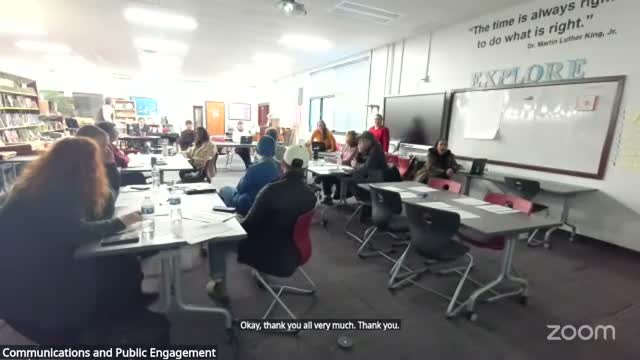
The Swannanoa steering committee spent the meeting finalizing wording for the small‑area plan’s vision statement, discussing boundary definitions and reviewing next steps for public engagement and implementation.
Staff said 304 people responded to a vision poll: roughly 77% of respondents did not request changes to the vision statement and about 83–84% agreed with the proposed study‑area boundaries. Based on community feedback and steering‑committee discussion, members agreed to small edits—retaining language to honor local heritage and character, substituting or clarifying phrases around local roots (debate over phrasing such as “working‑class” versus “Milltown roots”), and keeping an explicit reference to “affordable homes” (one participant suggested the alternative phrasing “homes for everyone”). The committee also added a reference to waterways at the end of the statement.
A substantive portion of the meeting covered the plan’s boundary map. Staff described the orange highlight area as the county’s recommended focus for concentrated growth, utilities and transit service and the green resilience area as including steep slopes and landslide hazard areas that staff expect to treat with greater conservation and protective policies. Participants asked about the Bee Tree area, Sunset and Riddle Road; staff said some portions are included in growth areas while steeper segments have been pulled out of growth boundaries for protection and that detailed future‑land‑use mapping will address flood and slope overlays.
On process and timing, staff reiterated that adoption of this small‑area plan would not automatically change zoning; zoning changes require separate rezoning and public‑hearing steps at the planning board and Board of Commissioners. Staff said next public engagement steps include a maps‑focused work session on Feb. 18, a first public viewing window in mid‑April to early May, public review of a draft plan in late June–early July, and a target of August for plan adoption with at least two public hearings during the adoption process.
Steering members raised anti‑displacement, workforce and commercial‑space affordability as priorities for the policy and actions phase; staff noted anti‑displacement goals are already in the county’s comprehensive plan and that the Swannanoa plan will present specific policy and action recommendations to address them. Members were asked to review draft policies and actions before the March meeting and to bring ideas for outreach and engagement between April and May.
The facilitator closed by assigning homework (review draft policies/actions, propose three engagement ideas) and confirming logistics for the Feb. 18 session.
Staff said 304 people responded to a vision poll: roughly 77% of respondents did not request changes to the vision statement and about 83–84% agreed with the proposed study‑area boundaries. Based on community feedback and steering‑committee discussion, members agreed to small edits—retaining language to honor local heritage and character, substituting or clarifying phrases around local roots (debate over phrasing such as “working‑class” versus “Milltown roots”), and keeping an explicit reference to “affordable homes” (one participant suggested the alternative phrasing “homes for everyone”). The committee also added a reference to waterways at the end of the statement.
A substantive portion of the meeting covered the plan’s boundary map. Staff described the orange highlight area as the county’s recommended focus for concentrated growth, utilities and transit service and the green resilience area as including steep slopes and landslide hazard areas that staff expect to treat with greater conservation and protective policies. Participants asked about the Bee Tree area, Sunset and Riddle Road; staff said some portions are included in growth areas while steeper segments have been pulled out of growth boundaries for protection and that detailed future‑land‑use mapping will address flood and slope overlays.
On process and timing, staff reiterated that adoption of this small‑area plan would not automatically change zoning; zoning changes require separate rezoning and public‑hearing steps at the planning board and Board of Commissioners. Staff said next public engagement steps include a maps‑focused work session on Feb. 18, a first public viewing window in mid‑April to early May, public review of a draft plan in late June–early July, and a target of August for plan adoption with at least two public hearings during the adoption process.
Steering members raised anti‑displacement, workforce and commercial‑space affordability as priorities for the policy and actions phase; staff noted anti‑displacement goals are already in the county’s comprehensive plan and that the Swannanoa plan will present specific policy and action recommendations to address them. Members were asked to review draft policies and actions before the March meeting and to bring ideas for outreach and engagement between April and May.
The facilitator closed by assigning homework (review draft policies/actions, propose three engagement ideas) and confirming logistics for the Feb. 18 session.
Don't Miss a Word: See the Full Meeting!
Go beyond summaries. Unlock every video, transcript, and key insight with a Founder Membership.
✓
Get instant access to full meeting videos
✓
Search and clip any phrase from complete transcripts
✓
Receive AI-powered summaries & custom alerts
✓
Enjoy lifetime, unrestricted access to government data
30-day money-back guarantee
