Conference committee debates scope and wording of S 23 synthetic-media disclaimer
February 05, 2026 | Government Operations, SENATE, Committees, Legislative , Vermont
This article was created by AI summarizing key points discussed. AI makes mistakes, so for full details and context, please refer to the video of the full meeting. Please report any errors so we can fix them. Report an error »
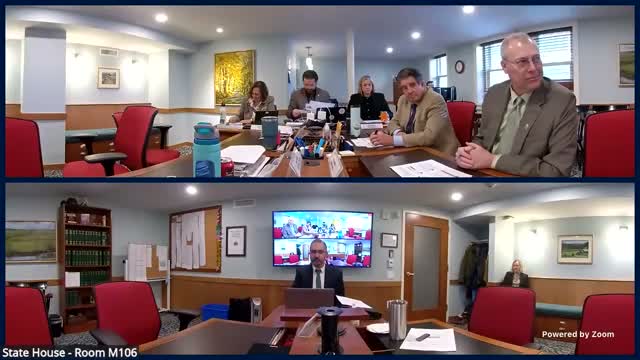
Speaker 3, presenting draft 1.1 of the Committee of the Conference report, proposed a revised disclaimer for S 23 that would say: "This media has been manipulated or generated by digital technology and depicts speech or conduct that did not occur." Speaker 3 said the change from the phrase "artificial intelligence technology" to "digital technology" better matches the bill's definition of synthetic media and would capture deceptive edits made with non-AI tools such as Photoshop.
The committee discussed whether to make the law apply only to a "political candidate" (the House approach) or to any "individual" (the Senate approach). Speaker 3 outlined a two-part structure: subdivision (a) would cover synthetic media that "appears to a reasonable person to be a realistic representation of a political candidate" that harms the candidate's reputation; subdivision (b) would reach synthetic media that "attempts to unduly influence the outcome of an election" by providing materially false information to voters, such as incorrect polling places or election dates.
Speaker 5 raised concerns that the term "individual" in subdivision (b) could be so broad it would sweep in trivial or private misrepresentations and could invite constitutional challenge. "I'm really hung up on the free speech thing," Speaker 5 said, arguing that a narrower formulation limited to political candidates might be more legally defensible and reduce the risk of costly litigation.
Other members explored potential middle-ground language. Speaker 4 suggested terms such as "prominent individual" or "public-facing individual" to narrow scope to people with public influence, but Speaker 3 cautioned such labels could be subjective and difficult to apply consistently across different audiences.
Counsel noted that courts might sever an unconstitutional subdivision while leaving other parts intact, and that several states use differing formulations; an example from a California case was cited as part of the legal-risk discussion. Committee members weighed the policy goal of protecting election integrity against the risk of First Amendment challenges and the practical issue that a longer, more explicit disclaimer could be cumbersome in spoken ads or phone calls.
No formal vote was taken. Speaker 2 requested five minutes to confer with a Senate colleague, and Speaker 1 recessed the panel for five minutes to allow discussion to continue after that short break.
The committee discussed whether to make the law apply only to a "political candidate" (the House approach) or to any "individual" (the Senate approach). Speaker 3 outlined a two-part structure: subdivision (a) would cover synthetic media that "appears to a reasonable person to be a realistic representation of a political candidate" that harms the candidate's reputation; subdivision (b) would reach synthetic media that "attempts to unduly influence the outcome of an election" by providing materially false information to voters, such as incorrect polling places or election dates.
Speaker 5 raised concerns that the term "individual" in subdivision (b) could be so broad it would sweep in trivial or private misrepresentations and could invite constitutional challenge. "I'm really hung up on the free speech thing," Speaker 5 said, arguing that a narrower formulation limited to political candidates might be more legally defensible and reduce the risk of costly litigation.
Other members explored potential middle-ground language. Speaker 4 suggested terms such as "prominent individual" or "public-facing individual" to narrow scope to people with public influence, but Speaker 3 cautioned such labels could be subjective and difficult to apply consistently across different audiences.
Counsel noted that courts might sever an unconstitutional subdivision while leaving other parts intact, and that several states use differing formulations; an example from a California case was cited as part of the legal-risk discussion. Committee members weighed the policy goal of protecting election integrity against the risk of First Amendment challenges and the practical issue that a longer, more explicit disclaimer could be cumbersome in spoken ads or phone calls.
No formal vote was taken. Speaker 2 requested five minutes to confer with a Senate colleague, and Speaker 1 recessed the panel for five minutes to allow discussion to continue after that short break.
View the Full Meeting & All Its Details
This article offers just a summary. Unlock complete video, transcripts, and insights as a Founder Member.
✓
Watch full, unedited meeting videos
✓
Search every word spoken in unlimited transcripts
✓
AI summaries & real-time alerts (all government levels)
✓
Permanent access to expanding government content
30-day money-back guarantee
