Council directs staff to fund a temporary code-enforcement program and return options
February 07, 2026 | South Weber City Council, South Weber , Davis County, Utah
This article was created by AI summarizing key points discussed. AI makes mistakes, so for full details and context, please refer to the video of the full meeting. Please report any errors so we can fix them. Report an error »
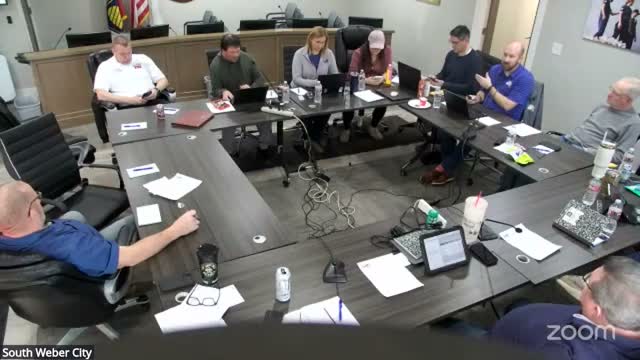
Council members spent an hour weighing approaches to code enforcement, from automated complaint tracking and seasonal crews to hiring a part-time code officer. Several members said the city's immediate problem is more perception than systemic noncompliance but acknowledged recurring, localized issues—overhanging trees, parking, safety at bus stops—that justify action.
After discussing options (contract service vs. part-time hire vs. using public-works crews), the council moved to budget $30,000 and directed staff to return with a recommendation that outlines: (1) whether to contract services or hire part-time personnel, (2) expected operational costs (vehicle, fuel, supplies), and (3) an automation/tracking plan to ensure complaints are logged and followed through.
The motion included direction that staff prioritize solutions that create clear accountability and measurable follow-up. Council emphasized that any program should avoid turning routine neighbor disputes into overbearing enforcement, while still addressing public-safety or maintenance issues that cost the city money (for example, repeated vehicle or curb damage during storms). Staff will return with options and cost estimates for committee review before finalizing an FY27 appropriation.
Ending: staff will draft implementation options (contract vs. part-time vs. seasonal), associated costs, and an automated tracking plan and return to committee/council for final approval.
After discussing options (contract service vs. part-time hire vs. using public-works crews), the council moved to budget $30,000 and directed staff to return with a recommendation that outlines: (1) whether to contract services or hire part-time personnel, (2) expected operational costs (vehicle, fuel, supplies), and (3) an automation/tracking plan to ensure complaints are logged and followed through.
The motion included direction that staff prioritize solutions that create clear accountability and measurable follow-up. Council emphasized that any program should avoid turning routine neighbor disputes into overbearing enforcement, while still addressing public-safety or maintenance issues that cost the city money (for example, repeated vehicle or curb damage during storms). Staff will return with options and cost estimates for committee review before finalizing an FY27 appropriation.
Ending: staff will draft implementation options (contract vs. part-time vs. seasonal), associated costs, and an automated tracking plan and return to committee/council for final approval.
Don't Miss a Word: See the Full Meeting!
Go beyond summaries. Unlock every video, transcript, and key insight with a Founder Membership.
✓
Get instant access to full meeting videos
✓
Search and clip any phrase from complete transcripts
✓
Receive AI-powered summaries & custom alerts
✓
Enjoy lifetime, unrestricted access to government data
30-day money-back guarantee
