Commonwealth Institute urges bigger state share for K–12 and childcare funding
January 19, 2026 | 2026 Legislature VA, Virginia
This article was created by AI summarizing key points discussed. AI makes mistakes, so for full details and context, please refer to the video of the full meeting. Please report any errors so we can fix them. Report an error »
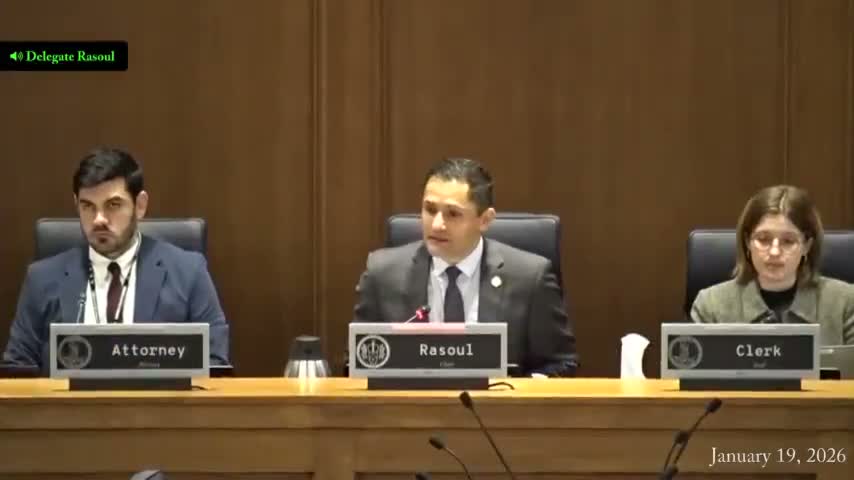
Ashley c Kenneth, president and CEO of the Commonwealth Institute, told the House Education Committee on Feb. 9, 2026, that Virginia has made progress restoring education funding but continues to fall short of peer states on adequacy and equity.
Kenneth summarized recent policy moves — including funding steps in 2023–24 and specific changes recommended by JLARC — and cited an Education Law Center analysis that uses combined state and local data from the 2022–23 school year. "That analysis shows Virginia provides less than the national average in terms of funding levels and less to high-need than low-need schools," Kenneth said, and the report assigned Virginia a "D" for adequacy and a "C" for funding equity.
Kenneth highlighted JLARC midpoint recommendations for additional funding above baseline student allocations: approximately 35% for students from low-income families, 40% for English learners and 105% for students with disabilities. TCI’s analysis finds Virginia’s current add-ons at about 22% for low-income students, 24% for English learners and 43% for students with disabilities, indicating gaps relative to the JLARC midpoints.
Kenneth said TCI will provide technical support and district-by-district estimates for proposed budget amendments and noted TCI’s plan to publish a side-by-side comparison of House and Senate committee budgets ahead of floor votes.
Why it matters: Funding formulas and add-ons determine resource distribution to high-need students and to childcare systems that affect workforce participation. Kenneth framed proposed ideas this session to create a clearer childcare calculation structure and to boost state funding shares.
What’s next: Kenneth said committee members should expect TCI’s district estimates and side-by-side budget summaries in advance of floor action; no formal votes occurred on funding measures at this meeting.
Kenneth summarized recent policy moves — including funding steps in 2023–24 and specific changes recommended by JLARC — and cited an Education Law Center analysis that uses combined state and local data from the 2022–23 school year. "That analysis shows Virginia provides less than the national average in terms of funding levels and less to high-need than low-need schools," Kenneth said, and the report assigned Virginia a "D" for adequacy and a "C" for funding equity.
Kenneth highlighted JLARC midpoint recommendations for additional funding above baseline student allocations: approximately 35% for students from low-income families, 40% for English learners and 105% for students with disabilities. TCI’s analysis finds Virginia’s current add-ons at about 22% for low-income students, 24% for English learners and 43% for students with disabilities, indicating gaps relative to the JLARC midpoints.
Kenneth said TCI will provide technical support and district-by-district estimates for proposed budget amendments and noted TCI’s plan to publish a side-by-side comparison of House and Senate committee budgets ahead of floor votes.
Why it matters: Funding formulas and add-ons determine resource distribution to high-need students and to childcare systems that affect workforce participation. Kenneth framed proposed ideas this session to create a clearer childcare calculation structure and to boost state funding shares.
What’s next: Kenneth said committee members should expect TCI’s district estimates and side-by-side budget summaries in advance of floor action; no formal votes occurred on funding measures at this meeting.
View the Full Meeting & All Its Details
This article offers just a summary. Unlock complete video, transcripts, and insights as a Founder Member.
✓
Watch full, unedited meeting videos
✓
Search every word spoken in unlimited transcripts
✓
AI summaries & real-time alerts (all government levels)
✓
Permanent access to expanding government content
30-day money-back guarantee
