Delegation Reviews Multiple Licensing, Fee and Compensation Bills for Local Licensing Board
February 07, 2026 | Howard, Delegation Committees, HOUSE OF REPRESENTATIVES, Committees, Legislative, Maryland
This article was created by AI summarizing key points discussed. AI makes mistakes, so for full details and context, please refer to the video of the full meeting. Please report any errors so we can fix them. Report an error »
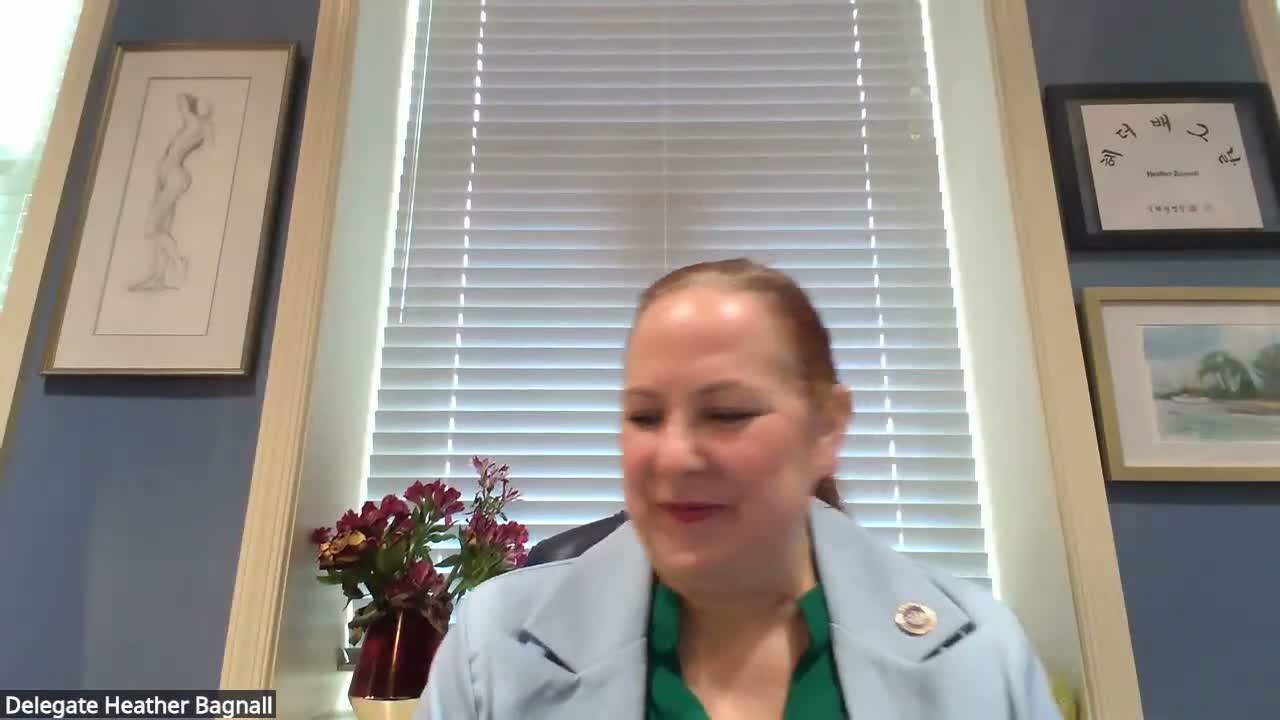
On Feb. 6 the Anne Arundel County delegation considered a package of local bills concerning the Board of License Commissioners and local alcohol licensing rules.
Abraham Hurdle, counsel for the Board of License Commissioners, testified on multiple items. Regarding HB339 (chief inspector compensation) he said the role is on call 24 hours and current pay lags comparable jurisdictions, noting research that places comparable positions in an NR-15 pay grade (top roughly $110,000). For HB512, Hurdle said commissioners have not received salary increases since 2007 and part-time inspectors since 2020; the board is requesting an 18% increase and proposed tying future adjustments to the county COLA. He told delegates the board can absorb the cost without raising license fees.
On licensing clarity, Hurdle explained HB519 would simplify confusing entertainment-permit tiers and explicitly would not change setback rules from residences, churches or schools. For HB522, the board proposed adjusting how one-day (per-diem) license fees are calculated for events with multiple points of sale, requiring a one-day license per point of sale for large events (the board identified roughly 11 events/groups that would be affected) to reflect needed inspection resources; the change was estimated to generate an additional $5,000–$6,000 annually from those events, not raising fees for the majority of one-day permits.
Delegates asked practical questions: the board reported there are 19 part-time inspectors working about 5 hours per week and that some events have as many as 10–12 points of sale. Delegates also discussed prior efforts on compensation grades and last year’s compromise proposals. On HB682, counsel said a new class-C golf-course and sports-activity venue license would better align licensing rules with venue operations (for example, the tavern license’s 21+ presence requirement and plumbing requirements can be ill-fitting for golf or family-friendly sports venues).
Delegate Rogers also requested a favorable report on HB727 to expand veterans organization licenses to include all uniformed services, a change the board supports and described as consistent with recent state-level military modernization changes.
No votes were taken on these licensing bills during the Feb. 6 meeting; the items remain under consideration for future action.
Abraham Hurdle, counsel for the Board of License Commissioners, testified on multiple items. Regarding HB339 (chief inspector compensation) he said the role is on call 24 hours and current pay lags comparable jurisdictions, noting research that places comparable positions in an NR-15 pay grade (top roughly $110,000). For HB512, Hurdle said commissioners have not received salary increases since 2007 and part-time inspectors since 2020; the board is requesting an 18% increase and proposed tying future adjustments to the county COLA. He told delegates the board can absorb the cost without raising license fees.
On licensing clarity, Hurdle explained HB519 would simplify confusing entertainment-permit tiers and explicitly would not change setback rules from residences, churches or schools. For HB522, the board proposed adjusting how one-day (per-diem) license fees are calculated for events with multiple points of sale, requiring a one-day license per point of sale for large events (the board identified roughly 11 events/groups that would be affected) to reflect needed inspection resources; the change was estimated to generate an additional $5,000–$6,000 annually from those events, not raising fees for the majority of one-day permits.
Delegates asked practical questions: the board reported there are 19 part-time inspectors working about 5 hours per week and that some events have as many as 10–12 points of sale. Delegates also discussed prior efforts on compensation grades and last year’s compromise proposals. On HB682, counsel said a new class-C golf-course and sports-activity venue license would better align licensing rules with venue operations (for example, the tavern license’s 21+ presence requirement and plumbing requirements can be ill-fitting for golf or family-friendly sports venues).
Delegate Rogers also requested a favorable report on HB727 to expand veterans organization licenses to include all uniformed services, a change the board supports and described as consistent with recent state-level military modernization changes.
No votes were taken on these licensing bills during the Feb. 6 meeting; the items remain under consideration for future action.
Don't Miss a Word: See the Full Meeting!
Go beyond summaries. Unlock every video, transcript, and key insight with a Founder Membership.
✓
Get instant access to full meeting videos
✓
Search and clip any phrase from complete transcripts
✓
Receive AI-powered summaries & custom alerts
✓
Enjoy lifetime, unrestricted access to government data
30-day money-back guarantee
