House committee hears testimony on H.753 after uptick in utility disconnections
February 07, 2026 | Environment & Energy, HOUSE OF REPRESENTATIVES, Committees, Legislative , Vermont
This article was created by AI summarizing key points discussed. AI makes mistakes, so for full details and context, please refer to the video of the full meeting. Please report any errors so we can fix them. Report an error »
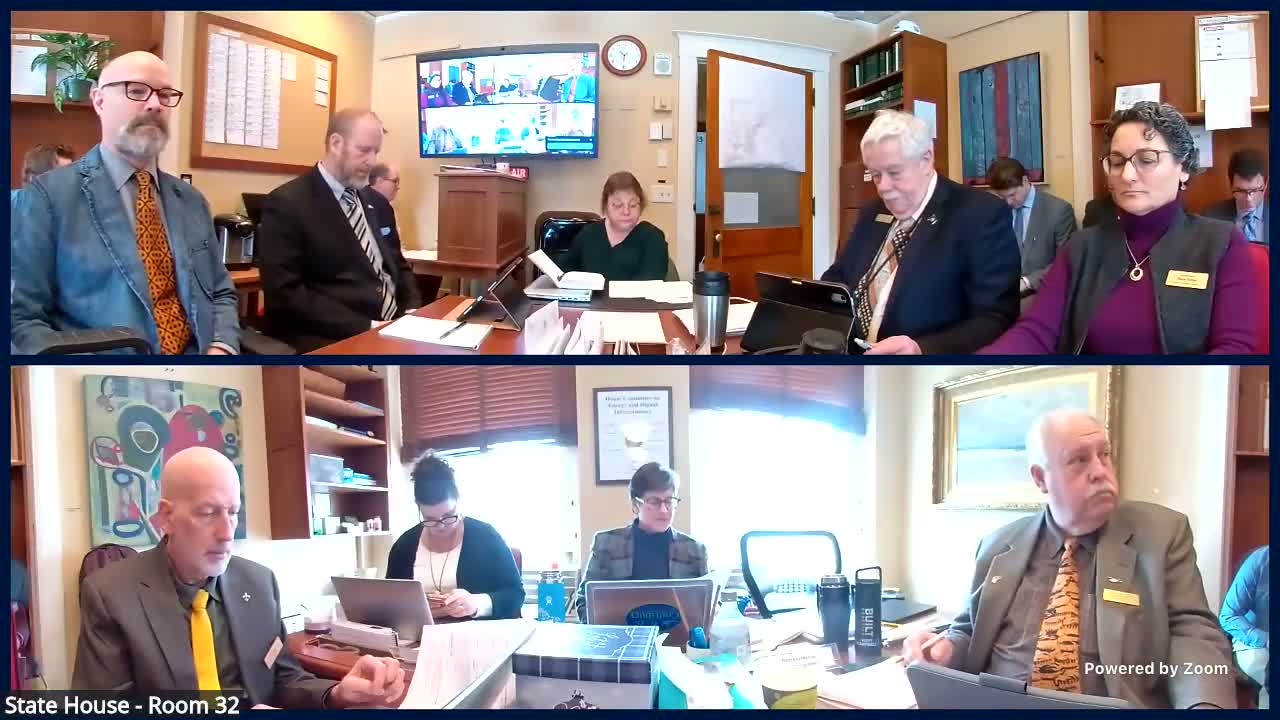
The Vermont House Energy and Digital Infrastructure Committee on Feb. 6 heard testimony on H.753, a bill that would require utilities to adopt plans and implement protections aimed at minimizing involuntary residential utility service disconnections.
Carol Flint, director for consumer affairs and public information at the Vermont Department of Public Service, told the committee the department used April as a proxy month for household hardship and that utilities’ reports to the Public Utility Commission showed an increase in disconnections when comparing April 2022 with April 2025. "Disconnections increased by about 31% between April 2022," Flint said, citing the PUC filings as her source. She reported 1,704 disconnections in April 2022 and said the April 2025 total supporting the 31% figure was 2,227; Flint noted she would confirm the exact 2025 count in submitted written testimony.
Flint said most disconnected residential accounts are later reconnected: "About 85% were reconnected," she told lawmakers, and that reconnections in the report are measured within a 15‑day window (though reconnections can occur within hours or days). She also said reconnection charges vary by utility and that while manual reconnection or field visits can incur fees, current rules do not allow utilities to charge for remote disconnections.
Flint placed the recent counts in historical context, citing Energy Justice Labs data for April 2017–2019 (2017: 2,027; 2018: 2,312; 2019: 2,671) and concluded recent levels reflect a return toward pre‑COVID disconnection patterns rather than an entirely new upward trend.
On medically necessary protections, Flint described existing PUC practice and guidance that accepts certificates signed not only by physicians but in practice by physician assistants, nurse practitioners and APRNs. She summarized the current rule as written in 30‑day certification intervals with an appeals pathway to the PUC for extensions; in practice, multiple certificates for the same household in a year have been accepted. "The current rule is 30 days," she said, noting the department would not necessarily recommend broad rulemaking for that narrow issue.
Committee members raised whether families with young children should receive protections similar to those currently in place for elders. Flint said she has heard concerns about households with young children but warned that formally expanding protections would impose administrative record‑keeping burdens on utilities and could increase costs passed into rates.
Flint said the department supports curtailing disconnections during periods of extreme heat, but urged careful definition of what constitutes "extreme heat." She referenced the U.S. Environmental Protection Agency’s framing of extremely hot days as those reaching or exceeding 95 °F and noted regional and multi‑day definitions vary. The department has previously asked utilities voluntarily to pause disconnections during heat waves.
The bill also calls for utilities to include strategic, realistic plans to minimize involuntary residential disconnections in service quality and reliability filings and, in some language, within alternative regulation plans. Flint observed that only Vermont Gas and Green Mountain Power currently operate under alternative regulation and recommended removing small water utilities from certain new requirements because many are legacy, locally run companies with very small customer bases and limited administrative capacity.
Flint said the PUC and utilities have generally been responsive to consumer complaints: she cited a state auditor’s finding that utilities addressed department inquiries about 96% of the time in the auditor’s sample. She also told members the department has produced disconnection reports previously but had not issued a calendar‑year report for the most recent January; she recommended collecting and analyzing more data before tying penalties to any new performance metric.
Representative Kathleen James closed the session by noting the committee will continue the record: the PUC is scheduled to testify next week, and she said the committee had invited Green Mountain Power to appear on H.753 and related bills.
The committee asked the PUC to provide clarifying data and Flint said she would submit corrected counts and the department’s written testimony for the record.
Carol Flint, director for consumer affairs and public information at the Vermont Department of Public Service, told the committee the department used April as a proxy month for household hardship and that utilities’ reports to the Public Utility Commission showed an increase in disconnections when comparing April 2022 with April 2025. "Disconnections increased by about 31% between April 2022," Flint said, citing the PUC filings as her source. She reported 1,704 disconnections in April 2022 and said the April 2025 total supporting the 31% figure was 2,227; Flint noted she would confirm the exact 2025 count in submitted written testimony.
Flint said most disconnected residential accounts are later reconnected: "About 85% were reconnected," she told lawmakers, and that reconnections in the report are measured within a 15‑day window (though reconnections can occur within hours or days). She also said reconnection charges vary by utility and that while manual reconnection or field visits can incur fees, current rules do not allow utilities to charge for remote disconnections.
Flint placed the recent counts in historical context, citing Energy Justice Labs data for April 2017–2019 (2017: 2,027; 2018: 2,312; 2019: 2,671) and concluded recent levels reflect a return toward pre‑COVID disconnection patterns rather than an entirely new upward trend.
On medically necessary protections, Flint described existing PUC practice and guidance that accepts certificates signed not only by physicians but in practice by physician assistants, nurse practitioners and APRNs. She summarized the current rule as written in 30‑day certification intervals with an appeals pathway to the PUC for extensions; in practice, multiple certificates for the same household in a year have been accepted. "The current rule is 30 days," she said, noting the department would not necessarily recommend broad rulemaking for that narrow issue.
Committee members raised whether families with young children should receive protections similar to those currently in place for elders. Flint said she has heard concerns about households with young children but warned that formally expanding protections would impose administrative record‑keeping burdens on utilities and could increase costs passed into rates.
Flint said the department supports curtailing disconnections during periods of extreme heat, but urged careful definition of what constitutes "extreme heat." She referenced the U.S. Environmental Protection Agency’s framing of extremely hot days as those reaching or exceeding 95 °F and noted regional and multi‑day definitions vary. The department has previously asked utilities voluntarily to pause disconnections during heat waves.
The bill also calls for utilities to include strategic, realistic plans to minimize involuntary residential disconnections in service quality and reliability filings and, in some language, within alternative regulation plans. Flint observed that only Vermont Gas and Green Mountain Power currently operate under alternative regulation and recommended removing small water utilities from certain new requirements because many are legacy, locally run companies with very small customer bases and limited administrative capacity.
Flint said the PUC and utilities have generally been responsive to consumer complaints: she cited a state auditor’s finding that utilities addressed department inquiries about 96% of the time in the auditor’s sample. She also told members the department has produced disconnection reports previously but had not issued a calendar‑year report for the most recent January; she recommended collecting and analyzing more data before tying penalties to any new performance metric.
Representative Kathleen James closed the session by noting the committee will continue the record: the PUC is scheduled to testify next week, and she said the committee had invited Green Mountain Power to appear on H.753 and related bills.
The committee asked the PUC to provide clarifying data and Flint said she would submit corrected counts and the department’s written testimony for the record.
View the Full Meeting & All Its Details
This article offers just a summary. Unlock complete video, transcripts, and insights as a Founder Member.
✓
Watch full, unedited meeting videos
✓
Search every word spoken in unlimited transcripts
✓
AI summaries & real-time alerts (all government levels)
✓
Permanent access to expanding government content
30-day money-back guarantee
