Deputy State Auditor Urges Time‑Limited, Legislator‑Led Oversight as Option for H.67
February 07, 2026 | Government Operations & Military Affairs, HOUSE OF REPRESENTATIVES, Committees, Legislative , Vermont
This article was created by AI summarizing key points discussed. AI makes mistakes, so for full details and context, please refer to the video of the full meeting. Please report any errors so we can fix them. Report an error »
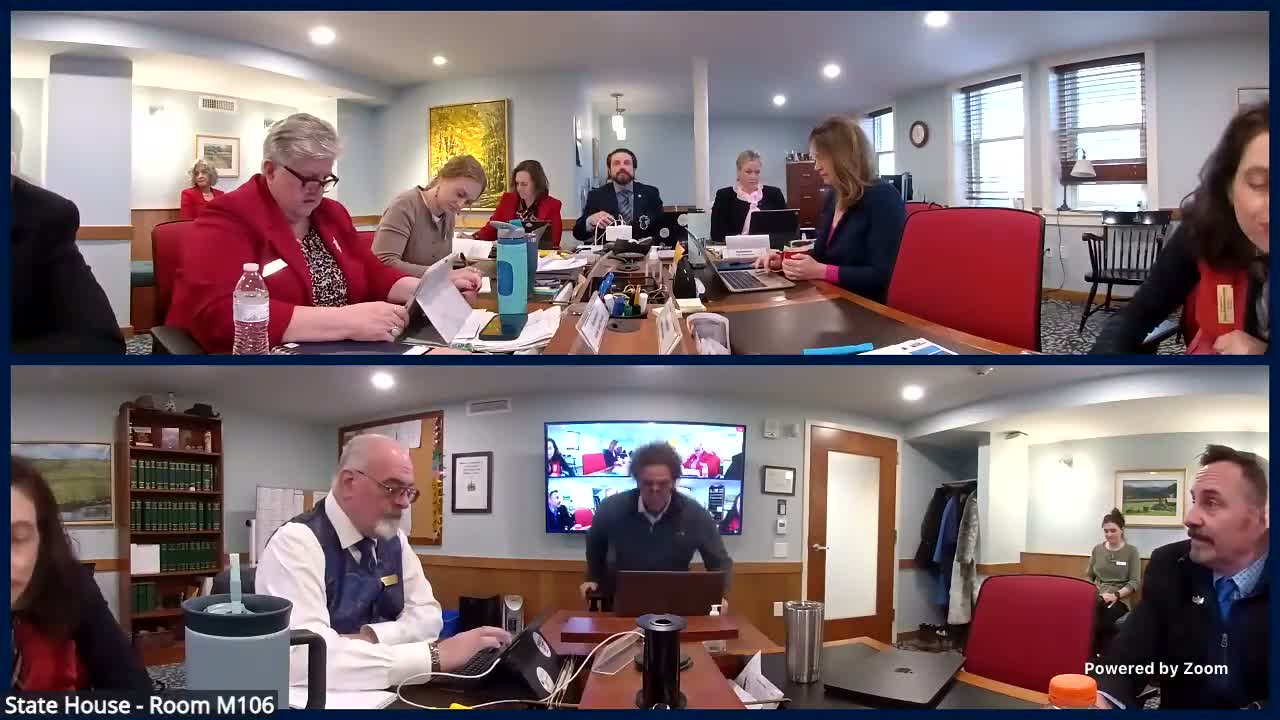
Deputy State Auditor Tim Ash told the Government Operations & Military Affairs committee on Feb. 6 that lawmakers have multiple paths to restore a meaningful legislative oversight function and urged a cautious, time‑limited approach if the legislature opts to reestablish a joint committee.
"If it's gonna be done, it should be made up of legislators," Tim Ash said, arguing that keeping the oversight body within the legislative branch preserves the separation necessary for the legislature to monitor the executive.
Ash, testifying about H.67, reviewed the history of the previous Government Accountability Committee and said that earlier iterations struggled because they focused on population indicators and conceptual distinctions rather than concrete performance and follow‑up. He told members the legislature could instead: (1) ask standing committees to do more follow‑up on the bills they pass, (2) use the auditor's office as a verification resource when requested (noting capacity limits), or (3) reestablish a joint oversight committee with a targeted mandate.
"You have to have some specific topics that people are particularly interested in," Ash said, recommending that standing committees nominate priorities for any accountability body and that the joint committee be evaluated after a limited trial period.
Committee members raised concerns about politicization and the perceived risk of a "witch hunt." Ash said those risks can be reduced by clarifying the selection process for topics, building bipartisan membership (for example, bipartisan co‑chairs), and keeping the committee's work explicitly performance‑focused rather than punitive. He also recommended setting a time‑limited pilot period so the legislature can evaluate the committee's usefulness before making it permanent.
The deputy auditor described three concrete roles the auditor's office could play if asked: provide subject‑matter consulting, perform verification of specified outcomes, and assist with evaluation tools — while noting that some uses would require additional resources.
The committee did not take a vote on H.67 during the session. Ash's testimony framed design choices lawmakers will face if they pursue a revived oversight function: who serves on the body, how topics are chosen, whether the body has any enforcement tools, and whether to start with a limited, evaluative pilot.
The committee is scheduled to reconvene in June to consider additional items.
"If it's gonna be done, it should be made up of legislators," Tim Ash said, arguing that keeping the oversight body within the legislative branch preserves the separation necessary for the legislature to monitor the executive.
Ash, testifying about H.67, reviewed the history of the previous Government Accountability Committee and said that earlier iterations struggled because they focused on population indicators and conceptual distinctions rather than concrete performance and follow‑up. He told members the legislature could instead: (1) ask standing committees to do more follow‑up on the bills they pass, (2) use the auditor's office as a verification resource when requested (noting capacity limits), or (3) reestablish a joint oversight committee with a targeted mandate.
"You have to have some specific topics that people are particularly interested in," Ash said, recommending that standing committees nominate priorities for any accountability body and that the joint committee be evaluated after a limited trial period.
Committee members raised concerns about politicization and the perceived risk of a "witch hunt." Ash said those risks can be reduced by clarifying the selection process for topics, building bipartisan membership (for example, bipartisan co‑chairs), and keeping the committee's work explicitly performance‑focused rather than punitive. He also recommended setting a time‑limited pilot period so the legislature can evaluate the committee's usefulness before making it permanent.
The deputy auditor described three concrete roles the auditor's office could play if asked: provide subject‑matter consulting, perform verification of specified outcomes, and assist with evaluation tools — while noting that some uses would require additional resources.
The committee did not take a vote on H.67 during the session. Ash's testimony framed design choices lawmakers will face if they pursue a revived oversight function: who serves on the body, how topics are chosen, whether the body has any enforcement tools, and whether to start with a limited, evaluative pilot.
The committee is scheduled to reconvene in June to consider additional items.
Don't Miss a Word: See the Full Meeting!
Go beyond summaries. Unlock every video, transcript, and key insight with a Founder Membership.
✓
Get instant access to full meeting videos
✓
Search and clip any phrase from complete transcripts
✓
Receive AI-powered summaries & custom alerts
✓
Enjoy lifetime, unrestricted access to government data
30-day money-back guarantee
