Judge warns H 628 could expand protection orders to require defendants to keep paying household bills
February 07, 2026 | Judiciary, HOUSE OF REPRESENTATIVES, Committees, Legislative , Vermont
This article was created by AI summarizing key points discussed. AI makes mistakes, so for full details and context, please refer to the video of the full meeting. Please report any errors so we can fix them. Report an error »
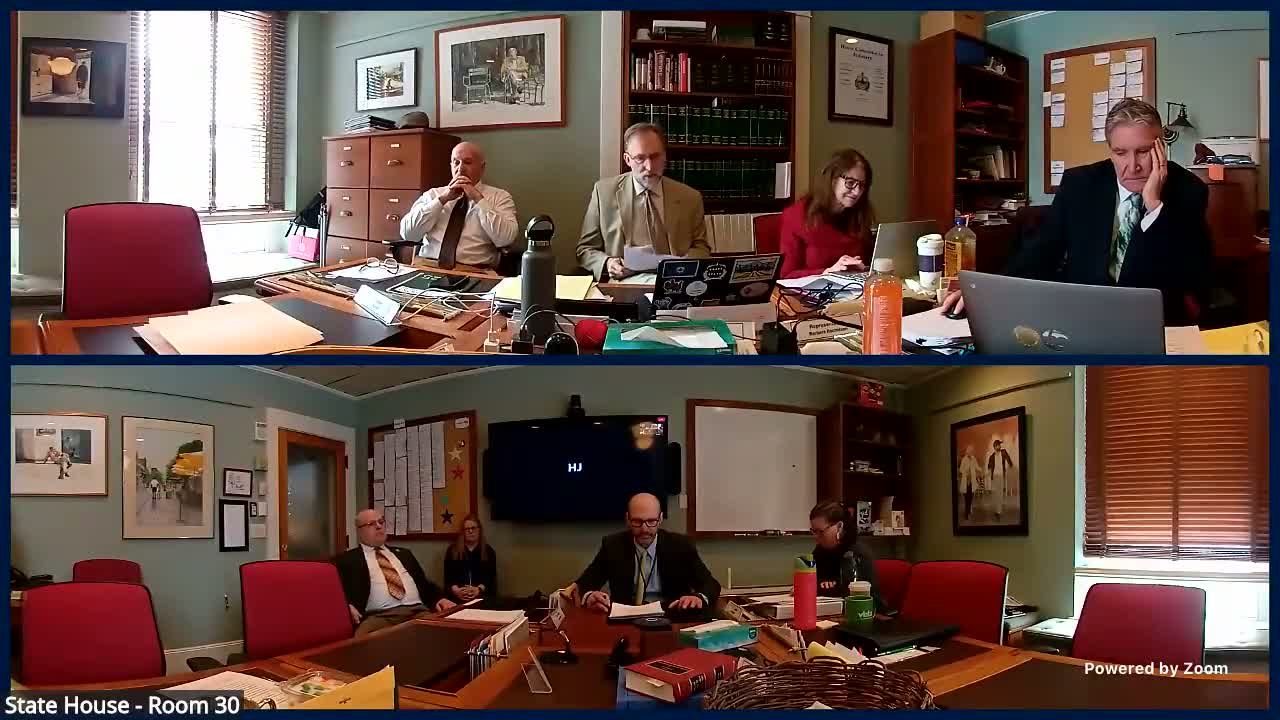
Chief Superior Judge Tom Zoney appeared before the House Judiciary panel to discuss H 628, a bill that would add a provision allowing courts to order a defendant to "continue to pay household bills for which the defendant was responsible" for a fixed period. Zoney told lawmakers the draft language for the proposed subsection f contains no explicit maximum time, unlike subsection e, which limits such relief to a fixed period not to exceed three months.
Why it matters: The change could let courts require continued payment of household bills in orders of protection even where there is no traditional "duty to support," potentially expanding the scope of short-term protective orders and introducing new factual disputes over which party was responsible for particular bills.
Zoney, identified in the transcript as "chief superior judge," said the critical legal distinction is between a duty to support and legal responsibility for a bill. "The crux of e is that there's a duty to support," he said, adding that subsection f "says continue to pay household bills for which the defendant was responsible," which would require a court to determine whether the defendant was legally responsible for a bill on the filing date. He noted that "if the defendant wasn't responsible, the court couldn't order it" and that joint responsibility or defaults could complicate enforcement.
The judge warned that courts handling summary protection proceedings are not intended to resolve long-term property or divorce-style financial disputes. "This is not intended to be a divorce action," he said. "It is intended for immediate summary protection, and the court is limited to how much it can do in this action." He added that courts typically consider ability to pay when evaluating contempt for nonpayment and that inability to pay can prevent a contempt finding.
Lawmakers pressed whether subsection f could be imposed under the existing language in e. Zoney said "it depends," explaining that f could be a subset of e in cases where a legal duty to support exists and the defendant also is responsible for a bill, but f would reach additional situations—such as cohabitating but unmarried partners—because it does not require finding a duty to support. "F would cover married couples. It would cover cohabitating individuals," he said.
On drafting, Zoney urged the committee to clarify what "responsible" means — whether it denotes a legal responsibility to a creditor or merely an interparty agreement — and to consider adding a fixed time limit for the payment order. "If you go in that policy direction, you should consider putting a fixed period of time in there," he told the panel, noting e's three-month limit as one model.
The judge also pointed to existing interim domestic orders used in divorce proceedings that can mimic the proposed language for married or civil-union parties and said the new subsection would extend similar mechanics only where a legal responsibility exists. He recommended that, if lawmakers adopt f, they should make the statute clearer to avoid turning protection orders into protracted financial adjudications.
The committee asked the judge for follow-up materials; Zoney agreed to provide statewide clearance-rate data and to return for additional meetings, including a budget session. The panel adjourned with plans for further discussion.
Next steps: The committee scheduled follow-up hearings and asked the judge for data on clearance rates; the transcript records plans to reconvene on related criminal-justice and budget items next week.
Why it matters: The change could let courts require continued payment of household bills in orders of protection even where there is no traditional "duty to support," potentially expanding the scope of short-term protective orders and introducing new factual disputes over which party was responsible for particular bills.
Zoney, identified in the transcript as "chief superior judge," said the critical legal distinction is between a duty to support and legal responsibility for a bill. "The crux of e is that there's a duty to support," he said, adding that subsection f "says continue to pay household bills for which the defendant was responsible," which would require a court to determine whether the defendant was legally responsible for a bill on the filing date. He noted that "if the defendant wasn't responsible, the court couldn't order it" and that joint responsibility or defaults could complicate enforcement.
The judge warned that courts handling summary protection proceedings are not intended to resolve long-term property or divorce-style financial disputes. "This is not intended to be a divorce action," he said. "It is intended for immediate summary protection, and the court is limited to how much it can do in this action." He added that courts typically consider ability to pay when evaluating contempt for nonpayment and that inability to pay can prevent a contempt finding.
Lawmakers pressed whether subsection f could be imposed under the existing language in e. Zoney said "it depends," explaining that f could be a subset of e in cases where a legal duty to support exists and the defendant also is responsible for a bill, but f would reach additional situations—such as cohabitating but unmarried partners—because it does not require finding a duty to support. "F would cover married couples. It would cover cohabitating individuals," he said.
On drafting, Zoney urged the committee to clarify what "responsible" means — whether it denotes a legal responsibility to a creditor or merely an interparty agreement — and to consider adding a fixed time limit for the payment order. "If you go in that policy direction, you should consider putting a fixed period of time in there," he told the panel, noting e's three-month limit as one model.
The judge also pointed to existing interim domestic orders used in divorce proceedings that can mimic the proposed language for married or civil-union parties and said the new subsection would extend similar mechanics only where a legal responsibility exists. He recommended that, if lawmakers adopt f, they should make the statute clearer to avoid turning protection orders into protracted financial adjudications.
The committee asked the judge for follow-up materials; Zoney agreed to provide statewide clearance-rate data and to return for additional meetings, including a budget session. The panel adjourned with plans for further discussion.
Next steps: The committee scheduled follow-up hearings and asked the judge for data on clearance rates; the transcript records plans to reconvene on related criminal-justice and budget items next week.
Don't Miss a Word: See the Full Meeting!
Go beyond summaries. Unlock every video, transcript, and key insight with a Founder Membership.
✓
Get instant access to full meeting videos
✓
Search and clip any phrase from complete transcripts
✓
Receive AI-powered summaries & custom alerts
✓
Enjoy lifetime, unrestricted access to government data
30-day money-back guarantee
