Caltrans reports improved delivery metrics, outlines training and process changes
February 01, 2026 | Transportation Commission, Agencies under Office of the Governor, Executive, California
This article was created by AI summarizing key points discussed. AI makes mistakes, so for full details and context, please refer to the video of the full meeting. Please report any errors so we can fix them. Report an error »
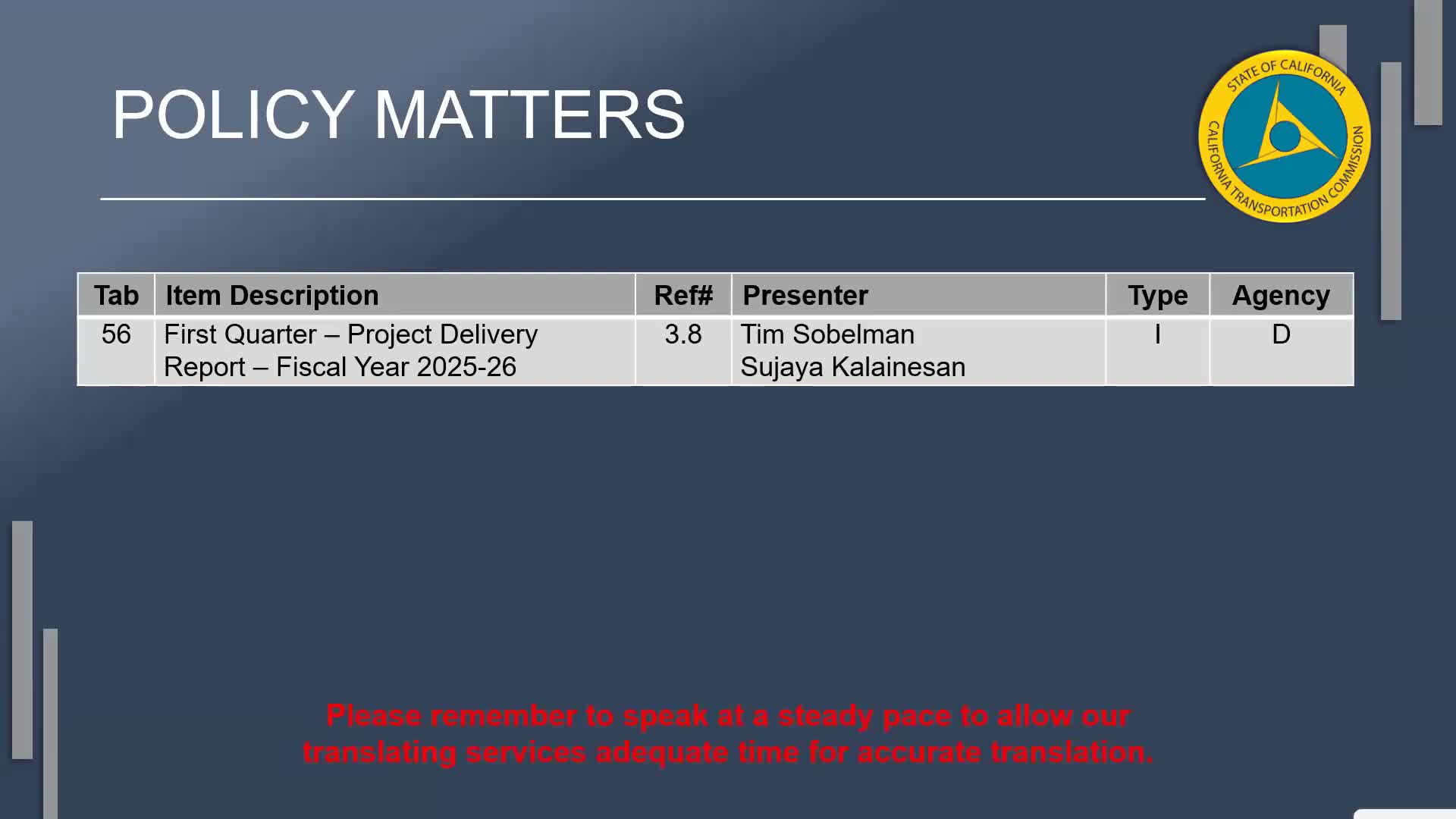
Caltrans officials told the Transportation Commission on day two of its January meeting that several project‑delivery metrics have improved and that the department is implementing new training and process changes to sustain progress.
"We had planned to deliver 229 projects at a capital value of almost $5.9 billion," Sujaya Kalenasan, division chief for project management, said in the commission meeting. She said roughly 138 projects were identified with some level of risk and staff have allocated about $665 million for projects that are ready for allocation.
Kalenasan highlighted that milestone completion rates vary by stage: about 10–13% for early milestones such as draft environmental documents and project approval, roughly 13% for right‑of‑way certification, and higher percentages for design and construction readiness compared with last year. For projects that completed construction she said the figure was around 20%.
Commission staff and Caltrans framed the improvements as the result of three continuous‑improvement efforts: joint board meetings to refresh long‑standing processes and institutional knowledge; targeted, role‑specific training to address gaps created by workforce turnover; and clearer guidance for project teams to document decisions and manage risk.
Kalenasan described operational steps to cope with limited allocation capacity: continuing to hold teams accountable to milestone dates, strategically shelving or repackaging projects that cannot be allocated this fiscal year, and creating a Q&A resource to help districts make consistent decisions on issues such as right‑of‑way and railroad agreements.
Commissioners on the dais praised the progress. "Your presentation really illustrates the progress you guys have made," Commissioner Tiffany said, thanking Caltrans staff for better communication across districts. Commissioner Eager thanked staff and Caltrans leadership for the work.
Caltrans warned the commission that statutory and calendar misalignment can affect first‑quarter delivery numbers and noted that many projects will show higher delivery later in the fiscal year. Kalenasan said staff would continue monitoring allocations and bring further proposals to the commission if funding or capacity constraints require adjustments.
The commission accepted the presentation; there was no formal action required for this informational item.
"We had planned to deliver 229 projects at a capital value of almost $5.9 billion," Sujaya Kalenasan, division chief for project management, said in the commission meeting. She said roughly 138 projects were identified with some level of risk and staff have allocated about $665 million for projects that are ready for allocation.
Kalenasan highlighted that milestone completion rates vary by stage: about 10–13% for early milestones such as draft environmental documents and project approval, roughly 13% for right‑of‑way certification, and higher percentages for design and construction readiness compared with last year. For projects that completed construction she said the figure was around 20%.
Commission staff and Caltrans framed the improvements as the result of three continuous‑improvement efforts: joint board meetings to refresh long‑standing processes and institutional knowledge; targeted, role‑specific training to address gaps created by workforce turnover; and clearer guidance for project teams to document decisions and manage risk.
Kalenasan described operational steps to cope with limited allocation capacity: continuing to hold teams accountable to milestone dates, strategically shelving or repackaging projects that cannot be allocated this fiscal year, and creating a Q&A resource to help districts make consistent decisions on issues such as right‑of‑way and railroad agreements.
Commissioners on the dais praised the progress. "Your presentation really illustrates the progress you guys have made," Commissioner Tiffany said, thanking Caltrans staff for better communication across districts. Commissioner Eager thanked staff and Caltrans leadership for the work.
Caltrans warned the commission that statutory and calendar misalignment can affect first‑quarter delivery numbers and noted that many projects will show higher delivery later in the fiscal year. Kalenasan said staff would continue monitoring allocations and bring further proposals to the commission if funding or capacity constraints require adjustments.
The commission accepted the presentation; there was no formal action required for this informational item.
View the Full Meeting & All Its Details
This article offers just a summary. Unlock complete video, transcripts, and insights as a Founder Member.
✓
Watch full, unedited meeting videos
✓
Search every word spoken in unlimited transcripts
✓
AI summaries & real-time alerts (all government levels)
✓
Permanent access to expanding government content
30-day money-back guarantee
