Chaffetz urges Utah to deepen immigration enforcement, backs 287(g) agreements and warns of 'Reconquista'
February 01, 2026 | Utah Eagle Forum, Citizen Journalism , Utah Citizen Journalism, Elections, Utah
This article was created by AI summarizing key points discussed. AI makes mistakes, so for full details and context, please refer to the video of the full meeting. Please report any errors so we can fix them. Report an error »
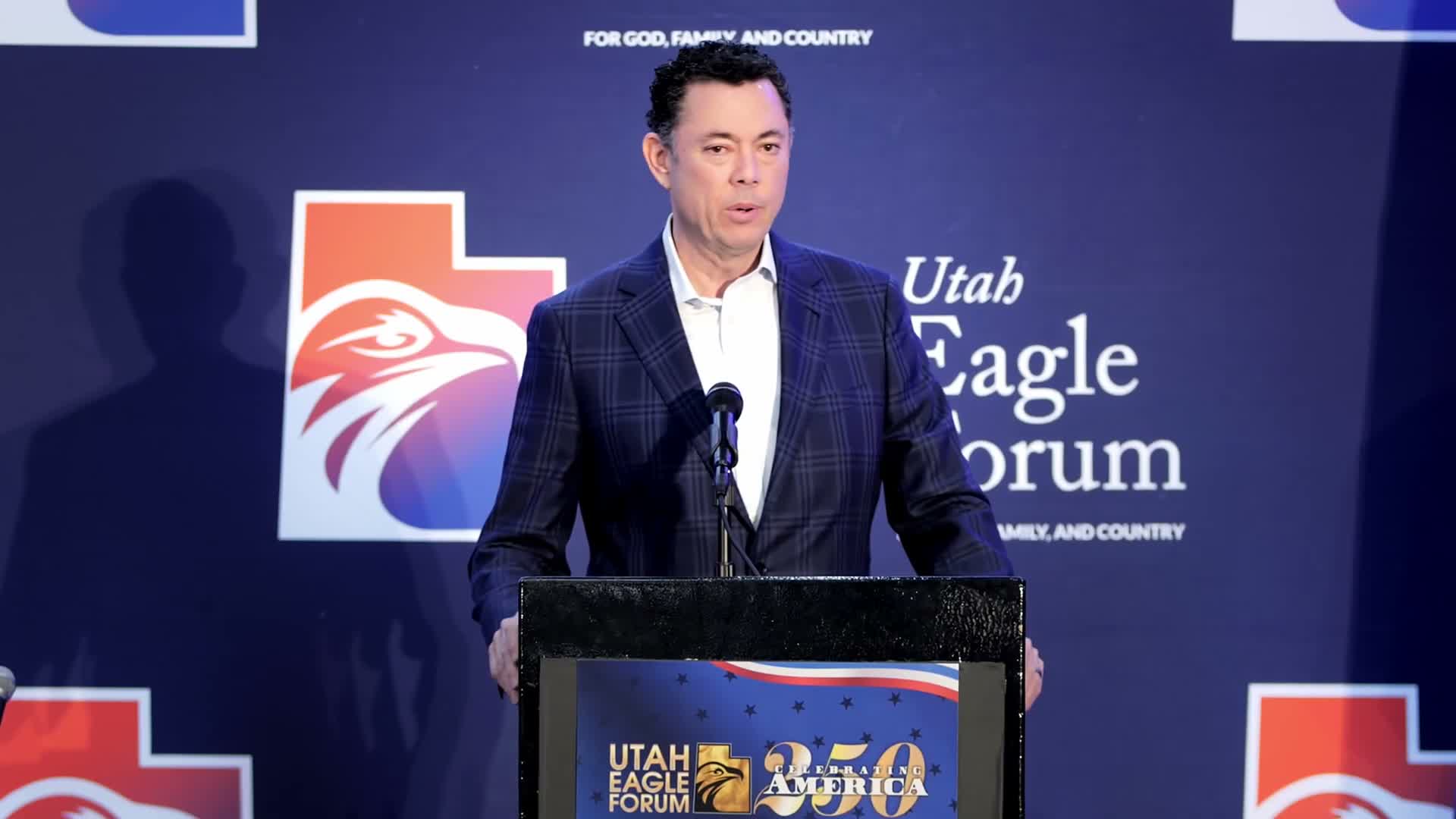
Jason Chaffetz, introduced at the Utah Eagle Forum, used a roughly hour-long address to urge tougher immigration enforcement and greater state cooperation with federal authorities.
Chaffetz said Utah should adopt and expand cooperative agreements he described as the "287(g)" program to deputize local law enforcement to assist Immigration and Customs Enforcement (ICE). He argued those agreements were previously rejected by some counties because of incarceration standard requirements but said changed federal standards make renewed participation necessary. "We need that 287(g) program," he said, framing it as a practical tool for local-federal cooperation.
He described operational constraints for ICE in the region, saying the agency’s Salt Lake office covers a large territory and that transporting detainees to ICE facilities can be logistically difficult: "They have to take them to Pahrump, Nevada," he said, calling the long transport a limiting factor on deportations.
Chaffetz also advocated tightening state-issued driving privileges and commercial licensing for people he said are in the country illegally, arguing that noncitizens should not be eligible for driver privilege cards or commercial driver's licenses. He said the state should require identification demonstrating U.S. citizenship for certain credentials.
On migration as a political tool, Chaffetz repeated claims he attributed to recent research and meetings in Washington with Peter Schweitzer of the Government Accountability Institute. He promoted Schweitzer's forthcoming book The Invisible Coup and said the book documents what he characterized as a coordinated effort by "the Chinese, the Mexicans, the drug cartels, and the jihadists" to use mass migration to influence U.S. politics. He said the Mexican government, he claimed, is "very active in supporting what they call Reconquista," and listed states he said were targets of the idea. Those assertions were presented as Chaffetz's characterization of the book and his meetings; the claims were not challenged or substantiated during his speech.
Chaffetz framed the topic as a mix of humanitarian obligations and enforcement: he said some migrants legitimately seek refuge but that current systems are being exploited. He urged audience members to press state legislators and local officials to pursue policy changes that would prioritize enforcement of current law and increased local cooperation with ICE.
The speech mixed policy proposals (use of 287(g) agreements, tighter credentialing), operational descriptions of ICE capacity limits, and broader geopolitical claims about migration strategy. The Utah Eagle Forum event did not include a legislative vote or formal action during Chaffetz’s remarks; his comments were an appeal to attendees and state actors rather than an announcement of new policy from state government.
Next steps noted by Chaffetz included urging local officials to reconsider 287(g) participation and encouraging audience engagement with state legislators; no specific bills or motions were proposed or adopted at the event.
Chaffetz said Utah should adopt and expand cooperative agreements he described as the "287(g)" program to deputize local law enforcement to assist Immigration and Customs Enforcement (ICE). He argued those agreements were previously rejected by some counties because of incarceration standard requirements but said changed federal standards make renewed participation necessary. "We need that 287(g) program," he said, framing it as a practical tool for local-federal cooperation.
He described operational constraints for ICE in the region, saying the agency’s Salt Lake office covers a large territory and that transporting detainees to ICE facilities can be logistically difficult: "They have to take them to Pahrump, Nevada," he said, calling the long transport a limiting factor on deportations.
Chaffetz also advocated tightening state-issued driving privileges and commercial licensing for people he said are in the country illegally, arguing that noncitizens should not be eligible for driver privilege cards or commercial driver's licenses. He said the state should require identification demonstrating U.S. citizenship for certain credentials.
On migration as a political tool, Chaffetz repeated claims he attributed to recent research and meetings in Washington with Peter Schweitzer of the Government Accountability Institute. He promoted Schweitzer's forthcoming book The Invisible Coup and said the book documents what he characterized as a coordinated effort by "the Chinese, the Mexicans, the drug cartels, and the jihadists" to use mass migration to influence U.S. politics. He said the Mexican government, he claimed, is "very active in supporting what they call Reconquista," and listed states he said were targets of the idea. Those assertions were presented as Chaffetz's characterization of the book and his meetings; the claims were not challenged or substantiated during his speech.
Chaffetz framed the topic as a mix of humanitarian obligations and enforcement: he said some migrants legitimately seek refuge but that current systems are being exploited. He urged audience members to press state legislators and local officials to pursue policy changes that would prioritize enforcement of current law and increased local cooperation with ICE.
The speech mixed policy proposals (use of 287(g) agreements, tighter credentialing), operational descriptions of ICE capacity limits, and broader geopolitical claims about migration strategy. The Utah Eagle Forum event did not include a legislative vote or formal action during Chaffetz’s remarks; his comments were an appeal to attendees and state actors rather than an announcement of new policy from state government.
Next steps noted by Chaffetz included urging local officials to reconsider 287(g) participation and encouraging audience engagement with state legislators; no specific bills or motions were proposed or adopted at the event.
Don't Miss a Word: See the Full Meeting!
Go beyond summaries. Unlock every video, transcript, and key insight with a Founder Membership.
✓
Get instant access to full meeting videos
✓
Search and clip any phrase from complete transcripts
✓
Receive AI-powered summaries & custom alerts
✓
Enjoy lifetime, unrestricted access to government data
30-day money-back guarantee
