Unidentified speaker says ICE, DHS "are terrorizing communities," urges accountability beyond body cameras
February 07, 2026 | Oversight Committee Democrats, Oversight and Reform: House Committee, Standing Committees - House & Senate, Congressional Hearings Compilation, Legislative, Federal
This article was created by AI summarizing key points discussed. AI makes mistakes, so for full details and context, please refer to the video of the full meeting. Please report any errors so we can fix them. Report an error »
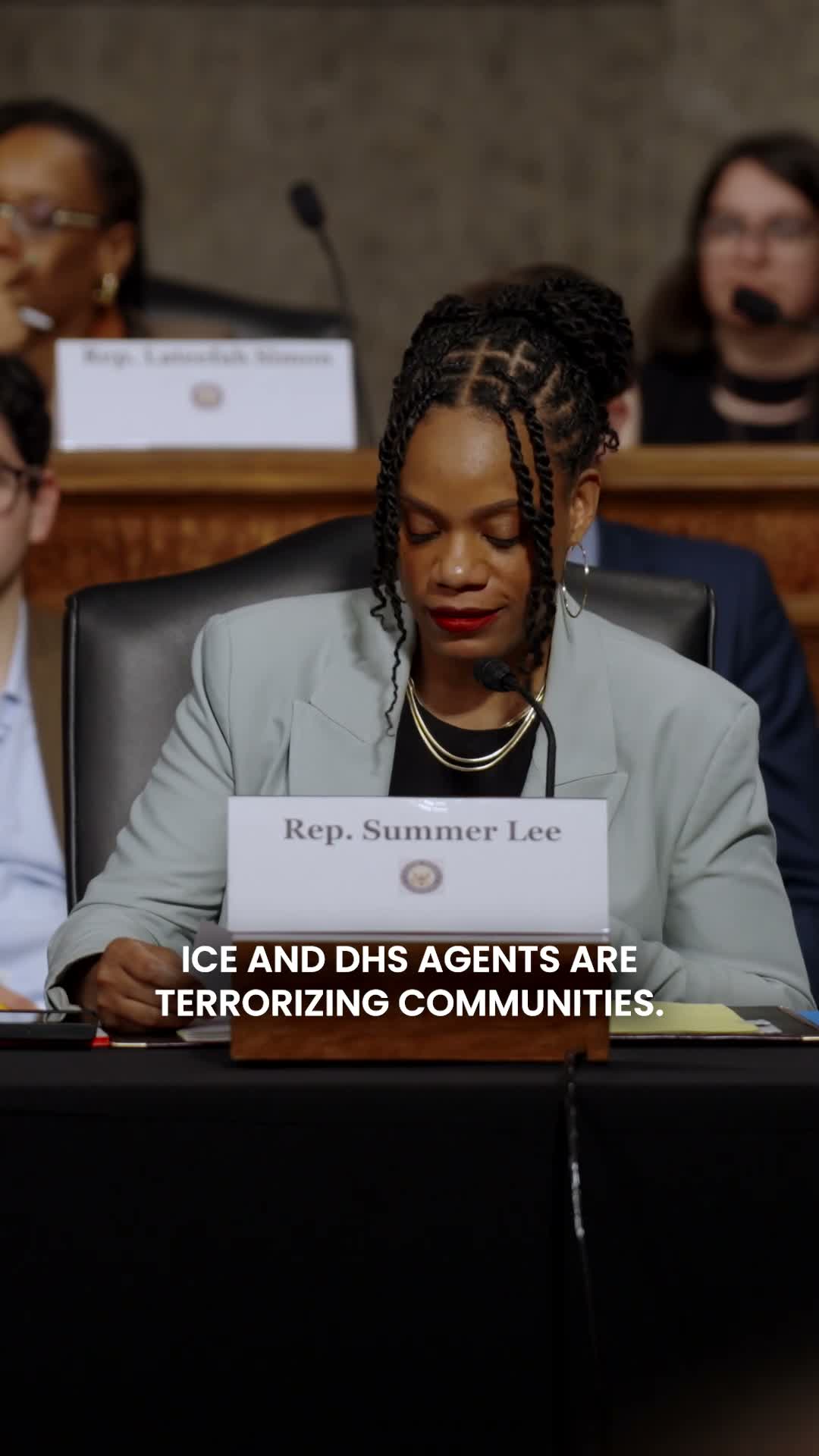
The speaker argued that limited reforms would not fix the problem. "So calling for body cameras and codes of conduct, quite frankly, isn't enough when the agency doesn't care about the current laws or the rules that they're already supposed to follow," the speaker said, pressing that oversight measures alone would be inadequate without institutional change.
The remarks framed current enforcement as part of a longer U.S. history of racially targeted policing. "These immigration enforcement agents are operating exactly how they were meant to operate," the speaker said, adding that "ICE is uniquely and deeply an American creation." The speaker cautioned against describing the agency as wholly foreign, saying labels such as "gestapo" risk obscuring historical continuities.
Invoking past systems of racial control, the speaker urged observers to "look back to the slave patrols or to racial segregation enforcement," and argued that routine racism and authoritarian tendencies have shaped contemporary enforcement. The speaker also referenced recent Supreme Court-related policing practices, stating, "The so called Kavanaugh stops from what the Supreme Court opened the doors to, stops based on racial profiling or just this era's stop and frisk."
The speaker said members of Black and Brown communities have long "sounded the alarm about racial bias and discrimination in law enforcement," and asserted that incremental gains made after high-profile killings have been rolled back: "The lessons learned in the wake of George Floyd and Breonna Taylor and Ahmaud Arbery have been completely abandoned, and ICE has been able to take advantage of that and run with it."
The transcript of the remarks includes no record of a formal response, motion, or vote. The statements summarize the speaker's claims and do not represent findings of fact; the transcript provides only the speaker's assertions and cited examples.
Don't Miss a Word: See the Full Meeting!
Go beyond summaries. Unlock every video, transcript, and key insight with a Founder Membership.
30-day money-back guarantee
