State archaeologist urges coordinated NAGPRA work in Texas as database gaps persist
January 31, 2026 | Historical Commission (THC), Departments and Agencies, Executive, Texas
This article was created by AI summarizing key points discussed. AI makes mistakes, so for full details and context, please refer to the video of the full meeting. Please report any errors so we can fix them. Report an error »
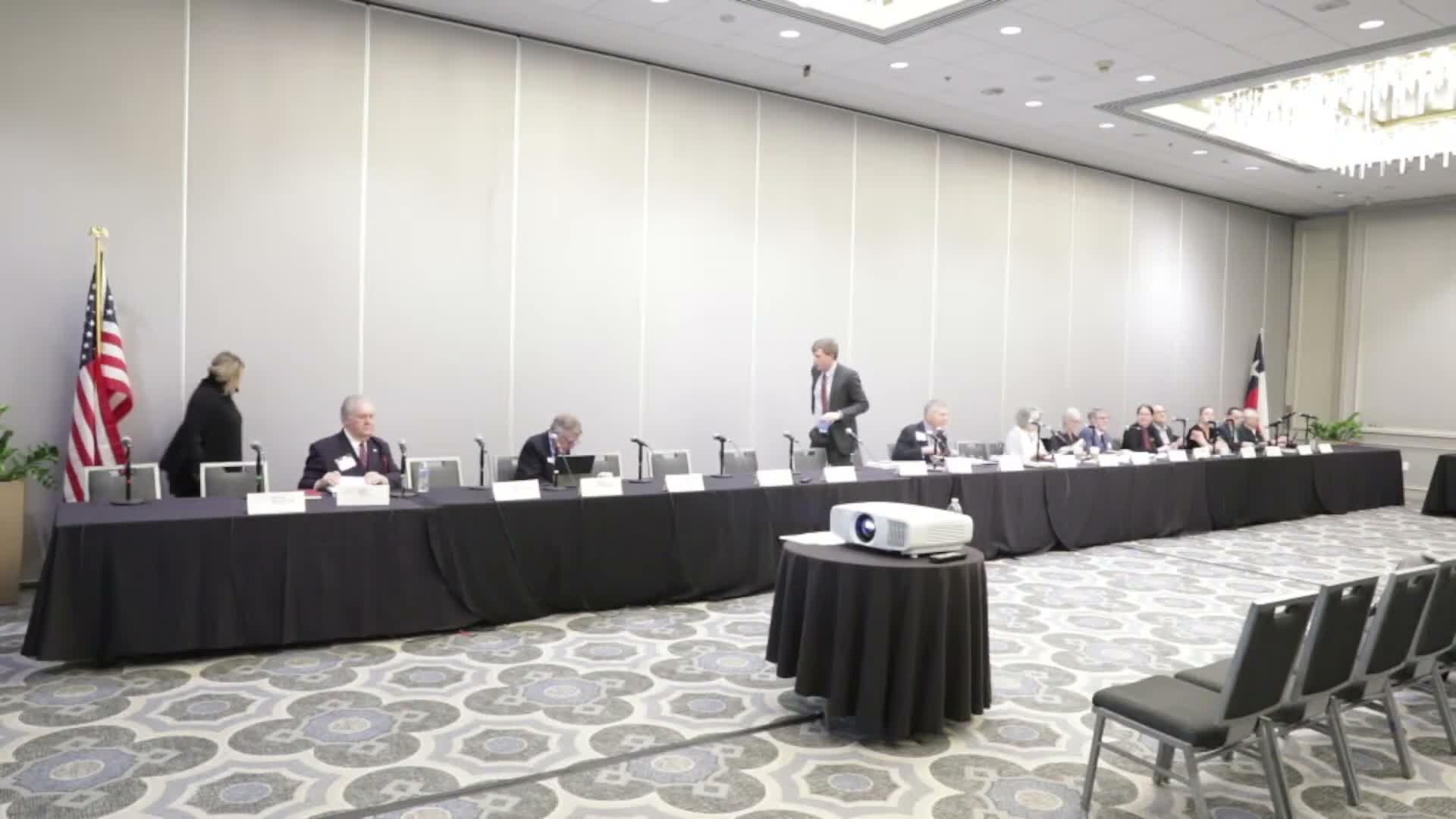
Brad Jones, State Archaeologist and Archaeology Division Director, told the Texas Historical Commission on Jan. 30 that while the Native American Graves Protection and Repatriation Act (NAGPRA) provides a framework for returning Native ancestors and funerary items held by federally funded institutions, the federal NAGPRA database is incomplete and sometimes inaccurate for Texas collections.
"The database gives us a snapshot," Jones said, "but it is not comprehensive and not necessarily accurate."
Jones told commissioners the nationwide database lists more than 80,000 collections identified as subject to NAGPRA; the Texas slice of that record lists about 3,332 individuals from 157 Texas counties and 45 facilities reporting Texas-origin material. He said many institutional collections originally documented in the early 20th century were made without modern osteological analysis, leading to mistaken counts and the discovery, on later review, of human remains among material previously catalogued as animal bone.
Jones described administrative and practical obstacles: many collections are held outside Texas, reporting was uneven when NAGPRA first took effect, and some repositories have since repatriated items. He also noted that 2024 federal rules broadened who may claim items based on geographic proximity and established a five-year repatriation expectation for facilities holding NAGPRA collections.
Those rule changes, Jones said, increase the workload on tribes, many of which have limited NAGPRA staff. "Most tribes have one person doing many jobs," he said, urging that institutions and state agencies consider ways to reduce that burden. Jones also emphasized that non‑federally recognized groups have used NAGPRA to press claims and that the law is designed primarily around federally recognized tribes.
The State Archaeologist highlighted the THC's memorandum of understanding (MOU) with the Caddo Nation as an example of collaborative work. Jones said the THC has helped facilitate repatriation planning at Caddo Mound State Historic Site and discussed developing a repatriation center and a secure cemetery or keepsake site on protected land, because many tribes lack land for reburial near original locations.
Commissioners questioned the size and scope of reburial land needs and possible legal or policy barriers. Jones said Texas law currently lacks a category in the Health and Safety Code that would allow cemeteries solely for repatriated archaeological materials, and he encouraged commissioners to consider legislative or policy solutions. He also recommended convening a summit to bring federally recognized tribes and institutions together to build a coordinated community of practice.
Why it matters: NAGPRA implementation affects the stewardship of human remains and culturally sensitive items across state and private collections. The issue has financial and staffing implications for tribes and institutions, and it intersects with state law, property availability and historic‑site management.
What's next: Jones said parties are exploring a Texas summit of tribes and holding institutions and that THC staff will continue consultations and inventories to clarify holdings and priorities.
"The database gives us a snapshot," Jones said, "but it is not comprehensive and not necessarily accurate."
Jones told commissioners the nationwide database lists more than 80,000 collections identified as subject to NAGPRA; the Texas slice of that record lists about 3,332 individuals from 157 Texas counties and 45 facilities reporting Texas-origin material. He said many institutional collections originally documented in the early 20th century were made without modern osteological analysis, leading to mistaken counts and the discovery, on later review, of human remains among material previously catalogued as animal bone.
Jones described administrative and practical obstacles: many collections are held outside Texas, reporting was uneven when NAGPRA first took effect, and some repositories have since repatriated items. He also noted that 2024 federal rules broadened who may claim items based on geographic proximity and established a five-year repatriation expectation for facilities holding NAGPRA collections.
Those rule changes, Jones said, increase the workload on tribes, many of which have limited NAGPRA staff. "Most tribes have one person doing many jobs," he said, urging that institutions and state agencies consider ways to reduce that burden. Jones also emphasized that non‑federally recognized groups have used NAGPRA to press claims and that the law is designed primarily around federally recognized tribes.
The State Archaeologist highlighted the THC's memorandum of understanding (MOU) with the Caddo Nation as an example of collaborative work. Jones said the THC has helped facilitate repatriation planning at Caddo Mound State Historic Site and discussed developing a repatriation center and a secure cemetery or keepsake site on protected land, because many tribes lack land for reburial near original locations.
Commissioners questioned the size and scope of reburial land needs and possible legal or policy barriers. Jones said Texas law currently lacks a category in the Health and Safety Code that would allow cemeteries solely for repatriated archaeological materials, and he encouraged commissioners to consider legislative or policy solutions. He also recommended convening a summit to bring federally recognized tribes and institutions together to build a coordinated community of practice.
Why it matters: NAGPRA implementation affects the stewardship of human remains and culturally sensitive items across state and private collections. The issue has financial and staffing implications for tribes and institutions, and it intersects with state law, property availability and historic‑site management.
What's next: Jones said parties are exploring a Texas summit of tribes and holding institutions and that THC staff will continue consultations and inventories to clarify holdings and priorities.
Don't Miss a Word: See the Full Meeting!
Go beyond summaries. Unlock every video, transcript, and key insight with a Founder Membership.
✓
Get instant access to full meeting videos
✓
Search and clip any phrase from complete transcripts
✓
Receive AI-powered summaries & custom alerts
✓
Enjoy lifetime, unrestricted access to government data
30-day money-back guarantee
