Vermont victim services center seeks $145,357 to cover operating gaps as special funds shrink
February 07, 2026 | Appropriations, HOUSE OF REPRESENTATIVES, Committees, Legislative , Vermont
This article was created by AI summarizing key points discussed. AI makes mistakes, so for full details and context, please refer to the video of the full meeting. Please report any errors so we can fix them. Report an error »
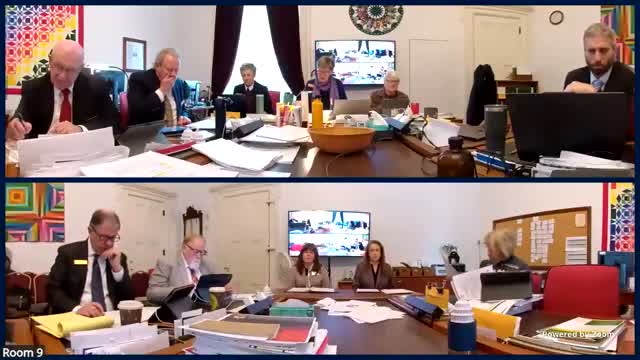
The Vermont Center for Crime Victim Services asked the House Appropriations Committee on Feb. 6 for $145,357.43 in FY27 funding, saying persistent declines in special-fund and pandemic-era federal revenue have forced the agency to rely on one-time federal dollars and left day-to-day operating needs unmet.
"I am the director of the Vermont Center for Crime Victim Services," Jennifer Pullman told the committee, outlining the Center’s role and the programs it administers. The request, Pullman said, is split between preserving a 3% increase in the base budget and providing limited administrative support to run grant-making operations to roughly 60 subgrantees.
The Center, a statutorily established quasi-state agency, runs the Victims Compensation Program and a unique Restitution Unit that advances funds to victims and later pursues collection. "We can reimburse victims and survivors for their losses ... up to $5,000," Pullman said, describing the restitution advance program.
Carol Brochu, the Center’s director of finance and administration, told committee members the agency handles oversight for about 60 subgrantees but operates with a small staff — 19 employees, 17 of them full time — and is not included in larger state bargaining pools for insurance or IT. "We have to go it on our own," Brochu said, explaining the agency must absorb cost increases for benefits and technology.
Brochu and Pullman described a multi-year decline in revenues to three special funds the Center administers — the compensation special fund, the restitution unit special fund and the domestic-violence-related special fund — and said the loss of one-time COVID-era federal funds and reductions in VOCA federal grants have steepened budget pressures. Brochu told the committee revenues into one fund fell from about $2.2 million in 2017 to roughly $1 million now and that ARPA-era support of about $1.8 million is gone.
The decline has tangible program effects, the Center said. Historically the agency provided $137,500 in general funds for supervised visitation and supplemented that with roughly $2.7 million from special funds; Brochu said many counties still lack supervised visitation capacity and that the Center had to stop using special funds for that purpose in the current year. "It really doesn't provide a lot of services," she said of the small general-fund allocation.
Pullman described the FY27 ask as follows: $49,502.73 to preserve the 3% base increase (already included in the governor’s proposal) and an additional amount intended to cover a 5% administrative allocation to reflect the Center’s grant administration workload. "We're just hoping you keep it there," she said of the 3% provision.
A separate concern raised during the briefing was a long-running, unexplained series of transfers out of the restitution fund. Brochu said she first noticed a roughly $30,000 annual transfer from the restitution special fund into the Department of Labor’s budget around 2015, that transfers stopped for several years, and then resumed in 2022. She said she has not found clear documentation supporting those transfers and that the total taken in recent years is roughly $310,000. Committee staff said they would investigate the accounting and statutory authority for those transfers.
Committee members pressed the Center on collection practices, staffing and the interplay of multiple fees and fines that feed special funds. The committee did not take a vote on the request during the session; staff members indicated they would follow up with the Department of Labor and finance staff to clarify the transfers and confirm statutory authority or accounting that permitted them.
The committee is scheduled to reconvene for related work later in the week; staff follow-up on the restitution transfers was noted as the next procedural step.
"I am the director of the Vermont Center for Crime Victim Services," Jennifer Pullman told the committee, outlining the Center’s role and the programs it administers. The request, Pullman said, is split between preserving a 3% increase in the base budget and providing limited administrative support to run grant-making operations to roughly 60 subgrantees.
The Center, a statutorily established quasi-state agency, runs the Victims Compensation Program and a unique Restitution Unit that advances funds to victims and later pursues collection. "We can reimburse victims and survivors for their losses ... up to $5,000," Pullman said, describing the restitution advance program.
Carol Brochu, the Center’s director of finance and administration, told committee members the agency handles oversight for about 60 subgrantees but operates with a small staff — 19 employees, 17 of them full time — and is not included in larger state bargaining pools for insurance or IT. "We have to go it on our own," Brochu said, explaining the agency must absorb cost increases for benefits and technology.
Brochu and Pullman described a multi-year decline in revenues to three special funds the Center administers — the compensation special fund, the restitution unit special fund and the domestic-violence-related special fund — and said the loss of one-time COVID-era federal funds and reductions in VOCA federal grants have steepened budget pressures. Brochu told the committee revenues into one fund fell from about $2.2 million in 2017 to roughly $1 million now and that ARPA-era support of about $1.8 million is gone.
The decline has tangible program effects, the Center said. Historically the agency provided $137,500 in general funds for supervised visitation and supplemented that with roughly $2.7 million from special funds; Brochu said many counties still lack supervised visitation capacity and that the Center had to stop using special funds for that purpose in the current year. "It really doesn't provide a lot of services," she said of the small general-fund allocation.
Pullman described the FY27 ask as follows: $49,502.73 to preserve the 3% base increase (already included in the governor’s proposal) and an additional amount intended to cover a 5% administrative allocation to reflect the Center’s grant administration workload. "We're just hoping you keep it there," she said of the 3% provision.
A separate concern raised during the briefing was a long-running, unexplained series of transfers out of the restitution fund. Brochu said she first noticed a roughly $30,000 annual transfer from the restitution special fund into the Department of Labor’s budget around 2015, that transfers stopped for several years, and then resumed in 2022. She said she has not found clear documentation supporting those transfers and that the total taken in recent years is roughly $310,000. Committee staff said they would investigate the accounting and statutory authority for those transfers.
Committee members pressed the Center on collection practices, staffing and the interplay of multiple fees and fines that feed special funds. The committee did not take a vote on the request during the session; staff members indicated they would follow up with the Department of Labor and finance staff to clarify the transfers and confirm statutory authority or accounting that permitted them.
The committee is scheduled to reconvene for related work later in the week; staff follow-up on the restitution transfers was noted as the next procedural step.
View the Full Meeting & All Its Details
This article offers just a summary. Unlock complete video, transcripts, and insights as a Founder Member.
✓
Watch full, unedited meeting videos
✓
Search every word spoken in unlimited transcripts
✓
AI summaries & real-time alerts (all government levels)
✓
Permanent access to expanding government content
30-day money-back guarantee
