Committee advances bill limiting arrests based solely on presumptive field drug tests; amendment adopted
February 04, 2026 | 2026 Legislature CO, Colorado
This article was created by AI summarizing key points discussed. AI makes mistakes, so for full details and context, please refer to the video of the full meeting. Please report any errors so we can fix them. Report an error »
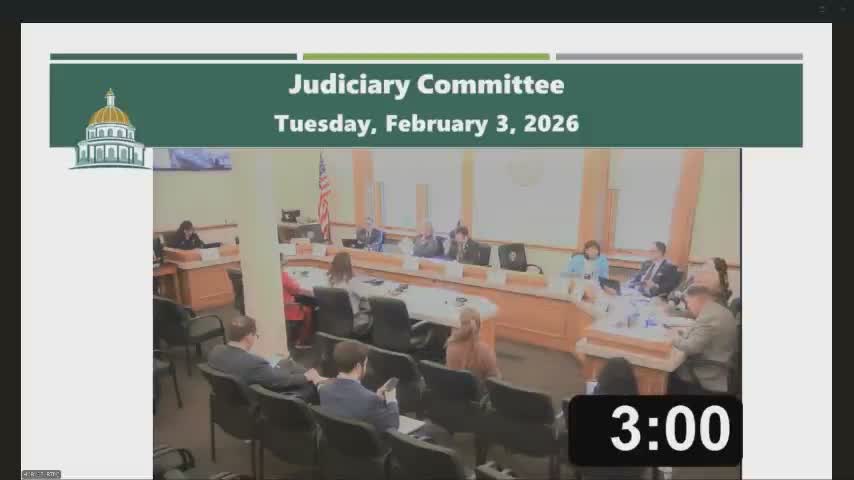
Sponsors told the Judiciary Committee HB 10‑20 responds to a nationwide concern that inexpensive colorimetric presumptive drug tests have a substantial false‑positive rate and can coerce innocent people into guilty pleas.
"This bill is about fairness, accuracy and trust in our system," Rep. Gilchrist said, describing a bipartisan working group that recommended two fixes: issue summonses instead of custodial arrests for low‑level (DM1) possession cases when a colorimetric test is the only evidence, and require a court advisement in certain felony cases that the test is presumptive and that defendants may request confirmatory laboratory testing.
Sponsors said the bill does not prevent arrest when other probable‑cause evidence exists; it narrows the circumstances in which a presumptive field test alone can trigger detention. AML Bacon described the policy as narrow and designed to preserve prosecutorial options where corroborating evidence exists while preventing coercive pretrial detention based solely on a test with known error rates.
Testimony and evidence: Witnesses included innocence‑advocacy organizations, the Colorado District Attorney’s Council and national researchers. Jeannie Siegel (Corey Wise Innocence Project), Kelly Young (Innocence Project), Des Walsh (Roadside Drug Test Innocence Alliance) and others described national examples where unreliable field tests produced false positives that led to arrests and coerced guilty pleas; speakers cited national estimates (roughly 30,000 wrongful arrests annually) and a Quattrone Center report that raised concerns about error rates.
The Colorado District Attorney’s Council (Jessica Dotter) said DAs participated on the working group and support an amendment clarifying that the summons prohibition applies only when a presumptive test is the sole basis for a DM1 charge. Panelists noted that confirmatory testing typically goes to regional or CBI labs, that turnaround can be slow, and that discovery routinely discloses when a field test was used.
Amendment and committee action: Sponsors moved amendment L1 to clarify the bill’s "solely" language; L1 was adopted without objection. The committee then voted unanimously on a roll call to send HB 10‑20 as amended to the Committee of the Whole with a favorable recommendation.
What happens next: HB 10‑20 goes to the full House Committee of the Whole for further consideration; sponsors said they expect continued stakeholder work on implementation details such as confirmatory testing logistics and fiscal assumptions.
"This bill is about fairness, accuracy and trust in our system," Rep. Gilchrist said, describing a bipartisan working group that recommended two fixes: issue summonses instead of custodial arrests for low‑level (DM1) possession cases when a colorimetric test is the only evidence, and require a court advisement in certain felony cases that the test is presumptive and that defendants may request confirmatory laboratory testing.
Sponsors said the bill does not prevent arrest when other probable‑cause evidence exists; it narrows the circumstances in which a presumptive field test alone can trigger detention. AML Bacon described the policy as narrow and designed to preserve prosecutorial options where corroborating evidence exists while preventing coercive pretrial detention based solely on a test with known error rates.
Testimony and evidence: Witnesses included innocence‑advocacy organizations, the Colorado District Attorney’s Council and national researchers. Jeannie Siegel (Corey Wise Innocence Project), Kelly Young (Innocence Project), Des Walsh (Roadside Drug Test Innocence Alliance) and others described national examples where unreliable field tests produced false positives that led to arrests and coerced guilty pleas; speakers cited national estimates (roughly 30,000 wrongful arrests annually) and a Quattrone Center report that raised concerns about error rates.
The Colorado District Attorney’s Council (Jessica Dotter) said DAs participated on the working group and support an amendment clarifying that the summons prohibition applies only when a presumptive test is the sole basis for a DM1 charge. Panelists noted that confirmatory testing typically goes to regional or CBI labs, that turnaround can be slow, and that discovery routinely discloses when a field test was used.
Amendment and committee action: Sponsors moved amendment L1 to clarify the bill’s "solely" language; L1 was adopted without objection. The committee then voted unanimously on a roll call to send HB 10‑20 as amended to the Committee of the Whole with a favorable recommendation.
What happens next: HB 10‑20 goes to the full House Committee of the Whole for further consideration; sponsors said they expect continued stakeholder work on implementation details such as confirmatory testing logistics and fiscal assumptions.
View the Full Meeting & All Its Details
This article offers just a summary. Unlock complete video, transcripts, and insights as a Founder Member.
✓
Watch full, unedited meeting videos
✓
Search every word spoken in unlimited transcripts
✓
AI summaries & real-time alerts (all government levels)
✓
Permanent access to expanding government content
30-day money-back guarantee
