Vermont hospitals outline $330 million plan to cut costs, urge cautious policy changes
February 07, 2026 | Health Care, HOUSE OF REPRESENTATIVES, Committees, Legislative , Vermont
This article was created by AI summarizing key points discussed. AI makes mistakes, so for full details and context, please refer to the video of the full meeting. Please report any errors so we can fix them. Report an error »
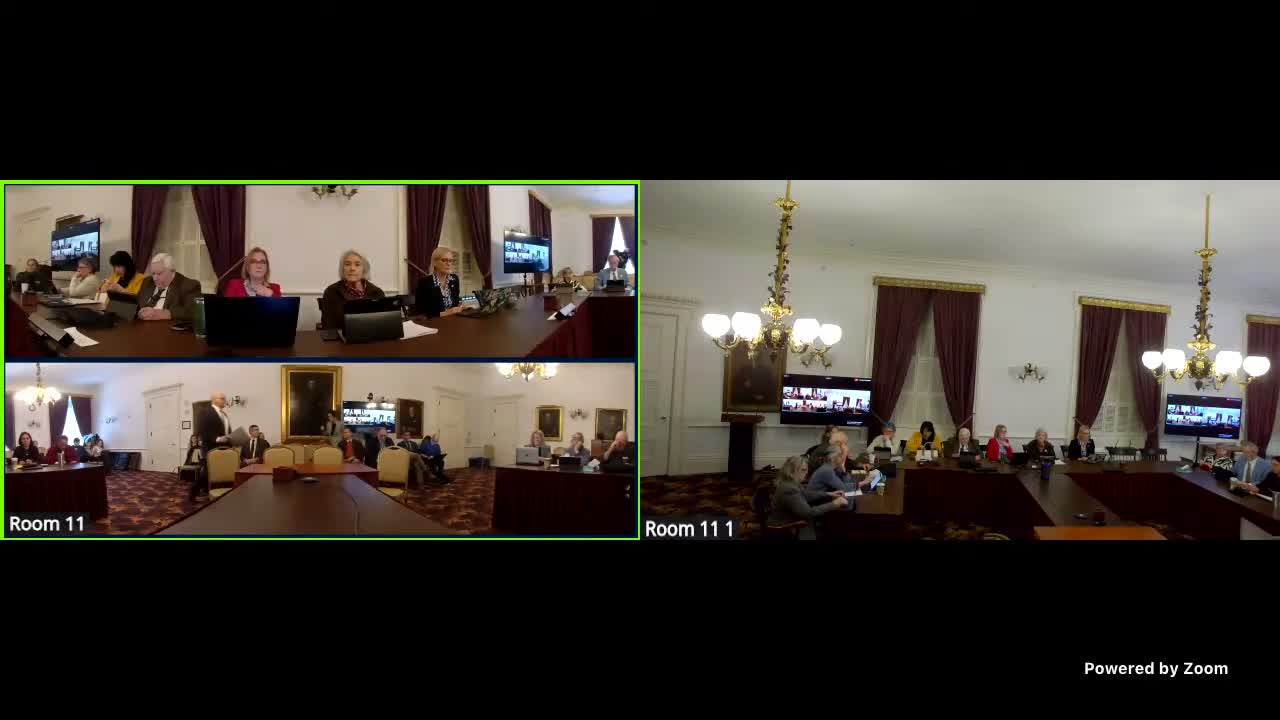
Hospital leaders from across Vermont told a joint continuation hearing of the Senate Health and Welfare Committee and the House Health Care Committee that they have already cut hundreds of millions of dollars in operating costs and are pursuing further savings while trying to preserve access to care.
Mike DelTreco, president of the Vermont Association of Hospitals and Health Systems, said hospitals submitted 2026 budgets that met Green Mountain Care Board guidance and that hospitals statewide eliminated $230,000,000 in operating expenses in one year. He said his association identified three pillars of work: initial budget reductions, an additional $100,000,000 in operational savings identified with national consultant Kaufman Hall to be achieved over two years, and ongoing regionalization and transformation work with the Agency of Human Services expected to generate further savings over a longer horizon. “The status quo is not sustainable,” DelTreco said, and he asked legislators to consider new proposals carefully “so as not to create any unintended consequences that might derail this forward progress.”
DelTreco clarified on questioning that the $100,000,000 figure comes from operational efficiency opportunities studied with Kaufman Hall and was not modeled to include reference‑based pricing; he described the preferred approach as a market‑basket‑minus mindset that allows limited growth to sustain workforce investment.
Steve Laplaier, CEO of UVM Health and president of UVM Medical Center, said UVM Health achieved significant savings last year and committed to additional operational savings over the next two years. Laplaier told the committees that recent Green Mountain Care Board orders for the UVM Medical Center contributed to a 12% reduction this year in related Blue Cross Blue Shield premiums; he added that prices for some procedures, including MRIs and CT scans, are about 25% lower for some services. Laplaier described efforts to provide fractional specialty FTEs and shared specialty coverage to keep more care local and said telehealth and partnerships with community health centers are part of the strategy.
Both witnesses emphasized protecting patient care as they pursue reductions. DelTreco said the reductions have focused on administrative and operational changes and asking staff to work more efficiently, with decisions framed to minimize impacts on patient care. Laplaier said UVM does not plan to force services onto other hospitals and favors partnerships when rural hospitals request support.
Legislators pressed for details about executive compensation and pipeline programs; Laplaier said he had no bonus structure when he took his role and that boards remain attentive to compensation decisions. Lawmakers also questioned whether regionalization and academic‑center partnerships risk concentrating services; witnesses said the aim is to coordinate specialist coverage without forcing consolidation.
The committee did not take formal action during the portion of the hearing captured in the transcript. Witnesses said further details on individual hospital plans and regional transformation work are forthcoming and that they would continue to work with AHS, the Green Mountain Care Board and insurers to monitor effects on access and affordability.
Mike DelTreco, president of the Vermont Association of Hospitals and Health Systems, said hospitals submitted 2026 budgets that met Green Mountain Care Board guidance and that hospitals statewide eliminated $230,000,000 in operating expenses in one year. He said his association identified three pillars of work: initial budget reductions, an additional $100,000,000 in operational savings identified with national consultant Kaufman Hall to be achieved over two years, and ongoing regionalization and transformation work with the Agency of Human Services expected to generate further savings over a longer horizon. “The status quo is not sustainable,” DelTreco said, and he asked legislators to consider new proposals carefully “so as not to create any unintended consequences that might derail this forward progress.”
DelTreco clarified on questioning that the $100,000,000 figure comes from operational efficiency opportunities studied with Kaufman Hall and was not modeled to include reference‑based pricing; he described the preferred approach as a market‑basket‑minus mindset that allows limited growth to sustain workforce investment.
Steve Laplaier, CEO of UVM Health and president of UVM Medical Center, said UVM Health achieved significant savings last year and committed to additional operational savings over the next two years. Laplaier told the committees that recent Green Mountain Care Board orders for the UVM Medical Center contributed to a 12% reduction this year in related Blue Cross Blue Shield premiums; he added that prices for some procedures, including MRIs and CT scans, are about 25% lower for some services. Laplaier described efforts to provide fractional specialty FTEs and shared specialty coverage to keep more care local and said telehealth and partnerships with community health centers are part of the strategy.
Both witnesses emphasized protecting patient care as they pursue reductions. DelTreco said the reductions have focused on administrative and operational changes and asking staff to work more efficiently, with decisions framed to minimize impacts on patient care. Laplaier said UVM does not plan to force services onto other hospitals and favors partnerships when rural hospitals request support.
Legislators pressed for details about executive compensation and pipeline programs; Laplaier said he had no bonus structure when he took his role and that boards remain attentive to compensation decisions. Lawmakers also questioned whether regionalization and academic‑center partnerships risk concentrating services; witnesses said the aim is to coordinate specialist coverage without forcing consolidation.
The committee did not take formal action during the portion of the hearing captured in the transcript. Witnesses said further details on individual hospital plans and regional transformation work are forthcoming and that they would continue to work with AHS, the Green Mountain Care Board and insurers to monitor effects on access and affordability.
Don't Miss a Word: See the Full Meeting!
Go beyond summaries. Unlock every video, transcript, and key insight with a Founder Membership.
✓
Get instant access to full meeting videos
✓
Search and clip any phrase from complete transcripts
✓
Receive AI-powered summaries & custom alerts
✓
Enjoy lifetime, unrestricted access to government data
30-day money-back guarantee
