BGS tells committee it accepts audit findings and outlines fixes for State Energy Management Program
February 07, 2026 | Natural Resources & Energy, SENATE, Committees, Legislative , Vermont
This article was created by AI summarizing key points discussed. AI makes mistakes, so for full details and context, please refer to the video of the full meeting. Please report any errors so we can fix them. Report an error »
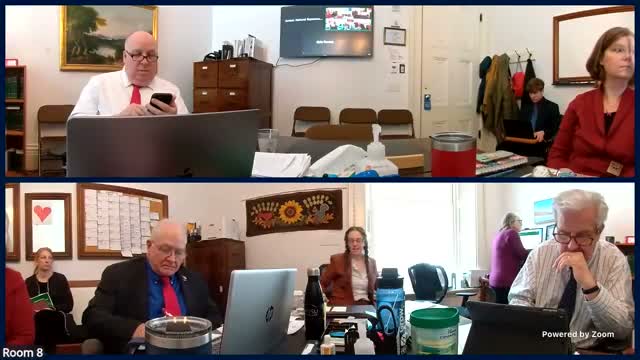
Deputy Commissioner Emily Kisicky and State Energy Program manager Brian Stulom told the Natural Resources & Energy committee on Feb. 6 that they accept an auditor’s findings about shortcomings in how BGS tracks energy usage and verifies savings across state facilities.
The BGS presentation described the State Energy Management Program (established under Act 178 in 2014) and said the program: relies on Energy Star Portfolio Manager for utility data collection; has two revolving funds for efficiency projects; and partners with Efficiency Vermont. The auditors reviewed data from 2016 through 2025 and identified gaps in how the agency tracks energy for facilities not owned by BGS, how it verifies post-installation savings, and inconsistencies with baseline and statutory savings targets.
BGS said it generally agreed with the recommendations, has submitted appendices of responses with timelines, and plans to produce a 2026 Agency Energy Plan to get the reporting back on the biannual schedule. The department also acknowledged that project completion slowed in recent years because of staffing gaps in the two project-manager roles; both positions were reported filled in January 2026, and staff said they expect to accelerate the project pipeline.
BGS highlighted program work beyond the audit: a municipal energy-resilience grant program that obligated approximately $35.9 million (ARPA funds) to projects, awarding funding to 126 municipalities across 246 buildings; a flexible load-management pilot that required a $38,500 software upgrade and has produced measurable savings; and expansion of EV charging infrastructure at state facilities (from eight chargers to 35 and counting).
Program staff said some statutory requirements from 2014 — for example, per-measure first-year savings thresholds — may merit reevaluation to allow bundling of measures that produce stronger lifecycle savings but do not meet per-measure targets in their first year.
BGS committed to reviewing standard operating procedures, improving measurement and verification practices (which may require additional resources), coordinating with partner agencies to improve statewide energy baselines, and returning to the committee with proposals to update statute where appropriate.
The BGS presentation described the State Energy Management Program (established under Act 178 in 2014) and said the program: relies on Energy Star Portfolio Manager for utility data collection; has two revolving funds for efficiency projects; and partners with Efficiency Vermont. The auditors reviewed data from 2016 through 2025 and identified gaps in how the agency tracks energy for facilities not owned by BGS, how it verifies post-installation savings, and inconsistencies with baseline and statutory savings targets.
BGS said it generally agreed with the recommendations, has submitted appendices of responses with timelines, and plans to produce a 2026 Agency Energy Plan to get the reporting back on the biannual schedule. The department also acknowledged that project completion slowed in recent years because of staffing gaps in the two project-manager roles; both positions were reported filled in January 2026, and staff said they expect to accelerate the project pipeline.
BGS highlighted program work beyond the audit: a municipal energy-resilience grant program that obligated approximately $35.9 million (ARPA funds) to projects, awarding funding to 126 municipalities across 246 buildings; a flexible load-management pilot that required a $38,500 software upgrade and has produced measurable savings; and expansion of EV charging infrastructure at state facilities (from eight chargers to 35 and counting).
Program staff said some statutory requirements from 2014 — for example, per-measure first-year savings thresholds — may merit reevaluation to allow bundling of measures that produce stronger lifecycle savings but do not meet per-measure targets in their first year.
BGS committed to reviewing standard operating procedures, improving measurement and verification practices (which may require additional resources), coordinating with partner agencies to improve statewide energy baselines, and returning to the committee with proposals to update statute where appropriate.
Don't Miss a Word: See the Full Meeting!
Go beyond summaries. Unlock every video, transcript, and key insight with a Founder Membership.
✓
Get instant access to full meeting videos
✓
Search and clip any phrase from complete transcripts
✓
Receive AI-powered summaries & custom alerts
✓
Enjoy lifetime, unrestricted access to government data
30-day money-back guarantee
