Senate committee hears bill to create Vermont Voting Rights Act, adds language assistance and new election-interference offenses
February 07, 2026 | Government Operations, SENATE, Committees, Legislative , Vermont
This article was created by AI summarizing key points discussed. AI makes mistakes, so for full details and context, please refer to the video of the full meeting. Please report any errors so we can fix them. Report an error »
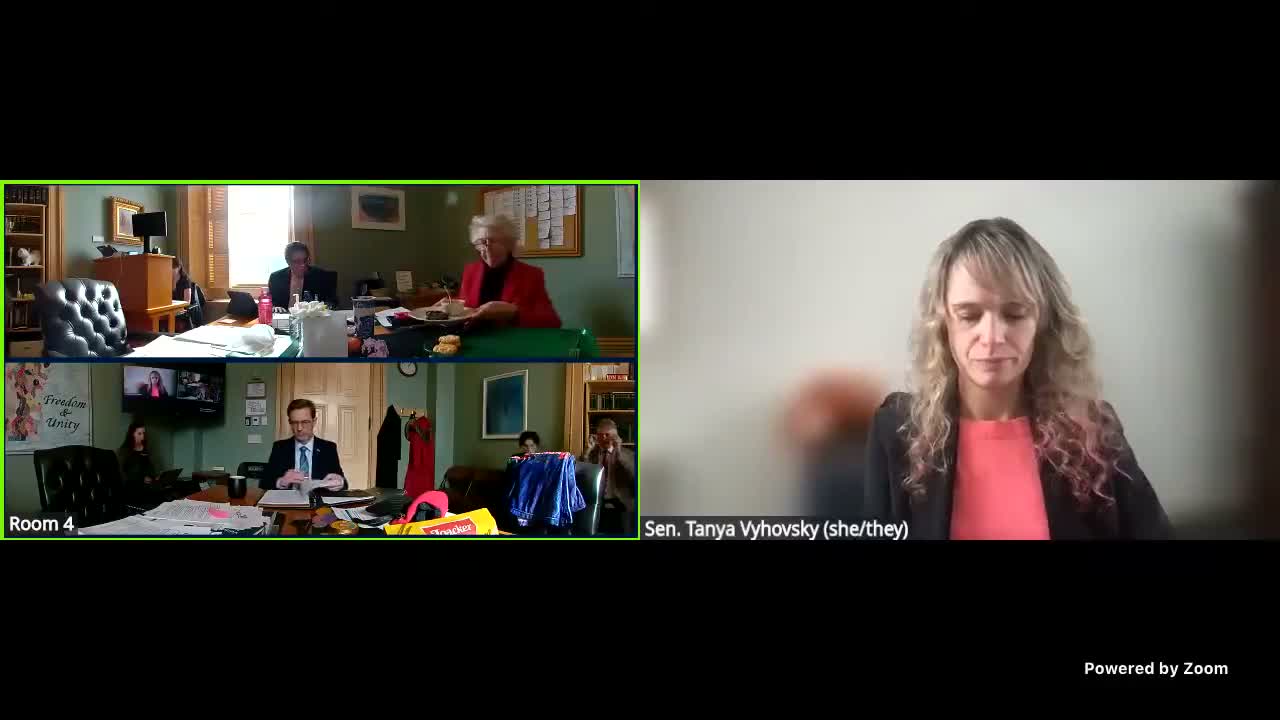
The Senate Government Operations Committee on Friday took an initial, detailed look at S.298, the Vermont Voting Rights Act, a broad bill that would add statewide voting-rights protections and new enforcement tools.
Legislative counsel Tim Devlin, who walked the committee through the draft, said the bill is organized into six areas: language assistance; assistance for voters 65 and older and voters with disabilities; limits and procedures for changes to electoral systems and district boundaries; creation of a voter-education and outreach fund; new criminal and civil measures to address election interference; and provisions for how incarcerated people are counted in reapportionment.
"First would be language assistance for voters," Devlin said while summarizing the bill’s structure, and he later described the bill’s enforcement mechanism: residents who believe required language services were not provided could bring a civil action in superior court.
Why it matters: supporters told the committee the bill aims to prevent "vote dilution"—a situation in which voters can cast ballots but election structures consistently prevent particular groups from translating votes into representation. The draft pairs preventive procedures (notice, review, and the option to seek an attorney general certification) with both criminal and civil enforcement tools.
Key provisions and committee questions
- Language assistance and assisted voting: The bill would require the secretary of state to identify languages that merit enhanced assistance and to publish findings annually. Devlin described procedures for assisting voters who are elderly or have disabilities, including sending poll officials to assist voters near a polling-place entrance and handling ballots in the voter’s presence. Committee members asked how officials would verify age and suggested adding specific checks or inviting elections staff to answer operational questions.
- Covered practices, notice, and preclearance: Municipalities seeking changes such as switching to at-large systems, consolidating or relocating polling places, or altering district boundaries within 12 months of an election would face a 45-day public-notice and review period and, if revised, an additional 30-day renotice. Municipalities may instead seek a "certificate of no objection" from the attorney general. A senator cautioned the 45-day period could coincide with ballot mailings and asked whether notice should happen earlier.
- Voter-education fund: The bill would create a special nonreverting voter education and outreach fund. "Monies in the fund shall be used solely for the purpose of educating voters," Devlin said. Revenue proposed for the fund would include civil penalties and other assessments under the bill.
- New election-interference offenses: The draft creates four offenses: intimidation of election officers, intimidation of voters, communication of false information to registered voters (narrowly limited to false statements about the date, time, or place of an election), and interference with voting by persons acting under color of law. Devlin emphasized application will be fact-specific and invoked the "true threat" doctrine when members asked about examples of intimidation; penalties in the criminal provisions range up to two years’ imprisonment in some subsections, and some sections include fines. The draft also authorizes civil penalties and attorney-general enforcement with injunctive remedies and damages.
- Counting incarcerated people for reapportionment: The bill directs that, for redistricting purposes, people incarcerated at census time would generally be counted at their last known address rather than at the correctional facility. Committee members raised practical concerns about voting eligibility, absentee voting, and how out-of-state incarceration should be treated.
Support and testimony
Three witnesses urged the committee to advance the bill and consider amendments to align with a recently published model state voting rights act. Alana Pearson, communications lead at RepresentWomen, said the bill would help address representation gaps for women and language-minority communities. "RepresentWomen strongly supports the Vermont Voting Rights Act," she said.
Ben Williams of FairVote Action said state voting-rights acts have become common after federal legal changes and urged the panel to consider adjustments floated by sponsors and stakeholders.
Venise Miller, manager of outreach at the Election Law Clinic at Harvard Law School, recommended amendments that would enable coalition claims (including MENA communities), a local problem-solving notice process before litigation, and centralized language-assistance support under the secretary of state.
What’s next
Committee members flagged specific drafting questions—mens rea language for criminal offenses ("willfully" vs. "knowingly"), the timing of public notice relative to ballot mailings, operational details for language assistance and chain-of-custody for ballots collected outside polling places, and the interaction between criminal fines and civil penalties. The committee recessed for five minutes to take up S.291 next; no vote on S.298 was taken at Friday’s session.
The record shows a robust, cross-partisan discussion of both practical implementation and legal standards; sponsors and counsel said they expect to circulate and consider amendments before the bill advances.
Legislative counsel Tim Devlin, who walked the committee through the draft, said the bill is organized into six areas: language assistance; assistance for voters 65 and older and voters with disabilities; limits and procedures for changes to electoral systems and district boundaries; creation of a voter-education and outreach fund; new criminal and civil measures to address election interference; and provisions for how incarcerated people are counted in reapportionment.
"First would be language assistance for voters," Devlin said while summarizing the bill’s structure, and he later described the bill’s enforcement mechanism: residents who believe required language services were not provided could bring a civil action in superior court.
Why it matters: supporters told the committee the bill aims to prevent "vote dilution"—a situation in which voters can cast ballots but election structures consistently prevent particular groups from translating votes into representation. The draft pairs preventive procedures (notice, review, and the option to seek an attorney general certification) with both criminal and civil enforcement tools.
Key provisions and committee questions
- Language assistance and assisted voting: The bill would require the secretary of state to identify languages that merit enhanced assistance and to publish findings annually. Devlin described procedures for assisting voters who are elderly or have disabilities, including sending poll officials to assist voters near a polling-place entrance and handling ballots in the voter’s presence. Committee members asked how officials would verify age and suggested adding specific checks or inviting elections staff to answer operational questions.
- Covered practices, notice, and preclearance: Municipalities seeking changes such as switching to at-large systems, consolidating or relocating polling places, or altering district boundaries within 12 months of an election would face a 45-day public-notice and review period and, if revised, an additional 30-day renotice. Municipalities may instead seek a "certificate of no objection" from the attorney general. A senator cautioned the 45-day period could coincide with ballot mailings and asked whether notice should happen earlier.
- Voter-education fund: The bill would create a special nonreverting voter education and outreach fund. "Monies in the fund shall be used solely for the purpose of educating voters," Devlin said. Revenue proposed for the fund would include civil penalties and other assessments under the bill.
- New election-interference offenses: The draft creates four offenses: intimidation of election officers, intimidation of voters, communication of false information to registered voters (narrowly limited to false statements about the date, time, or place of an election), and interference with voting by persons acting under color of law. Devlin emphasized application will be fact-specific and invoked the "true threat" doctrine when members asked about examples of intimidation; penalties in the criminal provisions range up to two years’ imprisonment in some subsections, and some sections include fines. The draft also authorizes civil penalties and attorney-general enforcement with injunctive remedies and damages.
- Counting incarcerated people for reapportionment: The bill directs that, for redistricting purposes, people incarcerated at census time would generally be counted at their last known address rather than at the correctional facility. Committee members raised practical concerns about voting eligibility, absentee voting, and how out-of-state incarceration should be treated.
Support and testimony
Three witnesses urged the committee to advance the bill and consider amendments to align with a recently published model state voting rights act. Alana Pearson, communications lead at RepresentWomen, said the bill would help address representation gaps for women and language-minority communities. "RepresentWomen strongly supports the Vermont Voting Rights Act," she said.
Ben Williams of FairVote Action said state voting-rights acts have become common after federal legal changes and urged the panel to consider adjustments floated by sponsors and stakeholders.
Venise Miller, manager of outreach at the Election Law Clinic at Harvard Law School, recommended amendments that would enable coalition claims (including MENA communities), a local problem-solving notice process before litigation, and centralized language-assistance support under the secretary of state.
What’s next
Committee members flagged specific drafting questions—mens rea language for criminal offenses ("willfully" vs. "knowingly"), the timing of public notice relative to ballot mailings, operational details for language assistance and chain-of-custody for ballots collected outside polling places, and the interaction between criminal fines and civil penalties. The committee recessed for five minutes to take up S.291 next; no vote on S.298 was taken at Friday’s session.
The record shows a robust, cross-partisan discussion of both practical implementation and legal standards; sponsors and counsel said they expect to circulate and consider amendments before the bill advances.
Don't Miss a Word: See the Full Meeting!
Go beyond summaries. Unlock every video, transcript, and key insight with a Founder Membership.
✓
Get instant access to full meeting videos
✓
Search and clip any phrase from complete transcripts
✓
Receive AI-powered summaries & custom alerts
✓
Enjoy lifetime, unrestricted access to government data
30-day money-back guarantee
