Hagerstown town hall draws landlords, tenants and advocates as council seeks feedback on rent stabilization
February 07, 2026 | Hagerstown, Washington County, Maryland
This article was created by AI summarizing key points discussed. AI makes mistakes, so for full details and context, please refer to the video of the full meeting. Please report any errors so we can fix them. Report an error »
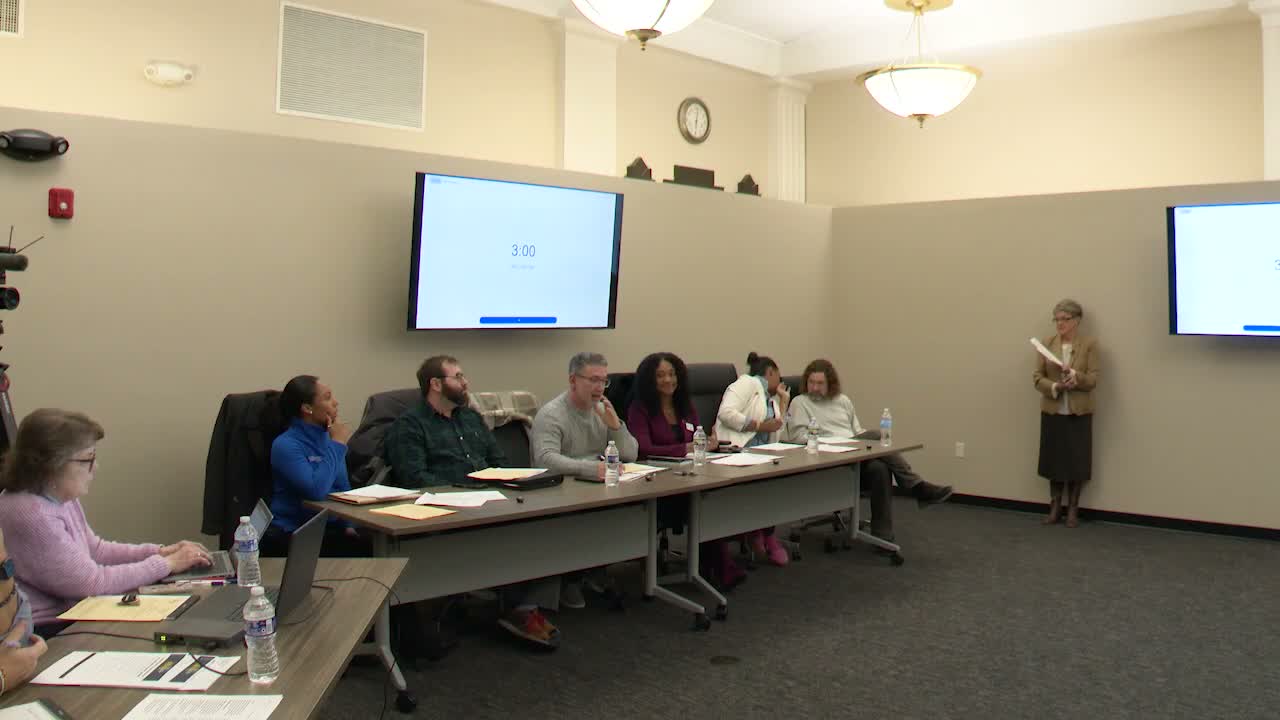
HAGERSTOWN, Md. — The Hagerstown City Council convened a public town-hall session to hear community views on possible rent-stabilization measures, drawing a mix of landlords, tenants, advocates and council members who presented starkly different assessments of risks and benefits.
The meeting, framed by Councilwoman Tia Burnett as an opportunity to "hear from the people about what's going on with our rent and housing," included presentations on recent Maryland law changes and 27 three‑minute public comments. Staff reminded attendees written comments would be accepted through Feb. 19 and said the council will hold a public work session to review the feedback.
Why it matters: Speakers said the choice could affect housing affordability, investment and housing supply in Hagerstown. Landlords told the council that rising property taxes, insurance and utility costs threaten small owners' ability to maintain rental housing. Tenants, veterans' advocates and the Washington County NAACP said caps and stronger eviction protections are needed to prevent displacement of low‑income and vulnerable residents.
Landlords and property managers told the council rising carrying costs make strict annual caps unworkable. "For us to try and apply a big city... solution to something that's really personal in a small town like Hagerstown may not be the best solution," said Jane Paige Thompson, a Hagerstown property manager, who noted local population and income figures and said average local rents and operating costs differ significantly from Montgomery and Prince George's counties. Several landlords gave detailed cost examples; Michael Stanford, a broker and property manager, said utilities for one seven‑unit building rose $2,700 in 2025 (a 36% increase) and highlighted new state rules limiting combined security and pet deposits to one month's rent and requiring timely returns with interest.
Speakers representing landlord associations and investor groups warned that strict caps can reduce new construction and encourage owners to sell or convert rental units, shrinking the housing supply. "If you constrain what you can get as a return on that investment, they're going to sell off their properties," said one speaker who has owned rental properties in the city and county.
Tenants, faith leaders and advocacy groups urged protections to prevent sudden displacement. Becky Homan recounted the case of Elizabeth Holver, a 65‑year‑old disabled Navy veteran who, Homan said, "was evicted from her apartment as she laid in an ICU bed on a ventilator at Meredith Hospital," and asked why the housing authority or social services had not performed a wellness check after notice attempts failed. Taj Smith, president of the Washington County NAACP, called housing a "fundamental human right" and urged rent stabilization with "good cause" eviction rules to protect Black and Brown families from disproportionate displacement.
Allegations about the Hagerstown Housing Authority also surfaced. One speaker alleged the housing authority had illegally evicted residents, submitted false court documents and garnished wages; she said she had filed motions with the court, the attorney general and HUD and had not yet received redress.
State context: A presenter summarized Maryland law changes: the state does not have a blanket statewide rent‑control law, but Montgomery and Prince George's counties have local caps tying increases to CPI formulas; the Renters Rights and Stabilization Act of 2024 (effective Oct. 1, 2024) established a tenant bill of rights, an Office of Tenant and Landlord Affairs, limits on deposits, and higher eviction‑filing costs.
Council response and next steps: Council members acknowledged the complexity and limits of local authority. Kristin Alshire and Mayor Bill McIntyre raised annexation and development constraints that limit the city's ability to add housing stock and noted a pending House bill on express annexation that could change the process. The council asked residents to submit written comments to councilcomments@hagerstownmaryland.org by Feb. 19 and said it will hold a public work session to deliberate on the feedback before proposing specific legislation.
What remains unresolved: No formal motion or vote was taken at the meeting. Speakers offered competing factual claims about local costs, housing‑supply effects and specific incidents involving the housing authority; the council indicated it will use written comments and a work session to gather more information before acting.
The next procedural step is the council's public work session to review the submitted comments and the public record.
The meeting, framed by Councilwoman Tia Burnett as an opportunity to "hear from the people about what's going on with our rent and housing," included presentations on recent Maryland law changes and 27 three‑minute public comments. Staff reminded attendees written comments would be accepted through Feb. 19 and said the council will hold a public work session to review the feedback.
Why it matters: Speakers said the choice could affect housing affordability, investment and housing supply in Hagerstown. Landlords told the council that rising property taxes, insurance and utility costs threaten small owners' ability to maintain rental housing. Tenants, veterans' advocates and the Washington County NAACP said caps and stronger eviction protections are needed to prevent displacement of low‑income and vulnerable residents.
Landlords and property managers told the council rising carrying costs make strict annual caps unworkable. "For us to try and apply a big city... solution to something that's really personal in a small town like Hagerstown may not be the best solution," said Jane Paige Thompson, a Hagerstown property manager, who noted local population and income figures and said average local rents and operating costs differ significantly from Montgomery and Prince George's counties. Several landlords gave detailed cost examples; Michael Stanford, a broker and property manager, said utilities for one seven‑unit building rose $2,700 in 2025 (a 36% increase) and highlighted new state rules limiting combined security and pet deposits to one month's rent and requiring timely returns with interest.
Speakers representing landlord associations and investor groups warned that strict caps can reduce new construction and encourage owners to sell or convert rental units, shrinking the housing supply. "If you constrain what you can get as a return on that investment, they're going to sell off their properties," said one speaker who has owned rental properties in the city and county.
Tenants, faith leaders and advocacy groups urged protections to prevent sudden displacement. Becky Homan recounted the case of Elizabeth Holver, a 65‑year‑old disabled Navy veteran who, Homan said, "was evicted from her apartment as she laid in an ICU bed on a ventilator at Meredith Hospital," and asked why the housing authority or social services had not performed a wellness check after notice attempts failed. Taj Smith, president of the Washington County NAACP, called housing a "fundamental human right" and urged rent stabilization with "good cause" eviction rules to protect Black and Brown families from disproportionate displacement.
Allegations about the Hagerstown Housing Authority also surfaced. One speaker alleged the housing authority had illegally evicted residents, submitted false court documents and garnished wages; she said she had filed motions with the court, the attorney general and HUD and had not yet received redress.
State context: A presenter summarized Maryland law changes: the state does not have a blanket statewide rent‑control law, but Montgomery and Prince George's counties have local caps tying increases to CPI formulas; the Renters Rights and Stabilization Act of 2024 (effective Oct. 1, 2024) established a tenant bill of rights, an Office of Tenant and Landlord Affairs, limits on deposits, and higher eviction‑filing costs.
Council response and next steps: Council members acknowledged the complexity and limits of local authority. Kristin Alshire and Mayor Bill McIntyre raised annexation and development constraints that limit the city's ability to add housing stock and noted a pending House bill on express annexation that could change the process. The council asked residents to submit written comments to councilcomments@hagerstownmaryland.org by Feb. 19 and said it will hold a public work session to deliberate on the feedback before proposing specific legislation.
What remains unresolved: No formal motion or vote was taken at the meeting. Speakers offered competing factual claims about local costs, housing‑supply effects and specific incidents involving the housing authority; the council indicated it will use written comments and a work session to gather more information before acting.
The next procedural step is the council's public work session to review the submitted comments and the public record.
View the Full Meeting & All Its Details
This article offers just a summary. Unlock complete video, transcripts, and insights as a Founder Member.
✓
Watch full, unedited meeting videos
✓
Search every word spoken in unlimited transcripts
✓
AI summaries & real-time alerts (all government levels)
✓
Permanent access to expanding government content
30-day money-back guarantee
