United Nations at 80: legacy of peacekeeping and a renewed call to reform the Security Council
February 07, 2026 | United Nations, International
This article was created by AI summarizing key points discussed. AI makes mistakes, so for full details and context, please refer to the video of the full meeting. Please report any errors so we can fix them. Report an error »
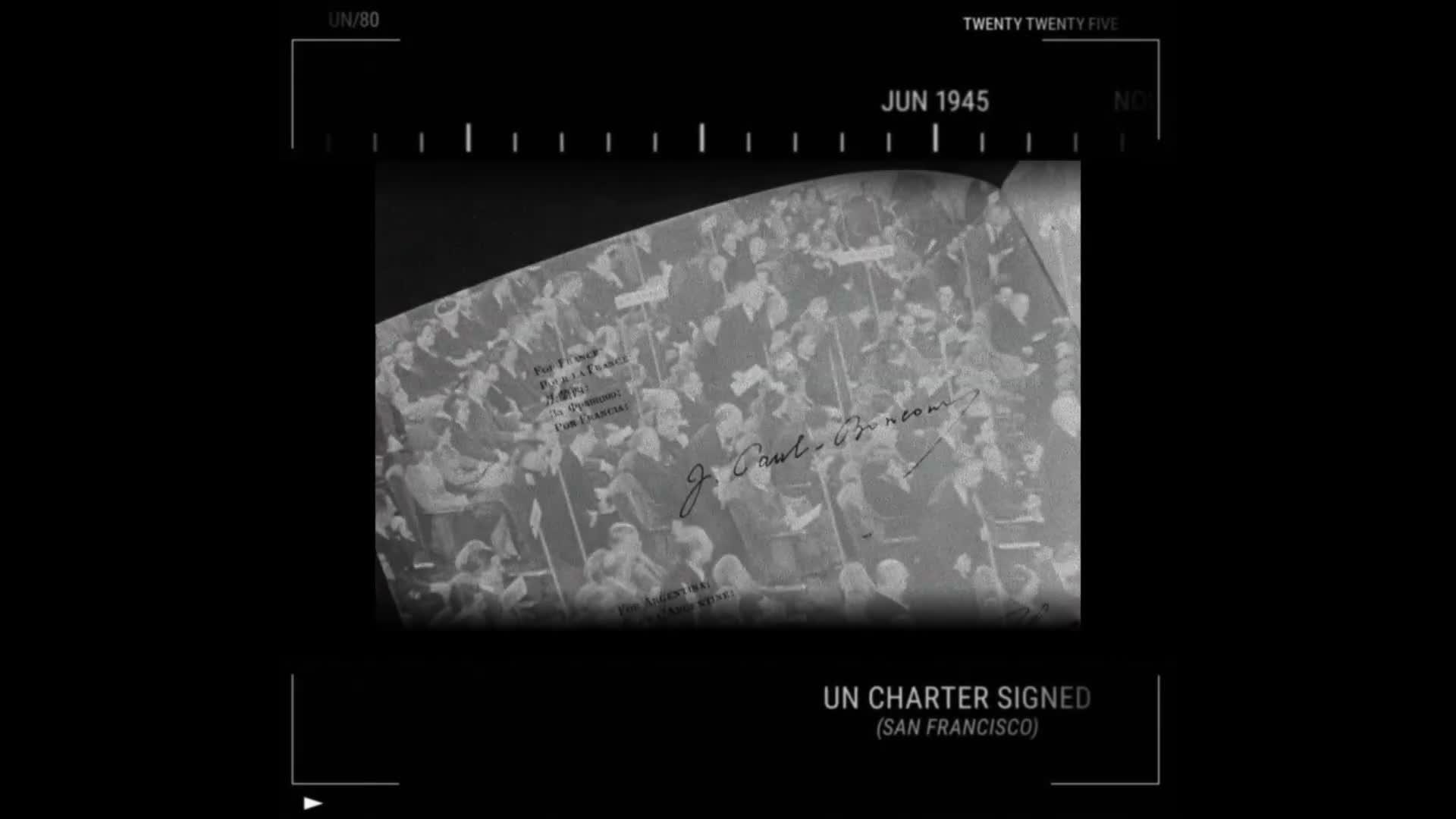
From the ruins of war, humanity dared to imagine unity, Speaker 1 said, recalling how 50 nations convened in 1945 to create a charter and bind words into a common promise. The address framed eight decades of work by the United Nations as an effort driven by intention: founding documents, expanding membership and new agencies that helped nations rebuild and govern.
The speaker credited the UN with establishing foundational norms — a charter and a declaration asserting universal human rights — and with growing from those beginnings to include nations across Africa, Asia, the Caribbean and the Middle East. "No longer shadows of empire, but sovereign stars," the speaker said, describing waves of new members that broadened the organization's voice.
The speech also acknowledged shortcomings while urging renewal. Citing recent pledges in 2024, Speaker 9 said, "The pact for the future must lay the ground for reform. Reform of the outdated United Nations Security Council to make it more effective, but also more representative of what the world is today." That call frames an explicit contemporary policy demand for structural change in the Security Council rather than a specific legislative proposal.
The address balanced praise and critique: peacekeeping and humanitarian gains were listed alongside failures to prevent atrocities such as the Rwandan genocide, which Speaker 1 said was "a silence that screamed across the world." The speech closed by urging collective action: "The future will not be inherited. It will be built," Speaker 1 said.
No formal votes or actions were recorded in the transcript of this address; the remarks are presented as a public commemoration and policy plea rather than a negotiated decision.
The speaker credited the UN with establishing foundational norms — a charter and a declaration asserting universal human rights — and with growing from those beginnings to include nations across Africa, Asia, the Caribbean and the Middle East. "No longer shadows of empire, but sovereign stars," the speaker said, describing waves of new members that broadened the organization's voice.
The speech also acknowledged shortcomings while urging renewal. Citing recent pledges in 2024, Speaker 9 said, "The pact for the future must lay the ground for reform. Reform of the outdated United Nations Security Council to make it more effective, but also more representative of what the world is today." That call frames an explicit contemporary policy demand for structural change in the Security Council rather than a specific legislative proposal.
The address balanced praise and critique: peacekeeping and humanitarian gains were listed alongside failures to prevent atrocities such as the Rwandan genocide, which Speaker 1 said was "a silence that screamed across the world." The speech closed by urging collective action: "The future will not be inherited. It will be built," Speaker 1 said.
No formal votes or actions were recorded in the transcript of this address; the remarks are presented as a public commemoration and policy plea rather than a negotiated decision.
Don't Miss a Word: See the Full Meeting!
Go beyond summaries. Unlock every video, transcript, and key insight with a Founder Membership.
✓
Get instant access to full meeting videos
✓
Search and clip any phrase from complete transcripts
✓
Receive AI-powered summaries & custom alerts
✓
Enjoy lifetime, unrestricted access to government data
30-day money-back guarantee
