Board approves grant application to add on-site mental-health assessment at Change Academy
February 07, 2026 | DeKalb County, Indiana
This article was created by AI summarizing key points discussed. AI makes mistakes, so for full details and context, please refer to the video of the full meeting. Please report any errors so we can fix them. Report an error »
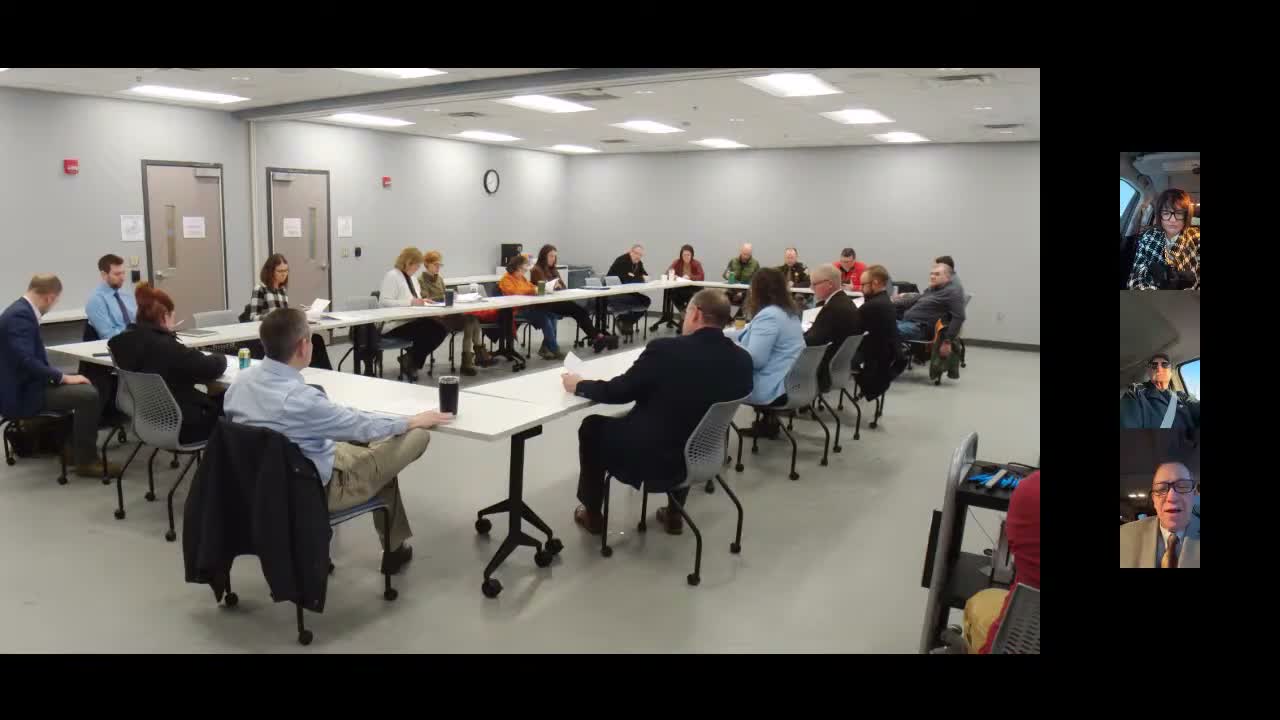
Speaker 1 presented a grant renewal and implementation plan for Change Academy and the board voted to approve submitting the application to the Department of Corrections. "The idea for this grant is to... help do some early assessment," Speaker 1 said, describing a partner mental-health provider that would send staff daily to perform intake assessments and short-term crisis support and to make referrals when appropriate. Speaker 1 told the board the proposal envisions a two-year award covering periodic clinician time, modest supplies and two sound machines to protect privacy during sessions.
Board members asked about voluntariness, parental permission and how referrals would be handled; Speaker 1 said parental consent would be sought and that referrals would go back to the parent or guardian for decisions. "If we find out there in fact to work the grant... there’s gonna be a number of things that can happen, including getting parental permission," Speaker 1 said.
Supporters on the board described the application as well organized. "Basic grant application is an excellent idea. I think it's well put together," Speaker 4 said before moving the item; Speaker 2 seconded the motion and the board approved submitting the grant application by voice vote (exact roll call not recorded).
Why it matters: the grant would place a clinician at Change Academy during students’ initial days, aiming to identify behavioral-health needs early and reduce disciplinary responses that may stem from unrecognized mental-health crises. The program’s designers said the goal is to triage students—identify who needs services immediately, who needs referral, and who needs no additional services—so that staff can tailor supports rather than lean solely on discipline.
Next steps: staff will submit the application to DOC and return with any award details, budget clarifications and implementation timelines if the grant is funded. The grant narrative and state budget documents were attached to the board packet.
Board members asked about voluntariness, parental permission and how referrals would be handled; Speaker 1 said parental consent would be sought and that referrals would go back to the parent or guardian for decisions. "If we find out there in fact to work the grant... there’s gonna be a number of things that can happen, including getting parental permission," Speaker 1 said.
Supporters on the board described the application as well organized. "Basic grant application is an excellent idea. I think it's well put together," Speaker 4 said before moving the item; Speaker 2 seconded the motion and the board approved submitting the grant application by voice vote (exact roll call not recorded).
Why it matters: the grant would place a clinician at Change Academy during students’ initial days, aiming to identify behavioral-health needs early and reduce disciplinary responses that may stem from unrecognized mental-health crises. The program’s designers said the goal is to triage students—identify who needs services immediately, who needs referral, and who needs no additional services—so that staff can tailor supports rather than lean solely on discipline.
Next steps: staff will submit the application to DOC and return with any award details, budget clarifications and implementation timelines if the grant is funded. The grant narrative and state budget documents were attached to the board packet.
Don't Miss a Word: See the Full Meeting!
Go beyond summaries. Unlock every video, transcript, and key insight with a Founder Membership.
✓
Get instant access to full meeting videos
✓
Search and clip any phrase from complete transcripts
✓
Receive AI-powered summaries & custom alerts
✓
Enjoy lifetime, unrestricted access to government data
30-day money-back guarantee
