Board reviews audits, updates electronic-monitoring rules and discusses new juvenile EM authority
February 07, 2026 | DeKalb County, Indiana
This article was created by AI summarizing key points discussed. AI makes mistakes, so for full details and context, please refer to the video of the full meeting. Please report any errors so we can fix them. Report an error »
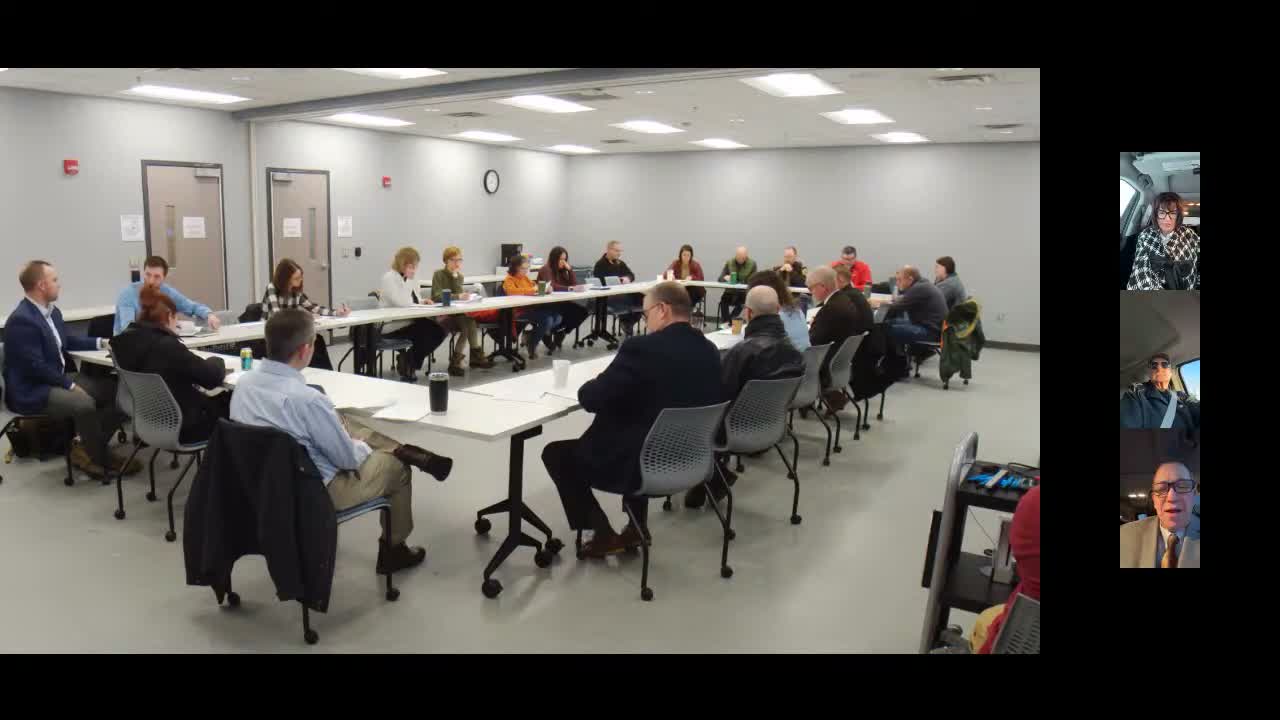
The board reviewed multiple reports, updated program rules and discussed operational changes to juvenile supervision.
Residential audit: Speaker 1 said the residential-audit report was lengthy but praised the program as a top-tier operation and noted staff had already implemented recommended language additions. Board members commended staff for the audit outcome.
Electronic-monitoring rule update: Speaker 1 proposed adding a bullet to the handbook clarifying that residents must follow program rules; Speaker 4 moved to add the language and the board approved the change by voice vote. The change was described as clarifying existing expectations rather than creating new sanctions.
Juvenile emergency EM authority: Speaker 3 described a recently approved local process allowing law enforcement to place juveniles on emergency electronic monitoring when they meet risk criteria. "It is part... approved for us to be able to place juvenile on electronic monitoring law, which means an emergency Bridal, Saturday night, if they fit the risk categories, law enforcement can make that or prevent... be able to place them directly on," Speaker 3 said. The board discussed cost comparisons: speakers noted an approximate $7-per-day cost for EM versus low-end detention costs the board estimated at about $200 per day, and cited examples where EM preserved bed capacity and reduced transport burdens.
Funding and legislation: Speaker 1 said DSC grant funding for 2027 is reduced overall but that DSC is doubling funding for CTP; Speaker 1 also reported a community-corrections bill cleared a House criminal committee and is headed to the full House.
Why it matters: the handbook language clarifies resident obligations and supports consistent rule enforcement; emergency EM authority gives law enforcement an additional tool to manage juvenile risk while reducing costly detention and transport when secure beds are limited.
Next steps: staff will incorporate the handbook language into program documents, continue to monitor DSC grant adjustments and follow the pending bill’s progress in the legislature.
Residential audit: Speaker 1 said the residential-audit report was lengthy but praised the program as a top-tier operation and noted staff had already implemented recommended language additions. Board members commended staff for the audit outcome.
Electronic-monitoring rule update: Speaker 1 proposed adding a bullet to the handbook clarifying that residents must follow program rules; Speaker 4 moved to add the language and the board approved the change by voice vote. The change was described as clarifying existing expectations rather than creating new sanctions.
Juvenile emergency EM authority: Speaker 3 described a recently approved local process allowing law enforcement to place juveniles on emergency electronic monitoring when they meet risk criteria. "It is part... approved for us to be able to place juvenile on electronic monitoring law, which means an emergency Bridal, Saturday night, if they fit the risk categories, law enforcement can make that or prevent... be able to place them directly on," Speaker 3 said. The board discussed cost comparisons: speakers noted an approximate $7-per-day cost for EM versus low-end detention costs the board estimated at about $200 per day, and cited examples where EM preserved bed capacity and reduced transport burdens.
Funding and legislation: Speaker 1 said DSC grant funding for 2027 is reduced overall but that DSC is doubling funding for CTP; Speaker 1 also reported a community-corrections bill cleared a House criminal committee and is headed to the full House.
Why it matters: the handbook language clarifies resident obligations and supports consistent rule enforcement; emergency EM authority gives law enforcement an additional tool to manage juvenile risk while reducing costly detention and transport when secure beds are limited.
Next steps: staff will incorporate the handbook language into program documents, continue to monitor DSC grant adjustments and follow the pending bill’s progress in the legislature.
Don't Miss a Word: See the Full Meeting!
Go beyond summaries. Unlock every video, transcript, and key insight with a Founder Membership.
✓
Get instant access to full meeting videos
✓
Search and clip any phrase from complete transcripts
✓
Receive AI-powered summaries & custom alerts
✓
Enjoy lifetime, unrestricted access to government data
30-day money-back guarantee
