Committee advances SB 74 after adopting Hong amendment amid clashes over librarians' criminal liability
February 07, 2026 | Judiciary, HOUSE OF REPRESENTATIVES, Committees, Legislative, Georgia
This article was created by AI summarizing key points discussed. AI makes mistakes, so for full details and context, please refer to the video of the full meeting. Please report any errors so we can fix them. Report an error »
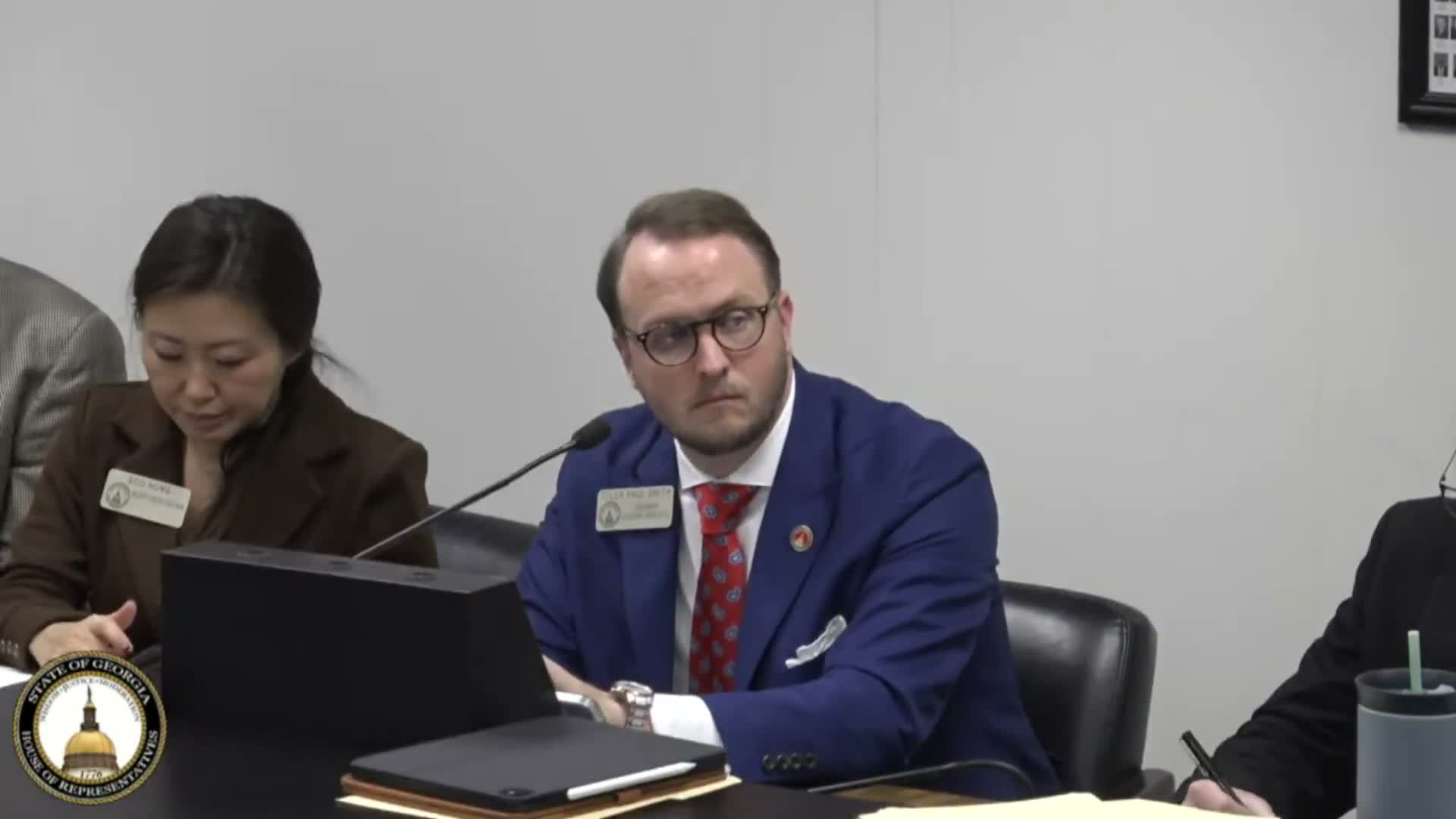
A Judiciary committee advanced Senate Bill 74 on a voice and show-of-hands vote after adopting an amendment from Vice Chair Hong that narrows immunity and requires training for members who review challenges to materials.
The measure, as amended, says immunity under the cited code section will not apply if a librarian fails to comply with the decisions of appropriate governing authorities on complaints about materials harmful to minors; the amendment also directs OCGA 20-5-43 to establish training procedures for reconsideration committees as provided in OCGA 16-12-103.
Supporters said the bill seeks to protect children by creating clearer, enforceable review processes. Senator Burns, one of the bill’s proponents, said the proposal is not intended to remove books from libraries but to ‘‘move [certain materials] to a place to which access by minors is more restricted and controlled.’’ He described the amendment as creating guidance and training for local governing bodies and staff.
Opponents, including public commenters and several committee members, said the changes risk criminalizing librarians and would have a chilling effect on book selection and access. Representative Panitch argued the bill would ‘‘gut the protection’’ that librarians have enjoyed since 1984 and warned that removing immunity could lead to criminal charges: ‘‘That is the direct effect of this bill. That is the design. That is a book ban.’’
Sarah Hunt Blackwell, senior policy counsel at the ACLU of Georgia, urged members to ‘‘please just keep our librarians in mind,’’ saying added criminal liability and administrative burdens would not better protect children but would instead saddle librarians with new duties and risks.
Bentley Hudgins, Georgia state director of the Human Rights Campaign, told the committee that the statutory definition in OCGA 16-12-102 appears to single out homosexuality in the list of conduct described as obscene and asked whether ‘‘being homosexual itself [is] obscene,’’ urging lawmakers to remove such language if the committee wished to avoid penalizing ordinary depictions of same-sex affection.
Proponents countered that the relevant provisions in the bill address OCGA 16-12-103 and 16-12-104 and that the definition language in 16-12-102, as drafted, targets explicit sexual conduct rather than simple expressions of affection. Some members said removing the word from the code could have unintended effects elsewhere in state law and recommended addressing definitional changes in separate legislation.
The committee considered a Roberts amendment that would have struck the word ‘‘homosexuality’’ from the code definition but rejected the amendment in a committee vote. The Hong amendment was adopted by voice vote earlier in the hearing. The bill then advanced from committee with the Hong amendment; the chair recorded his affirmative vote and adjourned the panel.
What happens next: SB 74, as amended, will proceed through the chamber’s legislative process; the committee did not publish a roll-call tally in the hearing transcript. The amendments and members’ debate leave open questions about how governing authorities will implement reconsideration procedures, who will bear legal defense costs for challenged staff, and whether additional statutory protections for employees should be added in later legislation.
The measure, as amended, says immunity under the cited code section will not apply if a librarian fails to comply with the decisions of appropriate governing authorities on complaints about materials harmful to minors; the amendment also directs OCGA 20-5-43 to establish training procedures for reconsideration committees as provided in OCGA 16-12-103.
Supporters said the bill seeks to protect children by creating clearer, enforceable review processes. Senator Burns, one of the bill’s proponents, said the proposal is not intended to remove books from libraries but to ‘‘move [certain materials] to a place to which access by minors is more restricted and controlled.’’ He described the amendment as creating guidance and training for local governing bodies and staff.
Opponents, including public commenters and several committee members, said the changes risk criminalizing librarians and would have a chilling effect on book selection and access. Representative Panitch argued the bill would ‘‘gut the protection’’ that librarians have enjoyed since 1984 and warned that removing immunity could lead to criminal charges: ‘‘That is the direct effect of this bill. That is the design. That is a book ban.’’
Sarah Hunt Blackwell, senior policy counsel at the ACLU of Georgia, urged members to ‘‘please just keep our librarians in mind,’’ saying added criminal liability and administrative burdens would not better protect children but would instead saddle librarians with new duties and risks.
Bentley Hudgins, Georgia state director of the Human Rights Campaign, told the committee that the statutory definition in OCGA 16-12-102 appears to single out homosexuality in the list of conduct described as obscene and asked whether ‘‘being homosexual itself [is] obscene,’’ urging lawmakers to remove such language if the committee wished to avoid penalizing ordinary depictions of same-sex affection.
Proponents countered that the relevant provisions in the bill address OCGA 16-12-103 and 16-12-104 and that the definition language in 16-12-102, as drafted, targets explicit sexual conduct rather than simple expressions of affection. Some members said removing the word from the code could have unintended effects elsewhere in state law and recommended addressing definitional changes in separate legislation.
The committee considered a Roberts amendment that would have struck the word ‘‘homosexuality’’ from the code definition but rejected the amendment in a committee vote. The Hong amendment was adopted by voice vote earlier in the hearing. The bill then advanced from committee with the Hong amendment; the chair recorded his affirmative vote and adjourned the panel.
What happens next: SB 74, as amended, will proceed through the chamber’s legislative process; the committee did not publish a roll-call tally in the hearing transcript. The amendments and members’ debate leave open questions about how governing authorities will implement reconsideration procedures, who will bear legal defense costs for challenged staff, and whether additional statutory protections for employees should be added in later legislation.
Don't Miss a Word: See the Full Meeting!
Go beyond summaries. Unlock every video, transcript, and key insight with a Founder Membership.
✓
Get instant access to full meeting videos
✓
Search and clip any phrase from complete transcripts
✓
Receive AI-powered summaries & custom alerts
✓
Enjoy lifetime, unrestricted access to government data
30-day money-back guarantee
