Virginia senators back expanded jail substance-use and mental-health grants, with provisos for smaller jails
February 07, 2026 | 2026 Legislature VA, Virginia
This article was created by AI summarizing key points discussed. AI makes mistakes, so for full details and context, please refer to the video of the full meeting. Please report any errors so we can fix them. Report an error »
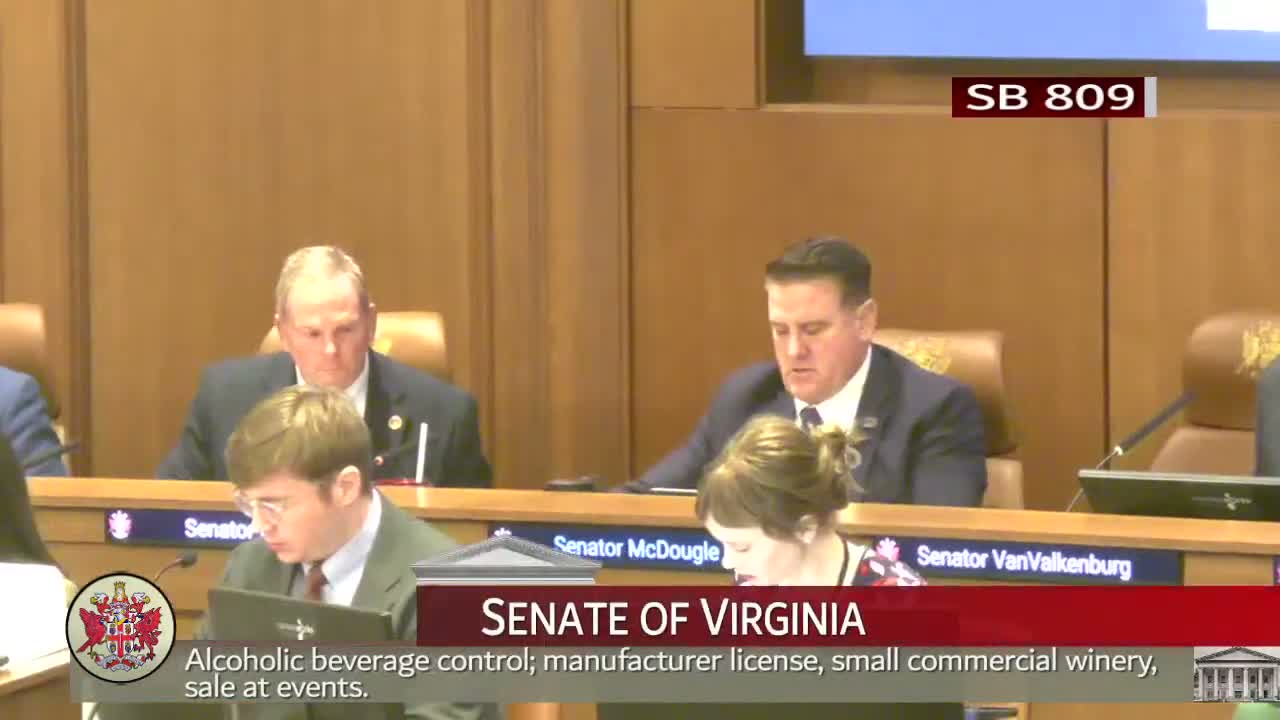
Senators on the Senate Rehabilitation and Social Services Committee on Friday advanced two bills intended to expand substance use disorder treatment and mental-health services for people incarcerated in local and regional jails.
Senator Srinivasan, the sponsor of SB599, said the bill would create a three-year grant limitation and require the Department of Criminal Justice Services (DCJS) to weigh applicants’ plans to become self-sufficient before awarding funds. He also offered a budget amendment (Item 394.10) proposing an additional $2,000,000 to support more grantees. “This approach strengthens sustainability, expands access to treatment, and maximizes the impact of our limited resources,” Srinivasan said.
Committee members pressed for clarity about how the program would work in smaller jails that lack community services boards (CSBs). Senator DeStef raised a repeated concern that, absent state oversight or funding, some small jails might only hand inmates informational materials rather than provide formal counseling. “My concern is some of our smaller jails don’t have CSBs… they can truly hand them a piece of paper,” DeStef said.
Sarah Stan of the Joint Commission on Health Care (JCHC) told the panel the accompanying budget language and amendment are intended to prioritize existing grantees and provide short-term funding to programs that might otherwise face gaps. “We’ve established additional funding to help those programs that may face a shortage in the short term,” Stan said, adding the application criteria require transition plans to self-sufficiency.
SB690 would repeal a DCJS requirement that limited expansion under an older model addiction-recovery program and consolidate funds into a broader jail mental-health pilot to strengthen continuity of care inside jails and after release. Srinivasan said grantees from the older program would be prioritized under the pilot to minimize service disruption.
The committee voted to report both measures and refer them to the Finance Committee for budgetary review. Roll calls recorded reporting votes and referrals during the session.
Senator Srinivasan, the sponsor of SB599, said the bill would create a three-year grant limitation and require the Department of Criminal Justice Services (DCJS) to weigh applicants’ plans to become self-sufficient before awarding funds. He also offered a budget amendment (Item 394.10) proposing an additional $2,000,000 to support more grantees. “This approach strengthens sustainability, expands access to treatment, and maximizes the impact of our limited resources,” Srinivasan said.
Committee members pressed for clarity about how the program would work in smaller jails that lack community services boards (CSBs). Senator DeStef raised a repeated concern that, absent state oversight or funding, some small jails might only hand inmates informational materials rather than provide formal counseling. “My concern is some of our smaller jails don’t have CSBs… they can truly hand them a piece of paper,” DeStef said.
Sarah Stan of the Joint Commission on Health Care (JCHC) told the panel the accompanying budget language and amendment are intended to prioritize existing grantees and provide short-term funding to programs that might otherwise face gaps. “We’ve established additional funding to help those programs that may face a shortage in the short term,” Stan said, adding the application criteria require transition plans to self-sufficiency.
SB690 would repeal a DCJS requirement that limited expansion under an older model addiction-recovery program and consolidate funds into a broader jail mental-health pilot to strengthen continuity of care inside jails and after release. Srinivasan said grantees from the older program would be prioritized under the pilot to minimize service disruption.
The committee voted to report both measures and refer them to the Finance Committee for budgetary review. Roll calls recorded reporting votes and referrals during the session.
View the Full Meeting & All Its Details
This article offers just a summary. Unlock complete video, transcripts, and insights as a Founder Member.
✓
Watch full, unedited meeting videos
✓
Search every word spoken in unlimited transcripts
✓
AI summaries & real-time alerts (all government levels)
✓
Permanent access to expanding government content
30-day money-back guarantee
