Municipal Officials Back ‘Right to Grow Food’ for Plants, Urge Excluding Livestock and Preserving Local Zoning
February 06, 2026 | Agriculture, Food Resiliency, & Forestry, HOUSE OF REPRESENTATIVES, Committees, Legislative , Vermont
This article was created by AI summarizing key points discussed. AI makes mistakes, so for full details and context, please refer to the video of the full meeting. Please report any errors so we can fix them. Report an error »
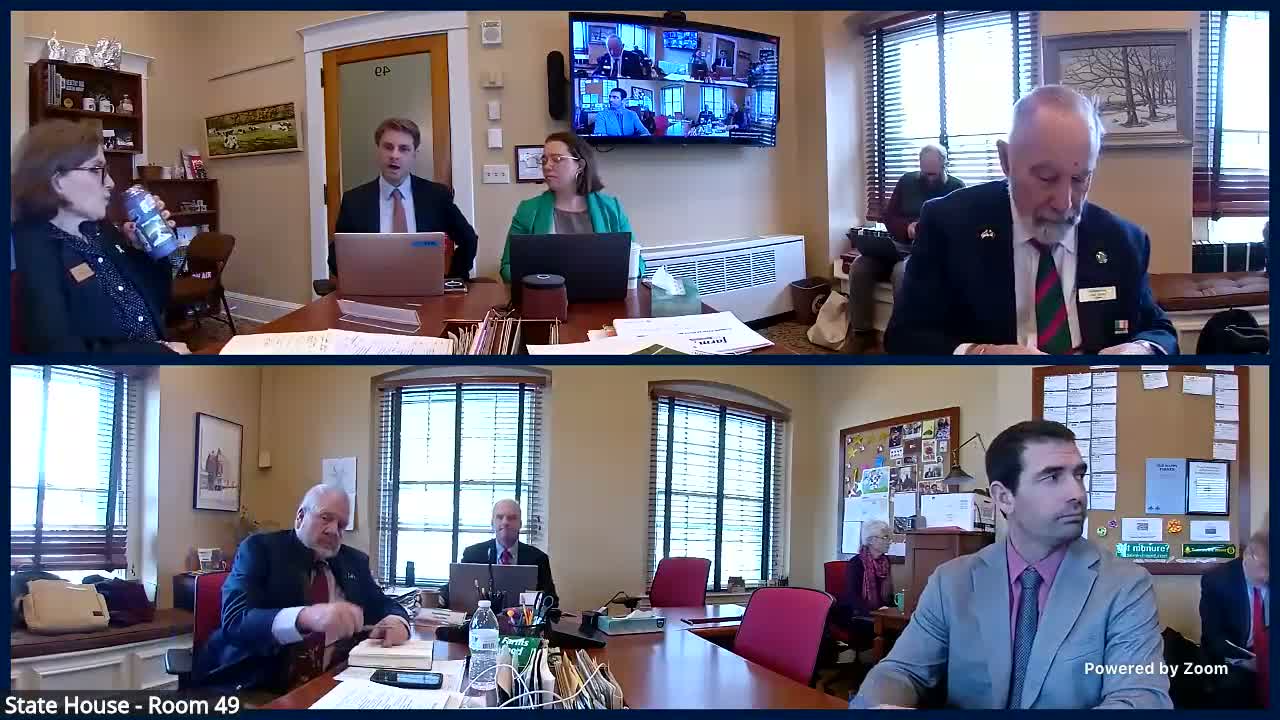
Municipal leaders and the Vermont League of Cities and Towns told a legislative committee they back a statutory “right to grow food” for plants, orchards and maple production but urged lawmakers to exclude livestock from that protection and preserve narrow municipal regulation for setbacks, screening and other public-safety concerns.
"We support the right to grow food," said Josh Shannen, director of intergovernmental relations, stressing that most of the League’s members are small municipalities and that their interest is in keeping consistent local land-use rules rather than regulating farming itself. Samantha Sheehan, municipal policy and advocacy specialist for the Vermont League of Cities and Towns, said municipal bylaws that set coop size, setback distances and manure disposal practices have long been used to protect neighbors and ensure animal welfare.
Why it matters: Witnesses said a widely worded exemption that includes all livestock could preempt those municipal bylaws and create enforcement gaps like those that arose in a recent Essex case in which an agency farm determination blocked local action. They told committee members the result could be lawsuits and uncertainty about who — state agencies or towns — has authority to address nuisances, animal cruelty or risks to wells and public infrastructure.
What witnesses recommended: Sheehan urged lawmakers to move plant-focused protections out of the farm-regulation section and into the municipal preemption list (identified in testimony as 24 V.S.A. §4413) so the law would make explicit that individuals, renters and institutions may grow food while still allowing municipalities to impose narrowly tailored rules (for example, setbacks, screening, lighting and limits that address traffic and emergency access).
On tiers and mapping: Committee members and witnesses debated whether protections should apply only in statutorily defined Tier 1A communities or also in Tier 1B areas created under Act 181. Witnesses recommended including both tiers or adding acreage triggers so the bill would not simply shift the problem to Tier 1B communities and would not encourage new farms to locate in denser areas to avoid municipal rules.
Grandfathering existing farms: Witnesses recommended an explicit grandfathering clause so farms designated or subject to Required Agricultural Practices (RAPs) prior to 07/01/2026 would remain exempt from any new municipal regulation, reducing retroactive impacts on established operations.
Limits of the proposal: Speakers repeatedly emphasized they were not asking towns to regulate farming practices such as cultivation intensity or soil management — matters best handled by the Agency of Agriculture, Food and Markets — but instead sought clear, objective municipal standards in dense mixed-use areas to protect public rights of way, emergency access and neighbors.
Next steps: Witnesses offered to work with legislative counsel and the Agency of Agriculture to refine statutory language, including precise grandfathering language and an explicit list of municipal regulatory items that do not conflict with the right to grow food. The committee paused to hear the next witness.
"We support the right to grow food," said Josh Shannen, director of intergovernmental relations, stressing that most of the League’s members are small municipalities and that their interest is in keeping consistent local land-use rules rather than regulating farming itself. Samantha Sheehan, municipal policy and advocacy specialist for the Vermont League of Cities and Towns, said municipal bylaws that set coop size, setback distances and manure disposal practices have long been used to protect neighbors and ensure animal welfare.
Why it matters: Witnesses said a widely worded exemption that includes all livestock could preempt those municipal bylaws and create enforcement gaps like those that arose in a recent Essex case in which an agency farm determination blocked local action. They told committee members the result could be lawsuits and uncertainty about who — state agencies or towns — has authority to address nuisances, animal cruelty or risks to wells and public infrastructure.
What witnesses recommended: Sheehan urged lawmakers to move plant-focused protections out of the farm-regulation section and into the municipal preemption list (identified in testimony as 24 V.S.A. §4413) so the law would make explicit that individuals, renters and institutions may grow food while still allowing municipalities to impose narrowly tailored rules (for example, setbacks, screening, lighting and limits that address traffic and emergency access).
On tiers and mapping: Committee members and witnesses debated whether protections should apply only in statutorily defined Tier 1A communities or also in Tier 1B areas created under Act 181. Witnesses recommended including both tiers or adding acreage triggers so the bill would not simply shift the problem to Tier 1B communities and would not encourage new farms to locate in denser areas to avoid municipal rules.
Grandfathering existing farms: Witnesses recommended an explicit grandfathering clause so farms designated or subject to Required Agricultural Practices (RAPs) prior to 07/01/2026 would remain exempt from any new municipal regulation, reducing retroactive impacts on established operations.
Limits of the proposal: Speakers repeatedly emphasized they were not asking towns to regulate farming practices such as cultivation intensity or soil management — matters best handled by the Agency of Agriculture, Food and Markets — but instead sought clear, objective municipal standards in dense mixed-use areas to protect public rights of way, emergency access and neighbors.
Next steps: Witnesses offered to work with legislative counsel and the Agency of Agriculture to refine statutory language, including precise grandfathering language and an explicit list of municipal regulatory items that do not conflict with the right to grow food. The committee paused to hear the next witness.
View the Full Meeting & All Its Details
This article offers just a summary. Unlock complete video, transcripts, and insights as a Founder Member.
✓
Watch full, unedited meeting videos
✓
Search every word spoken in unlimited transcripts
✓
AI summaries & real-time alerts (all government levels)
✓
Permanent access to expanding government content
30-day money-back guarantee
