WJCC proposes FY27 budget that would boost pay, expand supports and ask localities for $1.92 million above baseline
February 06, 2026 | WILLIAMSBURG-JAMES CITY PBLC SCHS, School Districts, Virginia
This article was created by AI summarizing key points discussed. AI makes mistakes, so for full details and context, please refer to the video of the full meeting. Please report any errors so we can fix them. Report an error »
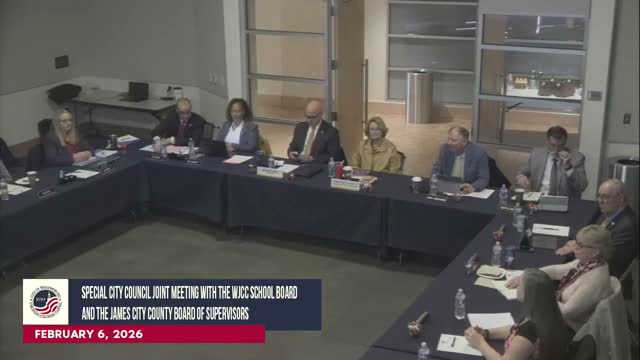
Dr. Keefer, superintendent of Williamsburg-James City County Public Schools, and Renee Ewing, the division's chief financial officer, presented the proposed FY2027 operating budget to a joint meeting of the school board, the Williamsburg City Council and the James City County Board of Supervisors. The proposal centers on compensation, student supports and sustaining operations while aligning spending with the Elevate '28 strategic plan.
The division projects roughly $10.6 million in new revenue for FY27, including a state funding increase the presentation estimated at $4.6 million and a $6.0 million increase tied to the joint funding agreement adopted in October 2025. Expenditure needs were presented at approximately $12.6 million, producing a funding gap of about $1.92 million that would form the basis of an above‑baseline request to local governments unless additional state funds materialize.
"This is intentionally a budget of need, not a budget of want," Dr. Keefer said, framing the proposal as one primarily designed to sustain core services and strengthen the workforce. The budget includes a base 2% salary increase consistent with the state proposal and layers additional dollars to continue implementing recommendations from a multi‑year Bolton compensation study. CFO Ewing reported that each 1% across‑the‑board salary increase costs roughly $1.3 million for the division and said remaining Bolton implementation costs were estimated at $6.8 million across the next two implementation years.
Staffing and benefits were highlighted as the budget's largest investments. The presentation forecasts a 16% projected increase in health insurance renewal rates for FY27; under a 70/30 employer/employee split the increase would amount to about $2.7 million in additional health costs, with roughly $2.0 million falling to the operating fund. The budget also includes a placeholder of $380,000 to address stipend competitiveness and proposals to increase contracted service hours for related special‑education services (from seven to eight hours) at an estimated contract cost of $640,000.
Programmatic investments the administration recommended include transition of some grant‑funded positions into the operating budget (special‑education teachers and related services), restoring seven bus driver FTEs that had been temporarily removed, expanded tutoring funds, K‑12 college and career readiness initiatives, and potential new positions such as an elementary math coach and gifted resource teacher. The administration flagged a one‑time startup estimate of about $225,000 to move lacrosse from a club sport to an interscholastic VHSL program and an ongoing approximate annual cost of $70,000, not including potential transportation expenses.
Ewing summarized identified savings of approximately $2.2 million through attrition, targeted departmental reductions and other adjustments, but said total savings did not fully close the projected gap. The administration presented a prioritized list of items that could be included in an above‑baseline request totaling about $1.92 million, subject to adjustments after state budget actions.
During Q&A, members asked how the division would measure the long‑term return on compensation investments and how state budget timing would affect local requests; Dr. Keefer and staff said they intend to track graduation and literacy measures, exhibition‑based learning, and other KPIs over time and hoped for clearer state revenue figures in the coming weeks. There was also discussion about collective‑bargaining proposals in the General Assembly and their potential fiscal implications for local budgets.
Procedural actions recorded during the meeting included a motion earlier to allow Ruth Larson to participate remotely (mover recorded as Steve Scalaroff) and a later motion to adjourn, both carried by voice votes.
Next steps: the administration signaled it will continue to analyze state revenue developments and return with refined figures; any above‑baseline request would be coordinated with the city and county budget cycles.
The division projects roughly $10.6 million in new revenue for FY27, including a state funding increase the presentation estimated at $4.6 million and a $6.0 million increase tied to the joint funding agreement adopted in October 2025. Expenditure needs were presented at approximately $12.6 million, producing a funding gap of about $1.92 million that would form the basis of an above‑baseline request to local governments unless additional state funds materialize.
"This is intentionally a budget of need, not a budget of want," Dr. Keefer said, framing the proposal as one primarily designed to sustain core services and strengthen the workforce. The budget includes a base 2% salary increase consistent with the state proposal and layers additional dollars to continue implementing recommendations from a multi‑year Bolton compensation study. CFO Ewing reported that each 1% across‑the‑board salary increase costs roughly $1.3 million for the division and said remaining Bolton implementation costs were estimated at $6.8 million across the next two implementation years.
Staffing and benefits were highlighted as the budget's largest investments. The presentation forecasts a 16% projected increase in health insurance renewal rates for FY27; under a 70/30 employer/employee split the increase would amount to about $2.7 million in additional health costs, with roughly $2.0 million falling to the operating fund. The budget also includes a placeholder of $380,000 to address stipend competitiveness and proposals to increase contracted service hours for related special‑education services (from seven to eight hours) at an estimated contract cost of $640,000.
Programmatic investments the administration recommended include transition of some grant‑funded positions into the operating budget (special‑education teachers and related services), restoring seven bus driver FTEs that had been temporarily removed, expanded tutoring funds, K‑12 college and career readiness initiatives, and potential new positions such as an elementary math coach and gifted resource teacher. The administration flagged a one‑time startup estimate of about $225,000 to move lacrosse from a club sport to an interscholastic VHSL program and an ongoing approximate annual cost of $70,000, not including potential transportation expenses.
Ewing summarized identified savings of approximately $2.2 million through attrition, targeted departmental reductions and other adjustments, but said total savings did not fully close the projected gap. The administration presented a prioritized list of items that could be included in an above‑baseline request totaling about $1.92 million, subject to adjustments after state budget actions.
During Q&A, members asked how the division would measure the long‑term return on compensation investments and how state budget timing would affect local requests; Dr. Keefer and staff said they intend to track graduation and literacy measures, exhibition‑based learning, and other KPIs over time and hoped for clearer state revenue figures in the coming weeks. There was also discussion about collective‑bargaining proposals in the General Assembly and their potential fiscal implications for local budgets.
Procedural actions recorded during the meeting included a motion earlier to allow Ruth Larson to participate remotely (mover recorded as Steve Scalaroff) and a later motion to adjourn, both carried by voice votes.
Next steps: the administration signaled it will continue to analyze state revenue developments and return with refined figures; any above‑baseline request would be coordinated with the city and county budget cycles.
Don't Miss a Word: See the Full Meeting!
Go beyond summaries. Unlock every video, transcript, and key insight with a Founder Membership.
✓
Get instant access to full meeting videos
✓
Search and clip any phrase from complete transcripts
✓
Receive AI-powered summaries & custom alerts
✓
Enjoy lifetime, unrestricted access to government data
30-day money-back guarantee
