House passes HB 1 limiting utility cost recovery for some executive pay after heated debate
February 06, 2026 | HOUSE OF REPRESENTATIVES, Committees, Legislative, Maryland
This article was created by AI summarizing key points discussed. AI makes mistakes, so for full details and context, please refer to the video of the full meeting. Please report any errors so we can fix them. Report an error »
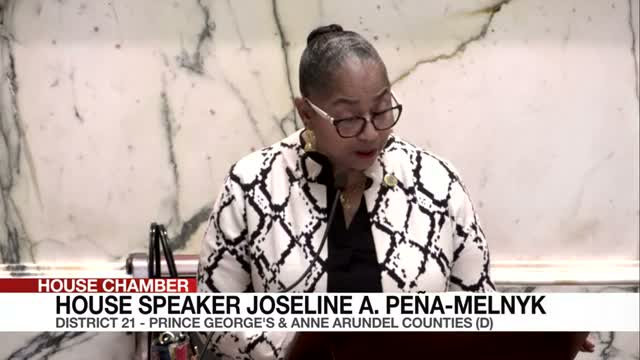
ANNAPOLIS, Md. — The Maryland House passed House Bill 1 on Feb. 5, 2026, by a 97–30 vote, clearing a bill that blocks investor-owned electric utilities from recovering some executive compensation and related costs from customers. The clerk announced the vote after an hours-long floor debate and comments from members across the state.
Supporters said HB 1 is a straightforward accountability measure that prevents utilities from shifting the cost of executive bonuses and perks onto ratepayers. The floor leader urged colleagues to back the bill as a cost-saving measure and policy signal, saying, "If you wanna reduce the cost to rate payers, you should vote for the bill." Supporters pointed to utility opposition to the bill as evidence it would have a tangible effect and cited BGE testimony estimating per-household savings in the low-dollar range.
Opponents called the measure largely symbolic and said the Public Service Commission (PSC) already has the statutory authority to disallow recovery of executive pay in rates. One delegate argued the PSC "sets the rates" and that adding this law could be redundant or have unintended consequences; others warned the bill could encourage utilities to shift incentive pay into base salaries, which could affect cost structures.
Speakers on both sides raised different estimates for savings. A member cited BGE testimony estimating roughly $1.70 in monthly savings for some customers; others said the fiscal note projected smaller or negligible per-household effects. Delegates also debated broader drivers of high bills — including program riders such as Empower, RGGI-related costs and prior policy choices — and whether HB 1 addresses those fundamental causes.
Members referenced committee testimony and letters from regulatory officials during the debate. Advocates argued HB 1 realigns corporate incentives so that shareholder-funded compensation, not ratepayer dollars, covers executive rewards. Critics said the PSC already reviews executive compensation and disallows imprudent costs in rate cases.
After debate, the clerk called the roll. "There being 97 votes in the affirmative and 30 votes in the negative, House Bill 1, having received a constitutional majority, is declared passed," the clerk announced. The House then moved to other floor and committee business.
The passage takes place as the chamber considers additional energy and cost-reduction measures this session; supporters described HB 1 as a "first step," while opponents urged more direct approaches to pause fees or target larger programmatic charges. The bill will proceed according to the legislative process for enacted House measures.
Supporters said HB 1 is a straightforward accountability measure that prevents utilities from shifting the cost of executive bonuses and perks onto ratepayers. The floor leader urged colleagues to back the bill as a cost-saving measure and policy signal, saying, "If you wanna reduce the cost to rate payers, you should vote for the bill." Supporters pointed to utility opposition to the bill as evidence it would have a tangible effect and cited BGE testimony estimating per-household savings in the low-dollar range.
Opponents called the measure largely symbolic and said the Public Service Commission (PSC) already has the statutory authority to disallow recovery of executive pay in rates. One delegate argued the PSC "sets the rates" and that adding this law could be redundant or have unintended consequences; others warned the bill could encourage utilities to shift incentive pay into base salaries, which could affect cost structures.
Speakers on both sides raised different estimates for savings. A member cited BGE testimony estimating roughly $1.70 in monthly savings for some customers; others said the fiscal note projected smaller or negligible per-household effects. Delegates also debated broader drivers of high bills — including program riders such as Empower, RGGI-related costs and prior policy choices — and whether HB 1 addresses those fundamental causes.
Members referenced committee testimony and letters from regulatory officials during the debate. Advocates argued HB 1 realigns corporate incentives so that shareholder-funded compensation, not ratepayer dollars, covers executive rewards. Critics said the PSC already reviews executive compensation and disallows imprudent costs in rate cases.
After debate, the clerk called the roll. "There being 97 votes in the affirmative and 30 votes in the negative, House Bill 1, having received a constitutional majority, is declared passed," the clerk announced. The House then moved to other floor and committee business.
The passage takes place as the chamber considers additional energy and cost-reduction measures this session; supporters described HB 1 as a "first step," while opponents urged more direct approaches to pause fees or target larger programmatic charges. The bill will proceed according to the legislative process for enacted House measures.
Don't Miss a Word: See the Full Meeting!
Go beyond summaries. Unlock every video, transcript, and key insight with a Founder Membership.
✓
Get instant access to full meeting videos
✓
Search and clip any phrase from complete transcripts
✓
Receive AI-powered summaries & custom alerts
✓
Enjoy lifetime, unrestricted access to government data
30-day money-back guarantee
