Committee reviews draft to expand pretrial supervision, flags staffing and notification gaps
February 06, 2026 | Corrections & Institutions, HOUSE OF REPRESENTATIVES, Committees, Legislative , Vermont
This article was created by AI summarizing key points discussed. AI makes mistakes, so for full details and context, please refer to the video of the full meeting. Please report any errors so we can fix them. Report an error »
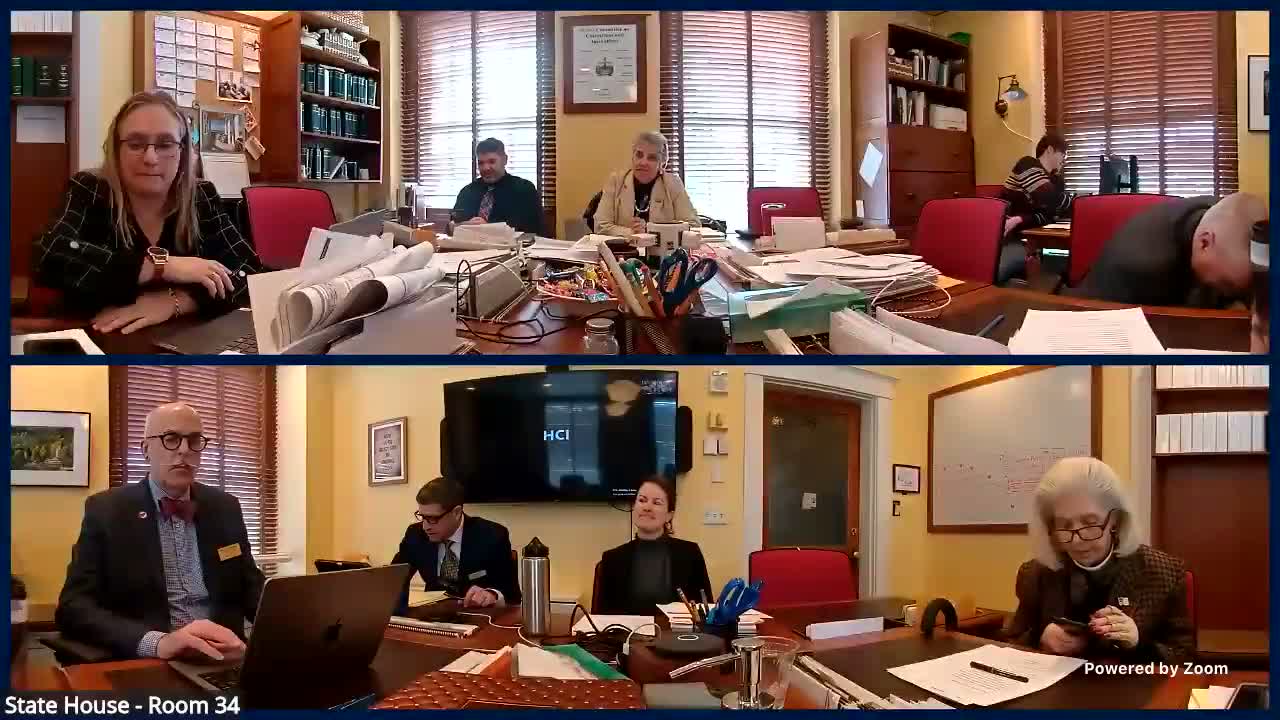
The House Corrections & Institutions committee met Feb. 6 to review draft 1.1 of a committee bill (draft request 26-0762) that would change statewide pretrial supervision under 13 VSA section 75 55. Committee staff said the draft is intended to implement four recommendations from the Council of State Governments: dedicate officers with smaller caseloads, authorize Department of Corrections staff to go directly to court on certain violations, base referrals on DOC risk-and-needs assessments rather than two statutory categories, and coordinate behavioral-health referrals across agencies.
Committee staff described the specific statutory edits in draft 1.1, including language that would direct DOC to "maintain a target caseload of not more than 20 defendants for each pretrial supervision officer" and remove two current eligibility categories (a violation of a condition of release or having five or more pending dockets) in favor of DOC assessments using evidence-based screening tools. Staff identified the draft request number as 26-0762 and noted the changes focus on the section of statute where the pretrial supervision program is codified ("13 VSA section 75 55").
The draft would also require DOC to "assess each defendant who is being considered or recommended for detention pending trial" and submit a report to the court recommending a supervision level. Staff said the court would retain authority to order release to the program, but the timing and trigger for DOC's review would change under the draft.
Several committee members pressed staff on operational details. One member asked whether the "20" limit refers solely to pretrial supervision caseloads or to an officer's entire workload, noting existing statutory caseload ratios for probation and parole officers. Committee staff said the Council of State Governments recommended dedicated pretrial supervision officers with caseloads of not more than 20, but acknowledged funding and staffing language is not included in the draft and would be needed to implement the change. "That could be an area for the committee to consider testimony," staff said.
Members also questioned how DOC would be notified so screenings could occur in time for arraignment or subsequent hearings. "Somebody's gotta notify DOC," the chair said; members suggested potential triggers could include the prosecutor, defense, court, or an arrest flag in a centralized system. Committee staff acknowledged the CSG recommendations did not specify the notification mechanism and flagged coordination and logistics as topics for witness testimony.
The committee discussed changes to compliance and review procedures after violations. The draft would allow pretrial supervision officers to file a motion to review court-imposed program condition violations and, in some phrasing, "may" notify the court. Members contrasted that with the governor's proposal, which staff said would require pretrial supervision officers to notify the prosecutor or the court; staff noted the two wordings produce similar ends but differ in permissive/mandatory language and in whether officers must notify prosecutors first.
On coordination, the draft adds a new subsection directing the Department of Mental Health and the Department of Health to work with DOC to provide timely referrals to behavioral-health services for defendants supervised under the program. Committee staff said the change responds to CSG testimony that limited availability and referral bottlenecks have hindered effective supervision.
Members voiced repeated concerns about whether DOC currently has the staff or authority to carry out the broader role proposed in the draft. One member summarized CSG's implementation challenges as (1) authority gaps, (2) limited resources and staff, and (3) weak cross-agency coordination. Several members recommended prioritizing coordination systems (for example, a statewide arrest flag or intake feed) before shifting responsibility more fully to DOC.
Next steps: staff told the committee House Judiciary will take up related language next week and offered to prepare a revised draft if the committee provides direction. The meeting recessed for lunch with plans to reconvene and hear witness testimony on operational impacts and triggering procedures.
Committee staff described the specific statutory edits in draft 1.1, including language that would direct DOC to "maintain a target caseload of not more than 20 defendants for each pretrial supervision officer" and remove two current eligibility categories (a violation of a condition of release or having five or more pending dockets) in favor of DOC assessments using evidence-based screening tools. Staff identified the draft request number as 26-0762 and noted the changes focus on the section of statute where the pretrial supervision program is codified ("13 VSA section 75 55").
The draft would also require DOC to "assess each defendant who is being considered or recommended for detention pending trial" and submit a report to the court recommending a supervision level. Staff said the court would retain authority to order release to the program, but the timing and trigger for DOC's review would change under the draft.
Several committee members pressed staff on operational details. One member asked whether the "20" limit refers solely to pretrial supervision caseloads or to an officer's entire workload, noting existing statutory caseload ratios for probation and parole officers. Committee staff said the Council of State Governments recommended dedicated pretrial supervision officers with caseloads of not more than 20, but acknowledged funding and staffing language is not included in the draft and would be needed to implement the change. "That could be an area for the committee to consider testimony," staff said.
Members also questioned how DOC would be notified so screenings could occur in time for arraignment or subsequent hearings. "Somebody's gotta notify DOC," the chair said; members suggested potential triggers could include the prosecutor, defense, court, or an arrest flag in a centralized system. Committee staff acknowledged the CSG recommendations did not specify the notification mechanism and flagged coordination and logistics as topics for witness testimony.
The committee discussed changes to compliance and review procedures after violations. The draft would allow pretrial supervision officers to file a motion to review court-imposed program condition violations and, in some phrasing, "may" notify the court. Members contrasted that with the governor's proposal, which staff said would require pretrial supervision officers to notify the prosecutor or the court; staff noted the two wordings produce similar ends but differ in permissive/mandatory language and in whether officers must notify prosecutors first.
On coordination, the draft adds a new subsection directing the Department of Mental Health and the Department of Health to work with DOC to provide timely referrals to behavioral-health services for defendants supervised under the program. Committee staff said the change responds to CSG testimony that limited availability and referral bottlenecks have hindered effective supervision.
Members voiced repeated concerns about whether DOC currently has the staff or authority to carry out the broader role proposed in the draft. One member summarized CSG's implementation challenges as (1) authority gaps, (2) limited resources and staff, and (3) weak cross-agency coordination. Several members recommended prioritizing coordination systems (for example, a statewide arrest flag or intake feed) before shifting responsibility more fully to DOC.
Next steps: staff told the committee House Judiciary will take up related language next week and offered to prepare a revised draft if the committee provides direction. The meeting recessed for lunch with plans to reconvene and hear witness testimony on operational impacts and triggering procedures.
Don't Miss a Word: See the Full Meeting!
Go beyond summaries. Unlock every video, transcript, and key insight with a Founder Membership.
✓
Get instant access to full meeting videos
✓
Search and clip any phrase from complete transcripts
✓
Receive AI-powered summaries & custom alerts
✓
Enjoy lifetime, unrestricted access to government data
30-day money-back guarantee
