Vermont Ways & Means hears warnings about administrative headaches as business groups push to conform to HR1
February 06, 2026 | Ways & Means, HOUSE OF REPRESENTATIVES, Committees, Legislative , Vermont
This article was created by AI summarizing key points discussed. AI makes mistakes, so for full details and context, please refer to the video of the full meeting. Please report any errors so we can fix them. Report an error »
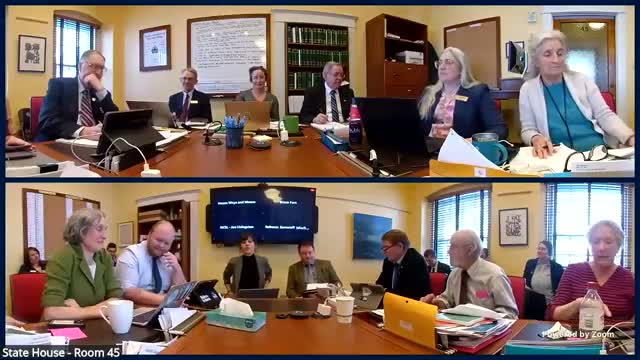
The Ways and Means Committee heard three hours of testimony on Feb. 5 about whether Vermont should conform to recent federal tax changes under HR1, a decision witnesses said will trade administrative simplicity against potential near-term revenue losses.
Amy Spear, president of the Vermont Chamber of Commerce, told the committee that in a period of federal policy volatility the most important state conforming choices are those that "provide stability, breathing room, particularly around research and experimental expenditures, business interest deductions, [and] expensing of depreciable business assets." She said conformity can help businesses reinvest and plan despite federal uncertainty.
Tax practitioners and the tax department gave a more technical accounting of the effects. Mike Hackett, a tax partner at Gallagher Flynn, ran the committee through HR1's business provisions and warned that decoupling from federal rules creates parallel compliance systems. Hackett described how HR1 restores immediate expensing for research and development costs previously required to be capitalized under section 174 of the Internal Revenue Code, and he said that change would materially ease tax burdens for firms that operate on research grants.
Rebecca Samraff, deputy commissioner of the Vermont Tax Department, said the department's starting point is administrative alignment with federal law because linkage reduces form complexity and supports voluntary compliance. Samraff recommended selective decoupling only where Vermont is already out of step (for example, existing decoupling from bonus depreciation) because otherwise the department would have to administer two overlapping regimes for many filers.
Bruce Ford of the Multistate Tax Commission told the committee federal corporate income receipts fell sharply in 2025 and urged the panel to consider bringing 100% of NCTI (the successor to GILTI) into the Vermont tax base while continuing to allow apportionment factors to avoid overtaxing income earned abroad. Joe Livingston of the National Conference of State Legislatures summarized the 50-state landscape: many states have paused broad conformity, some have enacted targeted decoupling around bonus depreciation and research expensing, and a few states are moving toward voluntary alignment on individual items.
Committee members asked witnesses about practical filing horizons, including whether taxpayers can amend prior-year returns and how 2025 filings will be affected. Hackett warned that absent legislative action some filers may be unable to "make whole" federally available deductions on their 2025 Vermont return and recommended prompt legislative consideration.
The committee recessed with no formal votes; members said they would digest testimony and follow up with witnesses. The committee left open the principal trade-off: conformity reduces complexity for taxpayers and administrators, but it may produce a one-time revenue impact that the Legislature must weigh against economic stability for Vermont businesses.
Amy Spear, president of the Vermont Chamber of Commerce, told the committee that in a period of federal policy volatility the most important state conforming choices are those that "provide stability, breathing room, particularly around research and experimental expenditures, business interest deductions, [and] expensing of depreciable business assets." She said conformity can help businesses reinvest and plan despite federal uncertainty.
Tax practitioners and the tax department gave a more technical accounting of the effects. Mike Hackett, a tax partner at Gallagher Flynn, ran the committee through HR1's business provisions and warned that decoupling from federal rules creates parallel compliance systems. Hackett described how HR1 restores immediate expensing for research and development costs previously required to be capitalized under section 174 of the Internal Revenue Code, and he said that change would materially ease tax burdens for firms that operate on research grants.
Rebecca Samraff, deputy commissioner of the Vermont Tax Department, said the department's starting point is administrative alignment with federal law because linkage reduces form complexity and supports voluntary compliance. Samraff recommended selective decoupling only where Vermont is already out of step (for example, existing decoupling from bonus depreciation) because otherwise the department would have to administer two overlapping regimes for many filers.
Bruce Ford of the Multistate Tax Commission told the committee federal corporate income receipts fell sharply in 2025 and urged the panel to consider bringing 100% of NCTI (the successor to GILTI) into the Vermont tax base while continuing to allow apportionment factors to avoid overtaxing income earned abroad. Joe Livingston of the National Conference of State Legislatures summarized the 50-state landscape: many states have paused broad conformity, some have enacted targeted decoupling around bonus depreciation and research expensing, and a few states are moving toward voluntary alignment on individual items.
Committee members asked witnesses about practical filing horizons, including whether taxpayers can amend prior-year returns and how 2025 filings will be affected. Hackett warned that absent legislative action some filers may be unable to "make whole" federally available deductions on their 2025 Vermont return and recommended prompt legislative consideration.
The committee recessed with no formal votes; members said they would digest testimony and follow up with witnesses. The committee left open the principal trade-off: conformity reduces complexity for taxpayers and administrators, but it may produce a one-time revenue impact that the Legislature must weigh against economic stability for Vermont businesses.
View the Full Meeting & All Its Details
This article offers just a summary. Unlock complete video, transcripts, and insights as a Founder Member.
✓
Watch full, unedited meeting videos
✓
Search every word spoken in unlimited transcripts
✓
AI summaries & real-time alerts (all government levels)
✓
Permanent access to expanding government content
30-day money-back guarantee
