Vermont agency narrows ABA telehealth and bars concurrent billing; providers warn of lost revenue and access
February 06, 2026 | Health Care, HOUSE OF REPRESENTATIVES, Committees, Legislative , Vermont
This article was created by AI summarizing key points discussed. AI makes mistakes, so for full details and context, please refer to the video of the full meeting. Please report any errors so we can fix them. Report an error »
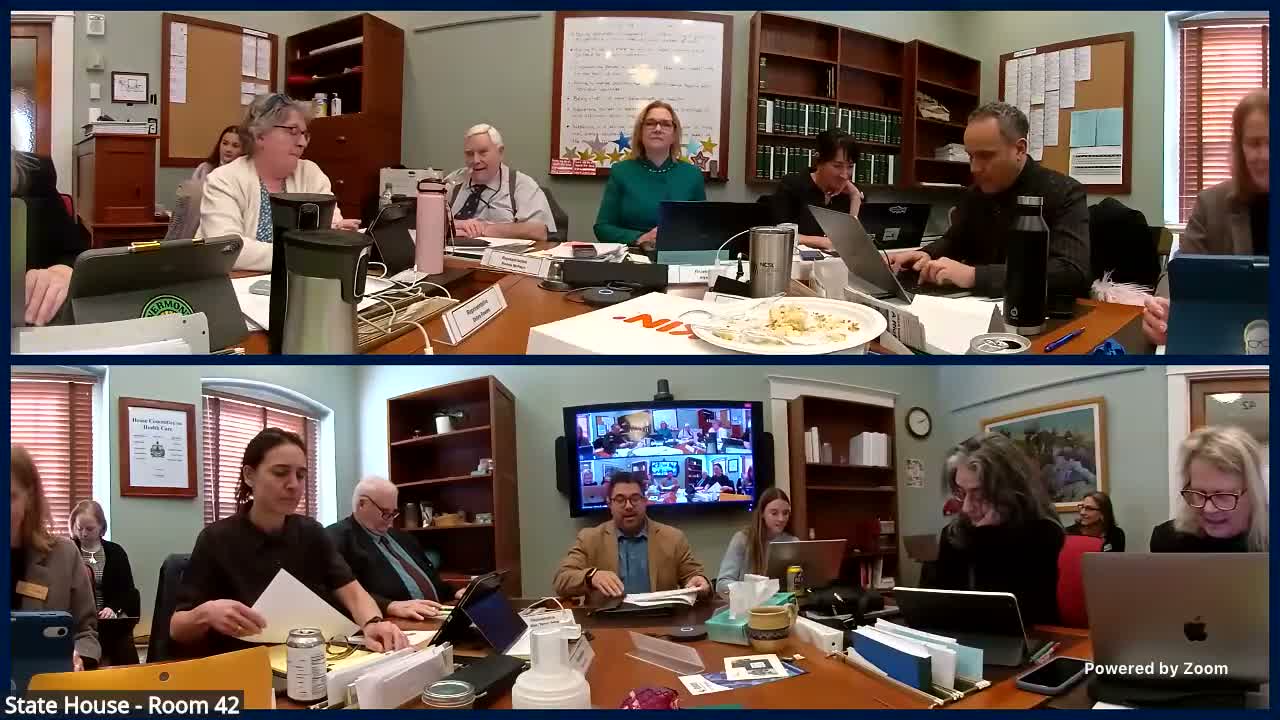
Vermont Medicaid officials described policy changes taking effect Jan. 1 that stop concurrent billing for two common ABA codes and narrow telehealth delivery, saying the moves respond to federal audit risk and coding vulnerabilities.
Grace Johnson, a policy analyst with Medicaid policy at AHS, summarized the benefit: “Vermont Medicaid covers applied behavior analysis, which is ABA services for kids with autism.” Agency presenters said a lack of a written concurrent-billing policy left the program vulnerable to Office of Inspector General review and possible recoupments; they cited a Wisconsin OIG audit that resulted in an $18,500,000 overpayment recoupment as a motivating example.
Agency staff told legislators they would no longer allow concurrent billing for codes 97155 (adaptive behavior treatment with protocol modification administered by a qualified health professional) and 97153 (adaptive behavior treatment by protocol administered by a technician), and that billing should reflect the child’s face-to-face service time rather than two providers billing for the same hour. The agency also said it had narrowed telehealth to three ABA codes, placing other codes back to in-person delivery where clinical review suggested that is more appropriate.
The changes have quantifiable consequences, officials said. Vermont Medicaid served 320 unique members who received ABA in 2025; DIVA projected that 154 members would be affected by the telehealth restriction and estimated providers would see an average 12% decrease in hours counted toward the state’s tier-based payments (range 0–16%), which DIVA estimated equates to about $1.4 million in reduced payments tied to concurrent-billing adjustments across 20 providers. DIVA said telehealth changes would affect about 0.8% of total ABA hours statewide and that affected claims were distributed across counties (including Newport, Rutland, Chittenden, Montpelier and Bennington), though one provider accounts for a large share of telehealth impact.
Providers pushed back sharply. Courtney Keane, co-owner of Keen Perspectives and chair of the Vermont Association of Applied Behavior Analysis, said DIVA relied on a subscription knowledge-base interpretation rather than primary AMA CPT resources and argued that the CPT descriptors do not prohibit concurrent billing for 97153 and 97155 when a qualified health professional provides active protocol modification during a technician’s treatment. “Those are the pieces I wanna touch on there,” Keane told the committee, and she warned that providers were already reducing or eliminating Medicaid services in response to the Jan. 1 policy.
Brian Merrier, a board-certified behavior analyst and national ABA consultant, said restricting telehealth and concurrent billing will “reduce access and compromise quality of care for autistic Vermonters,” and argued DIVA had not adequately collaborated with providers or families before implementing the rules. He described telehealth as a clinically appropriate modality for many children when matched properly and defended provider oversight practices that use documented readiness assessments and quality measures.
Clinic owners gave practical examples of immediate financial pain. Melinda Neff, owner of Green Mountain Behavior Consulting, said an in-house analysis showed a 16.6% projected revenue drop for 2026 after concurrent-billing changes—higher than the agency’s 12% estimate—and said her clinics have already cut jobs and benefits to stay afloat. “I do not believe that we are going to be able to keep our doors open,” Neff said, adding that closures would have disproportionate effects in rural areas where workforce and transportation barriers already limit in-person access.
Agency staff said they are monitoring monthly tier submissions, have a special investigations unit focused on program integrity, and will conduct a rate study due before July 26, 2026, to examine whether payment rates sustain access. Officials told the committee they are prepared to revisit rates as part of the governor’s budget process if monitoring or a rate study justifies adjustments.
Legislators and providers asked for faster reporting and closer monitoring than a mid‑year rate review, saying families who rely on toileting and other basic services cannot wait. Committee members also discussed whether to use budget tools to offset the projected payment changes.
What’s next: DIVA will continue ongoing monitoring, complete the ABA rate study before July 26, 2026, and report findings to the committee; legislators may consider budget adjustments or earlier reporting requirements if closures or access problems emerge.
Grace Johnson, a policy analyst with Medicaid policy at AHS, summarized the benefit: “Vermont Medicaid covers applied behavior analysis, which is ABA services for kids with autism.” Agency presenters said a lack of a written concurrent-billing policy left the program vulnerable to Office of Inspector General review and possible recoupments; they cited a Wisconsin OIG audit that resulted in an $18,500,000 overpayment recoupment as a motivating example.
Agency staff told legislators they would no longer allow concurrent billing for codes 97155 (adaptive behavior treatment with protocol modification administered by a qualified health professional) and 97153 (adaptive behavior treatment by protocol administered by a technician), and that billing should reflect the child’s face-to-face service time rather than two providers billing for the same hour. The agency also said it had narrowed telehealth to three ABA codes, placing other codes back to in-person delivery where clinical review suggested that is more appropriate.
The changes have quantifiable consequences, officials said. Vermont Medicaid served 320 unique members who received ABA in 2025; DIVA projected that 154 members would be affected by the telehealth restriction and estimated providers would see an average 12% decrease in hours counted toward the state’s tier-based payments (range 0–16%), which DIVA estimated equates to about $1.4 million in reduced payments tied to concurrent-billing adjustments across 20 providers. DIVA said telehealth changes would affect about 0.8% of total ABA hours statewide and that affected claims were distributed across counties (including Newport, Rutland, Chittenden, Montpelier and Bennington), though one provider accounts for a large share of telehealth impact.
Providers pushed back sharply. Courtney Keane, co-owner of Keen Perspectives and chair of the Vermont Association of Applied Behavior Analysis, said DIVA relied on a subscription knowledge-base interpretation rather than primary AMA CPT resources and argued that the CPT descriptors do not prohibit concurrent billing for 97153 and 97155 when a qualified health professional provides active protocol modification during a technician’s treatment. “Those are the pieces I wanna touch on there,” Keane told the committee, and she warned that providers were already reducing or eliminating Medicaid services in response to the Jan. 1 policy.
Brian Merrier, a board-certified behavior analyst and national ABA consultant, said restricting telehealth and concurrent billing will “reduce access and compromise quality of care for autistic Vermonters,” and argued DIVA had not adequately collaborated with providers or families before implementing the rules. He described telehealth as a clinically appropriate modality for many children when matched properly and defended provider oversight practices that use documented readiness assessments and quality measures.
Clinic owners gave practical examples of immediate financial pain. Melinda Neff, owner of Green Mountain Behavior Consulting, said an in-house analysis showed a 16.6% projected revenue drop for 2026 after concurrent-billing changes—higher than the agency’s 12% estimate—and said her clinics have already cut jobs and benefits to stay afloat. “I do not believe that we are going to be able to keep our doors open,” Neff said, adding that closures would have disproportionate effects in rural areas where workforce and transportation barriers already limit in-person access.
Agency staff said they are monitoring monthly tier submissions, have a special investigations unit focused on program integrity, and will conduct a rate study due before July 26, 2026, to examine whether payment rates sustain access. Officials told the committee they are prepared to revisit rates as part of the governor’s budget process if monitoring or a rate study justifies adjustments.
Legislators and providers asked for faster reporting and closer monitoring than a mid‑year rate review, saying families who rely on toileting and other basic services cannot wait. Committee members also discussed whether to use budget tools to offset the projected payment changes.
What’s next: DIVA will continue ongoing monitoring, complete the ABA rate study before July 26, 2026, and report findings to the committee; legislators may consider budget adjustments or earlier reporting requirements if closures or access problems emerge.
Don't Miss a Word: See the Full Meeting!
Go beyond summaries. Unlock every video, transcript, and key insight with a Founder Membership.
✓
Get instant access to full meeting videos
✓
Search and clip any phrase from complete transcripts
✓
Receive AI-powered summaries & custom alerts
✓
Enjoy lifetime, unrestricted access to government data
30-day money-back guarantee
