Legal team reviews open meeting law, public records and ethics requirements for board members
February 06, 2026 | Holyoke City, Hampden County, Massachusetts
This article was created by AI summarizing key points discussed. AI makes mistakes, so for full details and context, please refer to the video of the full meeting. Please report any errors so we can fix them. Report an error »
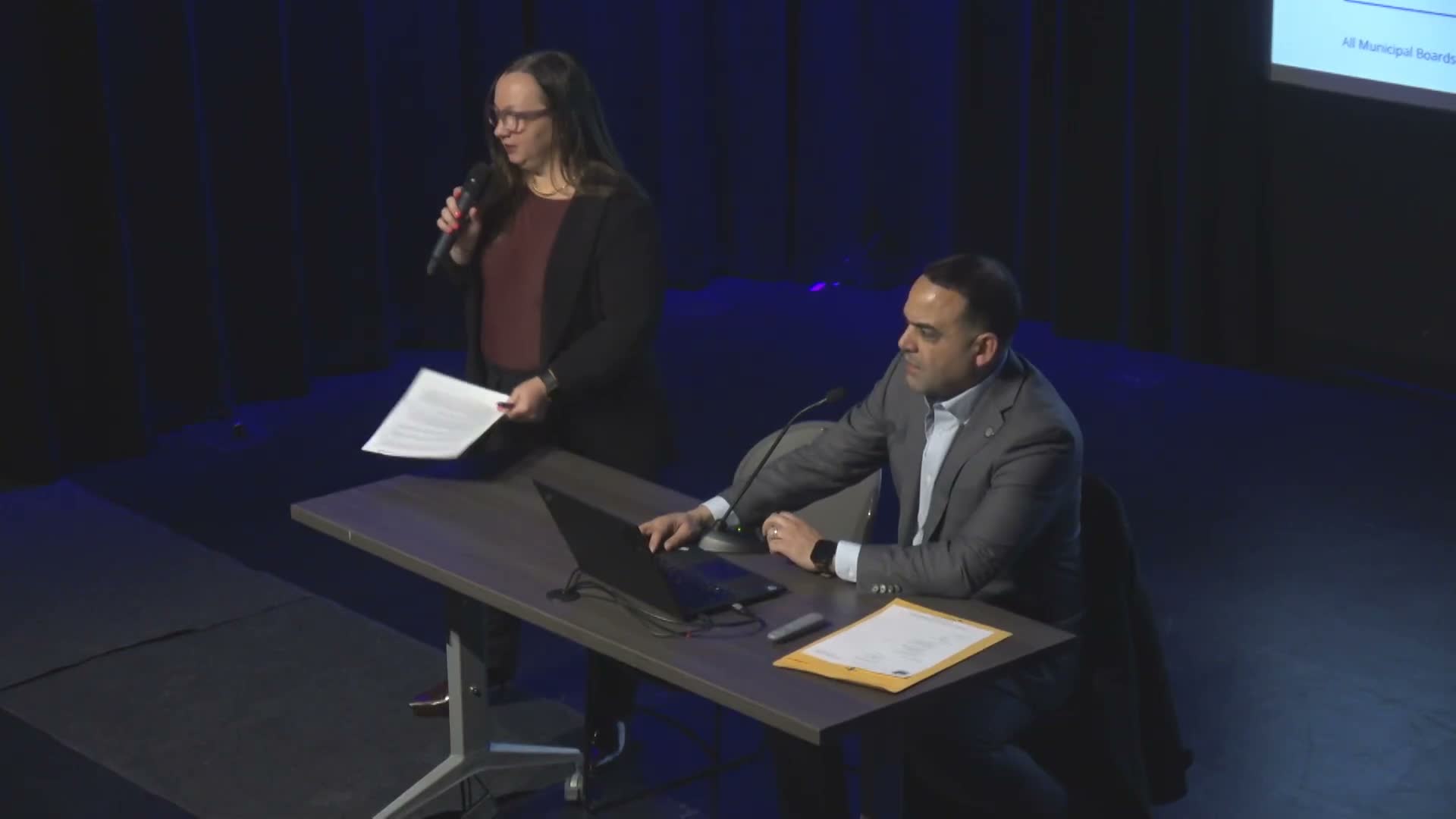
City Solicitor Lisa Ball and assistant Jane Mantileski provided a step-by-step briefing on legal compliance for volunteer boards.
Legal opinions and media inquiries: Ball said formal written legal opinions are typically requested by the mayor or city council but boards and department heads may reach out; the solicitor’s office plans to scan and post legal opinions on the city website (records currently available back to 2022) to reduce duplicate inquiries. Staff asked chairs to forward any media requests to the solicitor’s office and the city clerk so the city can coordinate responses.
Public records and minutes: Ball and Mantileski explained that the records access officer is the city clerk (named in the transcript as Bridal O'Leary) and that public records requests should be routed there so the clerk can document responses and appeals. They noted public records requests are expected to be acknowledged within 10 days but may require more time for redactions and research; meeting minutes (except unreleased executive session minutes) are subject to public inspection.
Open meeting law and trainings: Ball referenced the attorney general’s open meeting law guide (June 2025) and said newly appointed members should read it and sign a certificate of receipt, which should be returned to the city clerk. Staff emphasized available online trainings and an ethics test that appointees must complete every two years; the state ethics hotline and online account system were given as resources for conflict‑of‑interest questions.
Practical cautions: Jane Mantileski warned that email threads or draft documents circulated among a majority of a board can create an open-meeting violation if substantive discussion occurs, advising against 'reply all' and informal cross‑member deliberations outside posted meetings.
Legal opinions and media inquiries: Ball said formal written legal opinions are typically requested by the mayor or city council but boards and department heads may reach out; the solicitor’s office plans to scan and post legal opinions on the city website (records currently available back to 2022) to reduce duplicate inquiries. Staff asked chairs to forward any media requests to the solicitor’s office and the city clerk so the city can coordinate responses.
Public records and minutes: Ball and Mantileski explained that the records access officer is the city clerk (named in the transcript as Bridal O'Leary) and that public records requests should be routed there so the clerk can document responses and appeals. They noted public records requests are expected to be acknowledged within 10 days but may require more time for redactions and research; meeting minutes (except unreleased executive session minutes) are subject to public inspection.
Open meeting law and trainings: Ball referenced the attorney general’s open meeting law guide (June 2025) and said newly appointed members should read it and sign a certificate of receipt, which should be returned to the city clerk. Staff emphasized available online trainings and an ethics test that appointees must complete every two years; the state ethics hotline and online account system were given as resources for conflict‑of‑interest questions.
Practical cautions: Jane Mantileski warned that email threads or draft documents circulated among a majority of a board can create an open-meeting violation if substantive discussion occurs, advising against 'reply all' and informal cross‑member deliberations outside posted meetings.
Don't Miss a Word: See the Full Meeting!
Go beyond summaries. Unlock every video, transcript, and key insight with a Founder Membership.
✓
Get instant access to full meeting videos
✓
Search and clip any phrase from complete transcripts
✓
Receive AI-powered summaries & custom alerts
✓
Enjoy lifetime, unrestricted access to government data
30-day money-back guarantee
